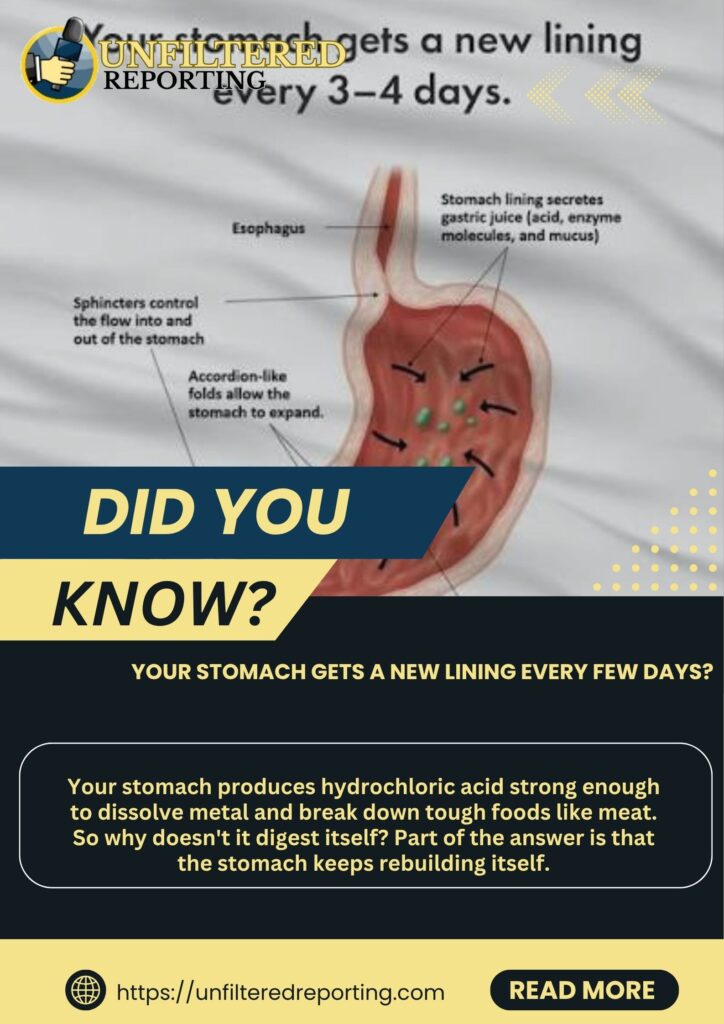


Did You Know: Your Stomach Gets a New Lining Every Few Days?
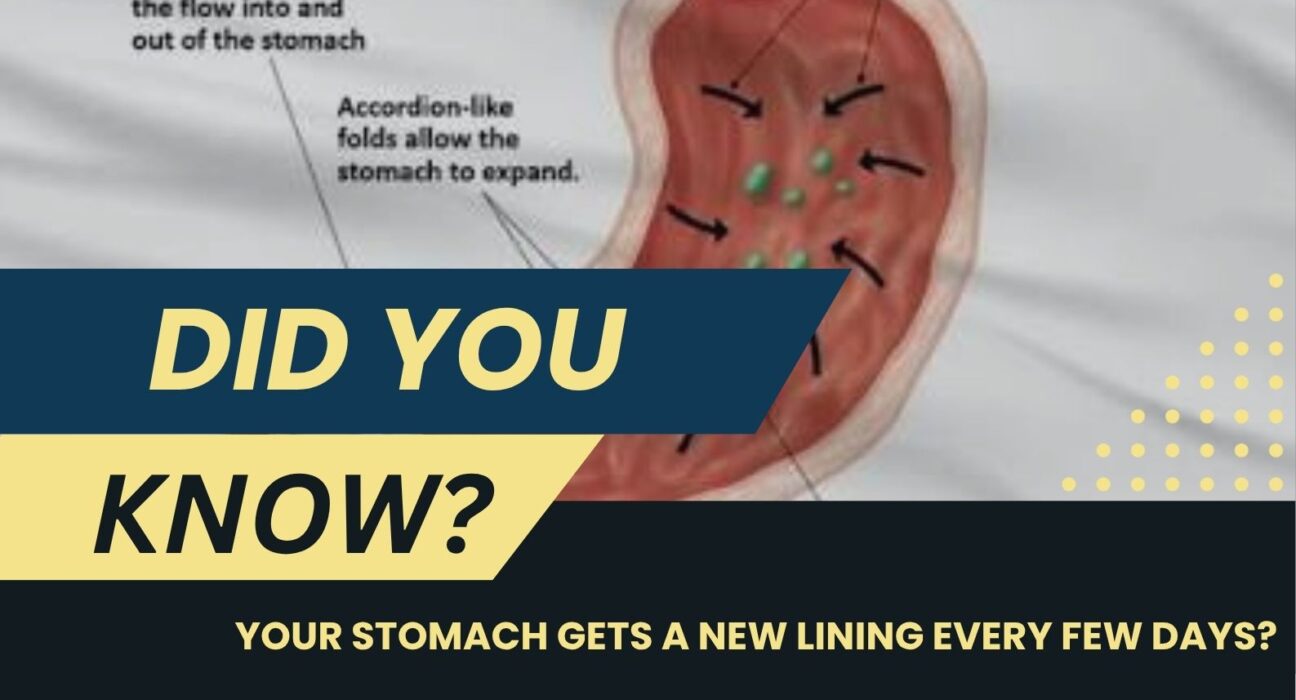
Your stomach produces hydrochloric acid strong enough to dissolve metal and break down tough foods like meat. So why doesn’t it digest itself? Part of the answer is that the stomach keeps rebuilding itself.
The inside of your stomach is covered by a thin layer of cells called the epithelium. These cells take the daily beating from acid, enzymes, and rough food, so they don’t last long. Roughly every three to five days, the surface cells are replaced by fresh ones.
Deep in the stomach wall, stem cells keep dividing to produce new cells. These push upward to replace the worn-out ones at the surface. It is one of the fastest renewal rates in the human body, which means the lining rarely gets the chance to wear down.
Renewal is only one part of the protection. Special cells in the stomach release a thick, sticky layer of mucus that coats the stomach wall and keeps acid from touching the cells underneath. Within that mucus, the cells also release bicarbonate, a natural base that neutralizes acid right at the surface. The inside of the stomach is extremely acidic, yet the lining itself stays close to neutral. On top of this, the cells are packed tightly together, forming a seal that stops acid from leaking between them.
Together, these defenses make the stomach lining one of the toughest surfaces in the body.
Sometimes the protection breaks down, and the result is a painful stomach ulcer. The most common causes are an infection by a bacterium called Helicobacter pylori and the long-term use of certain painkillers, such as ibuprofen and aspirin, which can reduce the stomach’s protective mucus. Heavy alcohol use and smoking can also damage the lining.
Interestingly, scientists once doubted that any bacteria could survive in stomach acid at all. Barry Marshall and Robin Warren proved otherwise and won the Nobel Prize in 2005 for the discovery. Marshall famously drank a culture of the bacteria himself to prove his point.
Your stomach is not simply a tough bag that happens to resist acid. It is constantly rebuilding itself, protecting itself with mucus and bicarbonate, and replacing damaged cells before they can cause trouble. Every meal you eat is digested inside a surface that is only a few days old.