
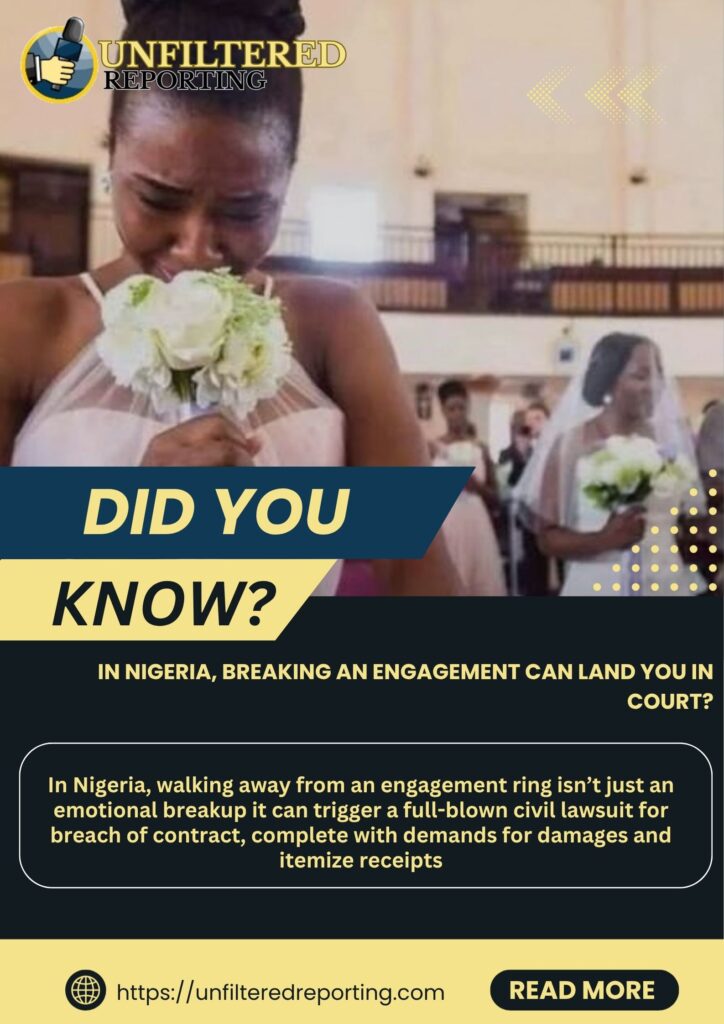


Did You Know: In Nigeria, Breaking an Engagement Can Land You in Court?

In Nigeria, walking away from an engagement ring isn’t just an emotional breakup it can trigger a full-blown civil lawsuit for breach of contract, complete with demands for damages and itemize receipts
When most people picture a broken engagement, they think of tearful phone calls, dramatic ring returns, and maybe a tub of ice cream. But under Nigerian civil law, a promise to marry is treated with the same legal gravity as a high-stakes business contract. If you get cold feet at the altar or even years before it you might find yourself defending your romantic choices in front of a judge.
In the Nigerian legal system, a mutual agreement to marry creates a binding legal obligation. If one party abruptly calls it quits without a legally acceptable excuse, the jilted partner can take them to court to sue for breach of promise to marry.
To successfully win one of these lawsuits, the plaintiff typically needs to prove three key elements: a definite, clear mutual agreement that a marriage was proposed and accepted; a distinct breach where one party refuses to go through with the wedding; and tangible damages suffered as a result.
Courts in Nigeria have repeatedly entertained these lawsuits, awarding damages across a few major categories. Judges routinely consider the emotional distress, psychological toll, and public humiliation caused by a canceled wedding. Beyond the heartbreak, courts also look closely at wasted financial investments. If you sponsored your ex through university, paid for their professional exams, or heavily contributed to building a future together with the expectation of marriage, the court can order a refund of those expenses as special damages. In some cases, they may even weigh the social or financial status the plaintiff would have gained through the union.
If you are navigating a relationship in Nigeria, this legal precedent comes with a very practical takeaway: love may be blind, but the law keeps a very close ledger. It pays to keep financial contributions clear and to communicate intentions honestly, because ambiguous promises or leading someone on for years can easily be interpreted by a court as a binding commitment.
So, the next time someone tells you that romance is dead, just remind them that in Nigeria, it’s alive, legally binding, and potentially billable!