
Today in History: 1966 Anti-Igbo Pogrom
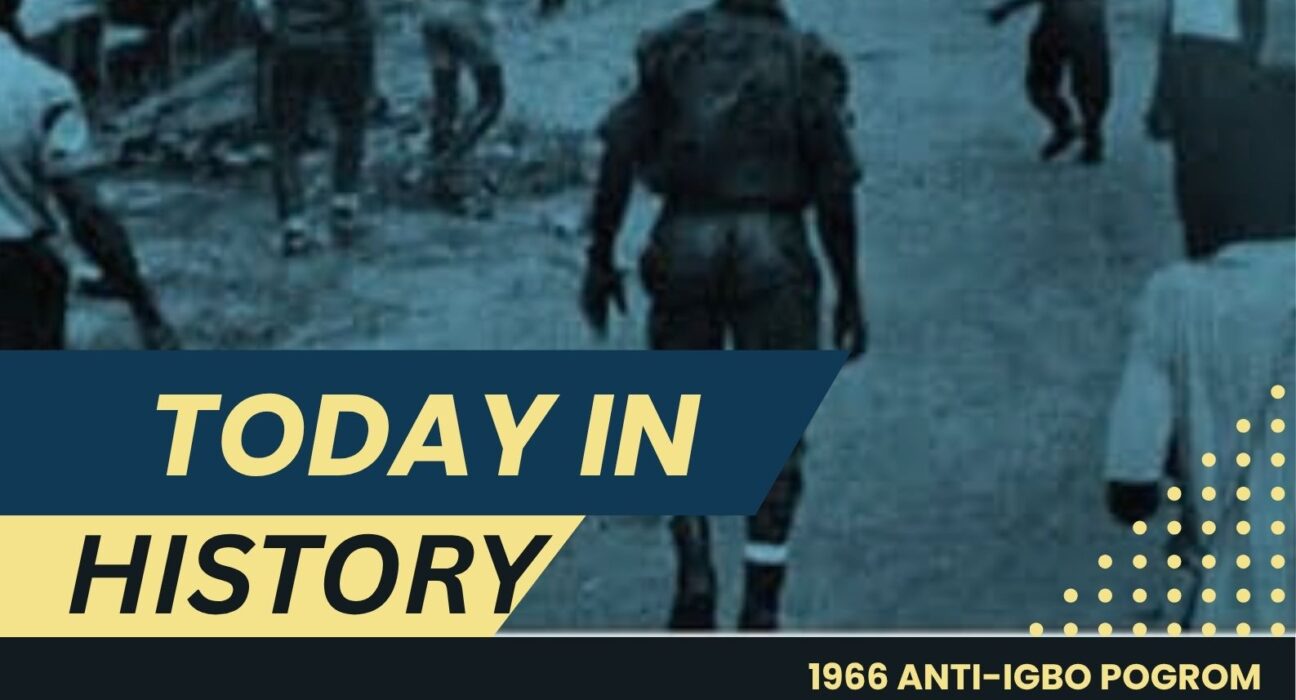
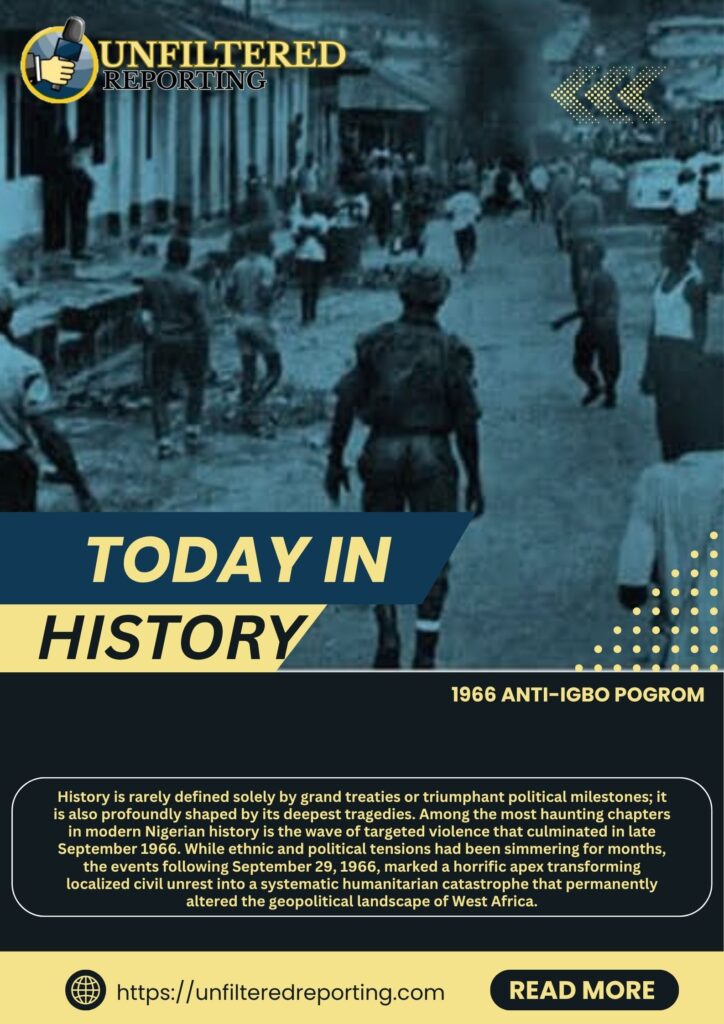
History is rarely defined solely by grand treaties or triumphant political milestones; it is also profoundly shaped by its deepest tragedies. Among the most haunting chapters in modern Nigerian history is the wave of targeted violence that culminated in late September 1966. While ethnic and political tensions had been simmering for months, the events following September 29, 1966, marked a horrific apex transforming localized civil unrest into a systematic humanitarian catastrophe that permanently altered the geopolitical landscape of West Africa.
To understand the magnitude of the violence, one must look at the fragile state of Nigeria in the mid-1960s. Gaining independence from British colonial rule in 1960, the country was stitched together from diverse ethnic, linguistic, and religious regions. In January 1966, a military coup led largely by officers of Igbo descent overthrew the federal government, resulting in the death of several prominent northern and western political leaders, including Prime Minister Sir Abubakar Tafawa Balewa.
Although the coup was staged to combat systemic corruption, it was perceived regionally as an ethnic power grab. This sentiment was exacerbated months later when the military government issued a decree unifying the civil service. Fearful of economic and political dominance by the more educated southern elites, deep-seated resentment took root in the Northern Region. Sporadic violence broke out in May 1966, but it was merely a prelude to what would follow.
The friction within the military boiled over on July 29, 1966, when northern soldiers orchestrated a bloody counter-coup, assassinating the military head of state, General Johnson Aguiyi-Ironsi (an Igbo), and dozens of other eastern officers. Command eventually fell to General Yakubu Gowon, but central authority across the nation fractured.
In the North, the counter-coup unleashed a wave of unbridled retribution. What began as retaliatory targeted attacks quickly escalated into coordinated, widespread violence against Igbo civilians, businessmen, civil servants, and families living in northern towns and cities.
The violence reached its absolute zenith on and immediately after September 29, 1966. Mobs, frequently assisted or unhindered by elements of the military and local authorities, swept through railway stations, marketplaces, and residential areas in northern commercial hubs. Thousands of innocent men, women, and children were slaughtered, and countless others lost their homes, livelihoods, and life savings.
The scale of the carnage overwhelmed basic survival instincts, forcing a massive, desperate exodus. Over one million Igbo and other easterners fled the north, streaming back toward the relative safety of the Eastern Region in what remains one of the largest forced migrations in African history.
The human cost of the autumn peak remains heavily contested, with conservative historical estimates placing the death toll between 8,000 and 10,000, while others argue it was significantly higher. Beyond the numbers, the psychological and political damage was irreversible. The failure of the federal government to guarantee the safety of its citizens in the North convinced eastern leaders that coexistence within a unified Nigeria was no longer viable.
This profound loss of trust served as the direct precursor to the declaration of the independent Republic of Biafra by Lieutenant Colonel Odumegwu Ojukwu in May 1967, which subsequently plunged the nation into the devastating three-year Nigerian Civil War. Decades later, the shadows of late September 1966 continue to loom large over collective memory, serving as a solemn reminder of how quickly civic fabric can unravel when fear, ethnicity, and violence are left unchecked.