



Did You Know: Octopuses Have Three Hearts and Blue Blood?
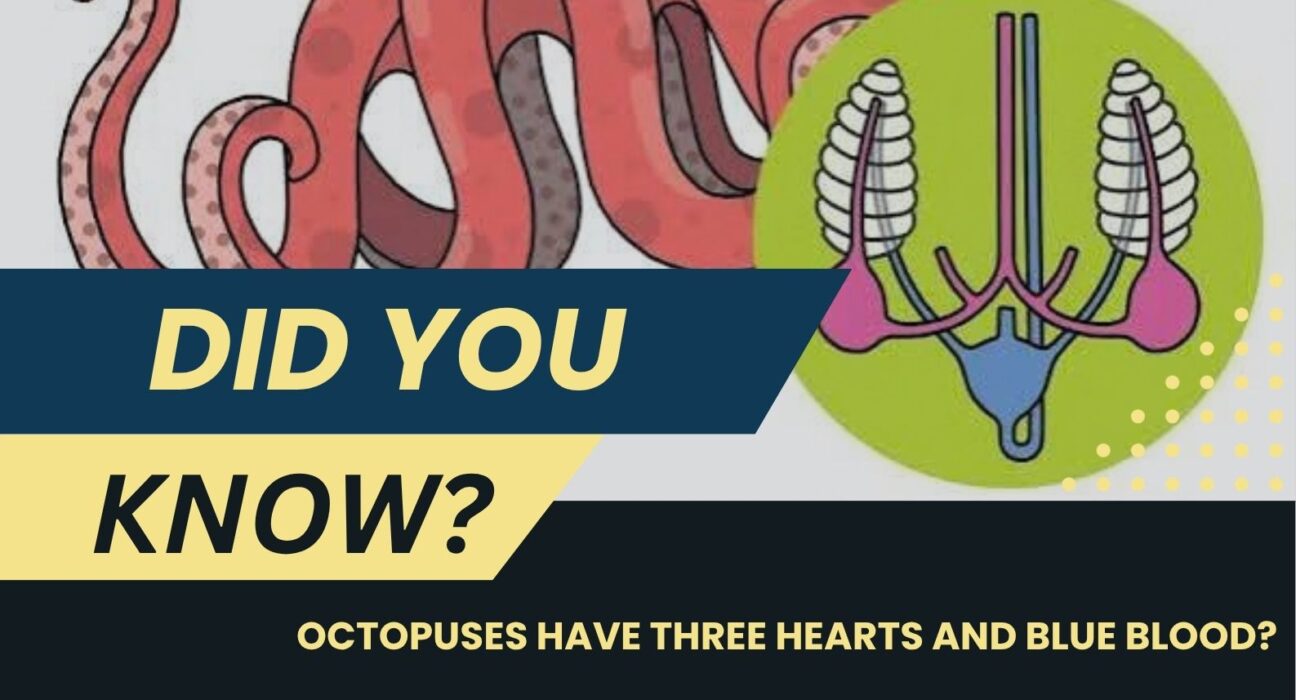
Few creatures in the natural world capture the imagination quite like the octopus. Beyond their famous intelligence, remarkable shape-shifting abilities, and complete lack of bones, these cephalopods possess a wildly unique internal physiology. Two of the most fascinating features that set them apart from almost every other animal on Earth are their three hearts and their striking blue blood.
While humans and other vertebrates rely on a single central pump to circulate blood throughout the body, an octopus requires three distinct hearts to get the job done. The system is split into specialized functions featuring a central systemic heart positioned in the middle of the body to pump oxygenated blood to the remaining organs and tissues, alongside two additional branchial hearts located at the base of the gills. The sole job of these gill-associated hearts is to boost blood pressure and push deoxygenated blood through the respiratory organs to pick up fresh oxygen from the surrounding water.
An intriguing quirk of this triple-heart design is that whenever an octopus swims, its main systemic heart actually stops beating. Because swimming is physically exhausting and metabolically inefficient for them, octopuses strongly prefer to crawl along the ocean floor. When they are forced to swim to escape danger, the primary heart pauses, which causes the animal to fatigue rapidly and return to crawling as soon as possible.
This specialized circulatory network is further complemented by an unusual respiratory fluid. Vertebrates use an iron-rich protein called hemoglobin to transport oxygen through the bloodstream, which is what gives human blood its characteristic red color. Octopuses, however, rely on a copper-containing protein called hemocyanin. Hemocyanin is exceptionally efficient at binding and releasing oxygen in the cold, low-oxygen marine environments typically found in the deep sea. When this copper-based protein becomes oxygenated, it reflects light to produce a vibrant blue hue. Once the oxygen has been fully delivered to the octopus’s tissues and organs, the deoxygenated blood takes on a clear, grayish-white appearance before returning to the gills to be recharged.
This remarkable circulatory design allows octopuses to thrive in extreme underwater habitats where many other species would struggle to survive, proving that nature has evolved wonderfully diverse ways to sustain life.