
Today in History: The Bloodless Coup of July 29, 1975 that Ousted Gowon
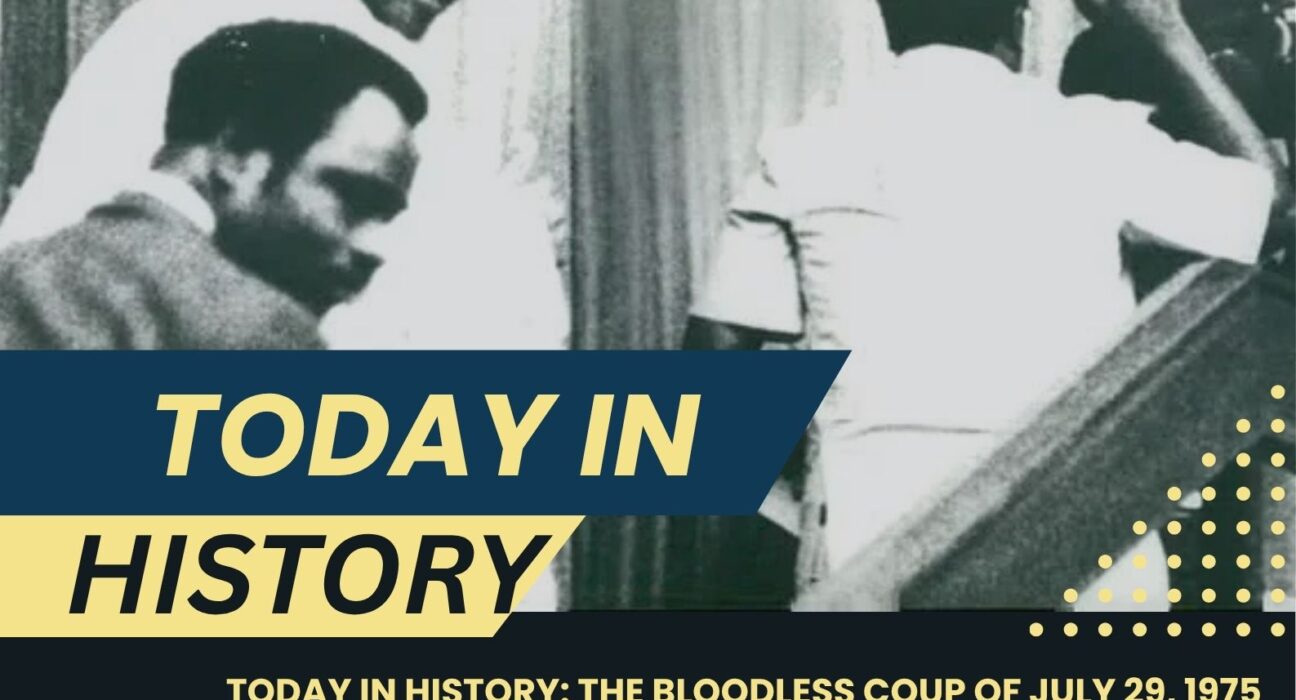
On July 29, 1975, the political landscape of Nigeria shifted dramatically without a single shot being fired. General Yakubu Gowon, who had steered the nation through 30 months of a brutal civil war and presided over the post-war oil boom, was ousted from power after nine years as Head of State. The turn of events unfolded while Gowon was hundreds of miles away in Kampala, Uganda, attending the 12th summit of the Organisation of African Unity (OAU).
When General Gowon came to power in the bloody counter-coup of July 1966, he was a 31-year-old bachelor facing a nation on the brink of collapse. After leading the Federal Government to victory in 1970 with a declaration of “No Victor, No Vanquished,” Gowon initially enjoyed immense popularity. His administration embarked on massive infrastructure programs, fueled by the 1970s oil boom, and introduced the National Youth Service Corps (NYSC) to foster national cohesion.
However, by 1974, political tensions began to brew beneath the surface of economic prosperity.
The turning point came in October 1974, when Gowon reneged on his promise to transition Nigeria back to democratic civilian rule by 1976. Announcing that the deadline was “unrealistic,” the administration sparked widespread frustration among political leaders, students, and civil society. Compounded by growing allegations of corruption among state military governors, severe port congestion, and economic inflation, discontent spread rapidly into the ranks of the military itself.
The coup of July 29, 1975, was executed with remarkable discipline and efficiency. Engineered by middle-belt and senior officers including Colonel Joseph Garba, Commander of the Brigade of Guards the plan relied on total surprise and strategic control.
In the early hours of the morning, troops secured key public installations, broadcasting stations, and telecommunications centers across Lagos, then the national capital. By dawn, Colonel Joseph Garba went on national radio to deliver a brief, calm announcement:
“Fellow countrymen, in view of recent events in the country, the Nigerian Armed Forces have decided to effect a change of the leadership of the Federal Military Government…”
The broadcast urged citizens to remain calm and assured the nation that the operation was completely peaceful. True to Garba’s words, not a single life was lost during the takeover a rare occurrence in the history of African military coups at the time.
In Kampala, news of the coup broke while General Gowon was attending the OAU summit proceedings. Upon receiving the news, the deposed leader displayed remarkable composure and statesmanlike dignity.
Rather than attempting to marshal support or resist the change, Gowon accepted his fate to prevent potential bloodshed in his homeland. Addressing news reporters at the summit shortly before his departure, he quoted lines from William Shakespeare’s *As You Like It*:
“All the world’s a stage, and all the men and women merely players; they have their exits and their entrances…”
Gowon pledged his loyalty to the new administration and appealed to all Nigerians to support the incoming leadership for the stability and unity of the nation. He subsequently went into exile in the United Kingdom, where he pursued higher education, eventually earning a doctorate in political science from the University of Warwick.
The 1975 coup ushered in the administration of Brigadier Murtala Ramat Muhammed, with Brigadier Olusegun Obasanjo serving as Chief of Staff, Supreme Headquarters.
The new regime immediately captured the public imagination through swift, decisive action. Murtala Muhammed reorganized the federal cabinet, retired all former military governors and senior service chiefs, purged the civil service to curb corruption, and established a firm, phased timetable for the return to democratic rule—a promise that was ultimately fulfilled in 1979.
July 29, 1975, remains a watershed moment in Nigerian history. It demonstrated that political transition within the military could occur without violent conflict, while highlighting the sensitivity of public opinion regarding democratic governance. The event marked the end of Nigeria’s longest continuous military reign up to that point and ushered in a brief but dynamic era of administrative reform that reshaped the nation’s governance structure for decades to come.