

FIFA Boss, Infantino Faces Questions on Eve of World Cup
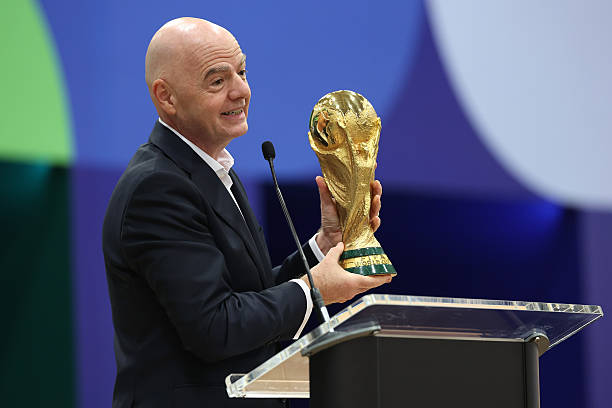
FIFA President, Gianni Infantino stepped before the media in Mexico City on Wednesday in what was described as a rare press conference, on the eve of the 2026 FIFA World Cup but the occasion was far from celebratory.
With off-field controversies threatening to overshadow the tournament’s historic opening, the world football chief found himself on the defensive before a ball had even been kicked.
The 2026 World Cup, expanded to 48 teams and billed as the largest and most ambitious in the competition’s history, is being co-hosted across the United States, Mexico, and Canada. The tournament kicks off on Thursday when co-hosts Mexico face South Africa at the iconic Estadio Azteca in Mexico City.
Yet, despite the scale and spectacle of what lies ahead, it is a series of troubling off-pitch issues that have dominated headlines in the lead-up to the competition.
Chief among the controversies is the case of Somali referee Omar Artan, one of Africa’s most decorated match officials and the 2025 men’s referee of the year by the Confederation of African Football. Artan was denied entry into the United States, shattering what he described as the greatest dream of his life. He was held for an 11-hour interview by border officials at Miami International Airport before being turned back. A US State Department official alleged he was associated with suspected members of terrorist organisations a claim Artan and the Somali government strongly disputed, with a government advisor confirming to AFP that he had the correct papers and a valid visa.
Artan returned to a hero’s welcome in Mogadishu and vowed to be present at the 2030 World Cup, saying he would not be discouraged. His case, however, has become a powerful symbol of broader fears that Donald Trump’s immigration crackdown could cast a long shadow over the tournament, with fans and team officials also reported to have been barred from entering the country.
The issue of ticket prices has proven equally contentious. Critics and fan groups have described FIFA’s pricing model as a betrayal of ordinary supporters. On FIFA’s own resale marketplace, the cheapest standard ticket for the final has been listed at just under $11,000, with some lower-deck seats going for close to $3 million. Even group stage tickets in Mexico have reached eye-watering levels on the secondary market. FIFA has defended itself by pointing out that entry-level tickets were made available from as low as $60, and that the organisation does not set resale prices, though it does collect a 15 percent fee from both buyers and sellers on its official resale platform. The ticket sales model has attracted a formal investigation, with one legal expert noting that FIFA has been conspicuously opaque about how pricing decisions are made and how many tickets remain available at any given time.
Infantino has previously brushed off the backlash, arguing that record demand with reports of over 500 million ticket requests received across sales windows justified the pricing environment. He has also stressed that FIFA’s revenue from the tournament is funnelled back into developing football across the globe.
Nevertheless, as the world tunes in for what promises to be a spectacular footballing spectacle, the questions swirling around FIFA’s management of the event have refused to go away. For Infantino, Wednesday’s press conference was an opportunity to get ahead of the noise though whether his answers will satisfy an increasingly frustrated football public remains to be seen.