

China Accelerates AI Expansion With New Data Centres, Talent Push
China is rapidly expanding its data-centre infrastructure and artificial intelligence workforce as Beijing intensifies efforts to strengthen the country’s position in the global AI industry.
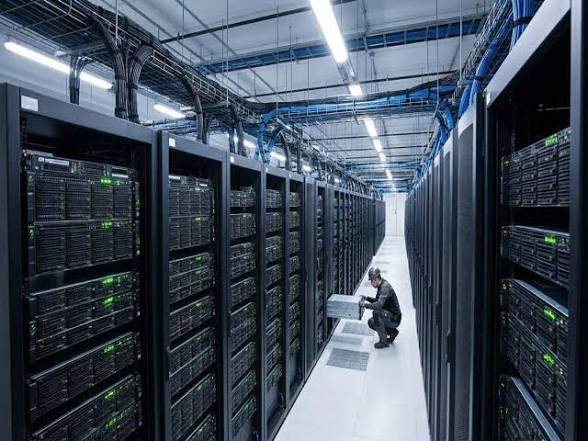
In Ulanqab, Inner Mongolia, a city widely known as China’s “potato capital,” large data centres are being constructed across areas traditionally associated with agriculture, with hundreds of workers involved in the ongoing development.
The expansion forms part of Beijing’s broader plan to integrate artificial intelligence into 90 per cent of industries and society by 2030.
The growing infrastructure is also supporting the development of China’s AI talent pool, with some Chinese researchers and students returning from overseas to pursue work in the country.
Jack Zhang of the University of Science and Technology of China, who previously studied at Yale University and Cambridge University, said he returned to apply his AI research to healthcare and medicine, where he believed greater resources and government support could help advance his work.
He also said fewer Chinese students and researchers were moving to the United States, while more were returning to China.
China’s expanding AI capabilities have become a significant part of its broader technology competition with the United States.
US President Donald Trump has said that whoever wins AI will win, while Anthropic CEO Dario Amodei has argued that Washington should continue restricting China’s access to advanced computer chips and equipment.
China has rejected concerns over the implications of its AI development, with the state-run Global Times describing US restrictions as an attempt to contain the country’s technological rise.
Beijing is also promoting the development of affordable open-source AI models, an approach encouraged by President Xi Jinping that allows users, businesses and countries to modify the technology.
The strategy differs from the closed AI models developed by companies such as OpenAI and Anthropic, whose underlying designs are not publicly available.
Chinese technology companies have used open-source development to share AI technology and accelerate innovation, while the approach has also helped companies operate amid restrictions on access to advanced chips.
China is seeking a greater role in establishing international rules for artificial intelligence, with Xi repeatedly calling for stronger regulation and a global framework for the technology.
Meanwhile, data-centre construction and expansion are continuing across Ulanqab, Ningxia, Gansu and Guizhou, with companies including Huawei, ByteDance and DeepSeek involved in the sector.
The regions offer relatively cheaper land, cooler temperatures and access to renewable energy resources. Wind and solar power have expanded significantly in these areas, helping to reduce the energy costs associated with running data centres.
However, the expansion has raised environmental and social concerns.
China has set a target for most of its data centres to operate on green energy by 2030, although some parts of the national electricity grid still depend on coal.
Water availability is another concern, particularly in the dry areas of Inner Mongolia where large-scale data-centre operations require significant resources.
Some villages have also been relocated to make way for development, although the scale of the relocations and the compensation provided to affected residents remain difficult to establish.
While some residents questioned the direct benefits of the projects, others said the development had created employment opportunities for members of their families.
A local resident, identified only by his surname, Zhang, said his children had secured jobs connected to the new development.
China’s growing number of science and technology graduates is also providing a larger pool of potential AI researchers and developers.
Dang Ronghao, a 27-year-old AI developer at a leading technology company, said Chinese researchers were increasingly applying AI to areas including nuclear fusion, astrophysics, new materials and drug development.
However, some academics have raised concerns about the openness of China’s research environment.
Professor Liu Jun of Tsinghua University’s Department of Statistics and Data Science, who has also taught at Harvard and Stanford, said he encourages his students to question and challenge ideas more frequently, while acknowledging that changing the research culture could be difficult.
Outside China’s technology centres, however, many residents remain more concerned about economic challenges, including weak growth, youth unemployment and declining property prices.
In rural Inner Mongolia, some farmers said the expansion of the AI industry had made little difference to their daily lives, with one farmer noting that he rarely uses the internet and had seen little change in his circumstances.
The contrasting experiences highlight the gap between Beijing’s ambitions for an increasingly AI-driven economy and the limited impact of the technology boom on some communities in rural areas.