Lagos Achieved Financial Autonomy Through Long-Term Borrowing, Strong Management, Says Tinubu
By Bamidele Atoyebi
President Bola Ahmed Tinubu has explained that Lagos State achieved financial autonomy by developing a disciplined approach to borrowing, investing in long-term infrastructure and building a sustainable model of governance that reduced its dependence on federal allocations.
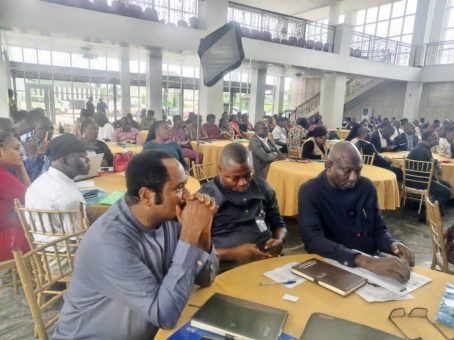
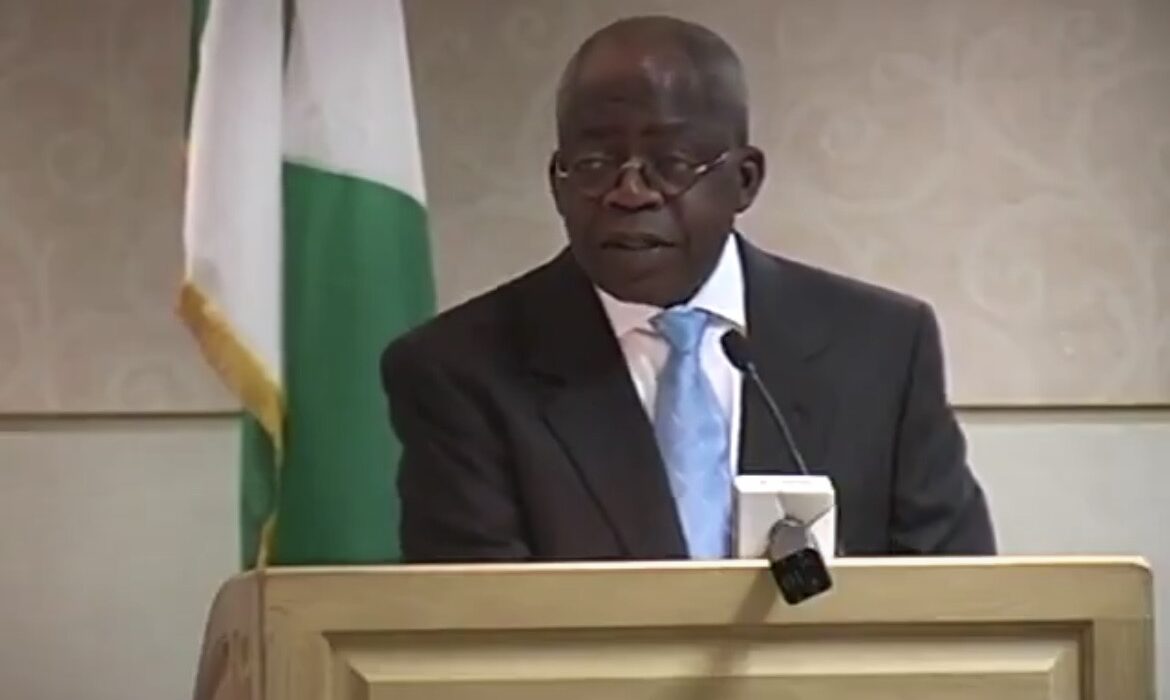
Tinubu made the remarks while delivering a lecture titled “Tinubunomics 402 – Total Financial Autonomy of a Subnational: Lagos as a Case Study”, with the topic “Fiscal Federalism: How to Effectively and Efficiently Run a Government With No Money from Abuja.”
The President said Lagos had demonstrated that a subnational government could become financially self-sustaining by building its internally generated revenue, accessing the bond market and using long-term funds to finance long-term infrastructure projects.
“Lagos can proudly say it is financially autonomous. No more dependencies,” Tinubu said.
He recalled that when Lagos began pursuing financial independence, some critics doubted the state’s ability to survive without relying heavily on federal resources.
According to him, the administration at the time responded by approaching the bond market to raise funds for infrastructure development.
“There were some critics then who thought that Lagos might not survive. We went to the bond market and we raised a fund,” he said.
Tinubu criticised those who opposed the borrowing strategy, saying they failed to understand the importance of matching the duration of financing with the lifespan of the projects being financed.
“At the time, I referred to them as financial illiterates because they did not know what infrastructure bonding is for,” he said.
The President argued that governments and organisations should not rely on short-term financing to execute projects that require many years to mature.
“Any state, any nation or organisation that must succeed cannot afford to use short-term money to finance long-term projects. They are going to go further into a hole and go into bankruptcy faster. You are going to find a long-term fund for a long-term project,” he said.
Tinubu said the bond strategy ultimately strengthened Lagos’ financial position rather than weakening it, recalling that by the time he left office as governor, the bond had been fully redeemed, while the state had retained equity in the fund.
“By the time I left office, that bond was redeemed fully with ₦22 billion in equity in the same fund, to be able to guarantee another bond of ₦257 billion. If that is not total recovery, call it any other name,” he said.
He added that the ability of Lagos to raise a ₦257 billion bond with a seven-year tenor demonstrated the state’s creditworthiness and the strength of its financial foundation.
“Before they composed a bond of seven years for ₦257 billion, it means you have standard and quality. It means you are creditworthy,” Tinubu said.
The President said the development showed that Lagos was succeeding despite the challenges associated with financing economic development at the subnational level.
“The foundation is rock solid and we are building the block,” he said.
Tinubu also used the history of Learjet, the executive aircraft manufacturer, as an analogy for leadership, risk-taking and the importance of confronting challenges rather than shifting responsibility to others.
According to him, the company encountered a major setback after four of its first 24 executive aircraft crashed within the first 58 flight hours, prompting the relevant aviation authorities to ground the aircraft.
He said the incident threatened the company’s survival, forcing its engineers to investigate the cause of the crashes and determine how to correct the problem.
Tinubu said the company subsequently needed a test pilot to fly the aircraft after the fault had been investigated, but only three of the trained pilots volunteered to take the risk.
Rather than asking one of them to undertake the potentially dangerous flight, Tinubu said company founder Bill Lear chose to test the aircraft himself.
“He said, ‘I found, developed and built the foundation of this company, so I am going to do the flight trial myself. I took the risk, I live with the risk,’” Tinubu recounted.
According to the President, Lear’s decision nearly cost him his life when the aircraft began nose-diving during the test flight.
“He was going to crash and die. That was the moment he discovered the error,” Tinubu said.
He said Lear managed to force the aircraft to land, after which the error was corrected, paving the way for the company’s subsequent success.
For Tinubu, the episode illustrated the qualities required of effective leaders, particularly courage, responsibility and the willingness to take calculated risks.
“Leadership, that is leadership for you. That is leadership courage. That is the ability to take risks. If you don’t kill the fear and conquer the fear, you cannot make a king,” he said.
The President, however, stressed that physical infrastructure, financial strength and other visible achievements alone were insufficient to define successful leadership.
He said a leader must also develop capable managers and successors who can sustain and expand the vision after the leader leaves office.
“No matter how successful we have been, a leader can be noted for the brick and mortar and all the muscles and skylines, but if you have no good managers that you have developed, if you have no good successor that can succeed without you or with you, that can really build on the vision, you can never achieve full success,” he said.
Tinubu linked the issue of succession to his own political experience in Lagos, saying he took what he described as a political risk when he backed a successor amid opposition and uncertainty.
“It is only now that we have a successful successor,” he said.
He recalled that several of his associates advised him during the political crisis surrounding the choice of his successor as Lagos governor.
“Many of my friends who are here and not here led me when I was facing the political crisis of nominating who was going to succeed me. I did. I took the risk and the risk is yielding and Lagos is succeeding,” he said.
Tinubu described the emergence of what he called a successful successor as part of the governance model that Lagos had developed over time.
“So we have a very successful successor and we have equally built a very unique model of governance for the rest of the public to emulate,” he said.
He further illustrated the Lagos governance model using the analogy of a house and a well-maintained lawn, drawing comparisons with companies and machines such as John Deere, Caterpillar and lawnmowers.
According to him, the model requires different actors to perform clearly defined responsibilities to ensure that the entire system remains functional.
“You can relate to John Deere here and you can relate to Caterpillar here. You can relate to international harvesters here. You can relate to your easy lawnmower,” Tinubu said.
He explained that the house represented the broader governance structure, while the lawn represented the environment that must continually be maintained.
“The house must not fall apart. The lawn must stay manicured and the house must be solid. That is the model,” he said.
Tinubu said the responsibilities within the governance structure should be divided in a way that allows each institution to perform its role effectively.
He cited former Lagos State Governor Babatunde Fashola as the “lawnmower” responsible for taking care of the job, while describing his own role metaphorically as taking care of the grass and cleaning the shrubs.
He said the Lagos State House of Assembly, in the analogy, represented the sprinkler responsible for helping sustain the system and ensuring that the “house” and its environment remained healthy.
“The House of Assembly brings the sprinkler and guides the house to continue to be green. The job is well-divided that we are doing it well,” Tinubu said.
The President’s lecture therefore presented Lagos’ experience as a combination of financial discipline, long-term infrastructure financing, leadership risk-taking, institutional continuity and succession planning.
He argued that the sustainability of any government should not depend solely on the availability of federal funds, but on its ability to develop a strong financial foundation, make prudent investment decisions and build institutions and leaders capable of sustaining its achievements.