



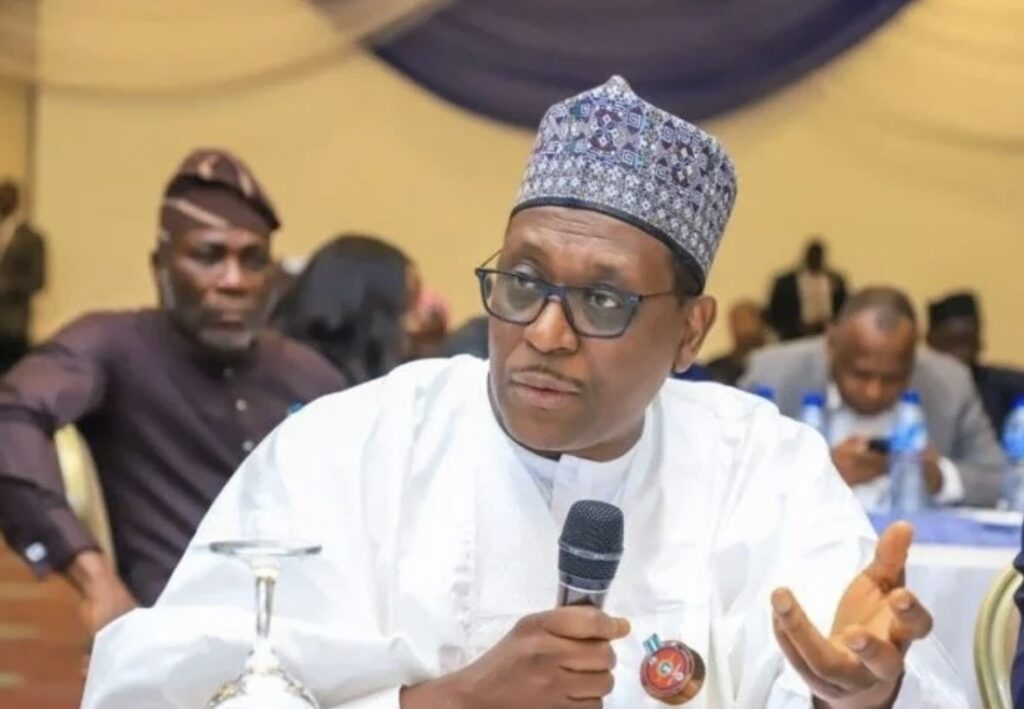


Okey Ikechukwu Blames Atiku Abubakar for PDP’s Current Troubles
Dr. Okey Ikechukwu, Executive Director of Development Specs Academy, has said that the current state of disarray within the Peoples Democratic Party (PDP) can be traced largely to the actions and influence of former Vice President Alhaji Atiku Abubakar.
Speaking during a recent appearance on The Morning Show aired on Channels Television, Ikechukwu made a pointed assessment of the PDP’s leadership crisis and decline in political relevance, particularly in the wake of the 2023 general elections.
“The PDP is where it is today, partly or largely because of Alhaji Atiku Abubakar,” Ikechukwu stated during the live interview. He argued that the internal divisions that have plagued the party, especially leading up to and following the 2023 elections, are deeply tied to Atiku’s approach to leadership and party politics.
Atiku, who has contested for Nigeria’s presidency six times and was the PDP’s presidential candidate in 2019 and 2023, has often been at the centre of internal power struggles within the party. His inability to reconcile major factions ahead of the last general election, particularly the G5 governors’ rebellion and the fallout from the party’s presidential primary, were seen by many analysts as significant factors in the PDP’s poor electoral performance.
According to Ikechukwu, Atiku’s continued dominance within the party has made it difficult for younger, reform-minded leaders to emerge and steer the PDP in a new direction. He described the former vice president’s political career as one that has often prioritized personal ambition over party unity.
“The political culture that has taken root in the PDP is one where decisions are heavily influenced by the ambitions of one man. That kind of politics is unsustainable,” Ikechukwu added.
His comments come at a time when the PDP is still reeling from its loss of federal power and struggling to present a coherent opposition to the ruling All Progressives Congress (APC). With the 2027 elections looming, there is growing pressure within the party for sweeping reforms and new leadership strategies.
While some within the PDP have remained loyal to Atiku, others are calling for a generational shift that would allow for a more inclusive and strategic repositioning of the party. Dr. Ikechukwu’s remarks have sparked renewed debate over the party’s future and whether it can reclaim national prominence under its current leadership configuration.
As of the time of filing this report, neither Alhaji Atiku Abubakar nor the PDP’s national leadership has responded publicly to Ikechukwu’s comments. However, political observers say the statement reflects a wider sentiment among stakeholders who believe that the party must undergo a significant transformation if it hopes to remain competitive in 2027.


