


Tinubu Takes Credit for Dangote Refinery’s Export Milestone, Calls Support a Strategic Decision
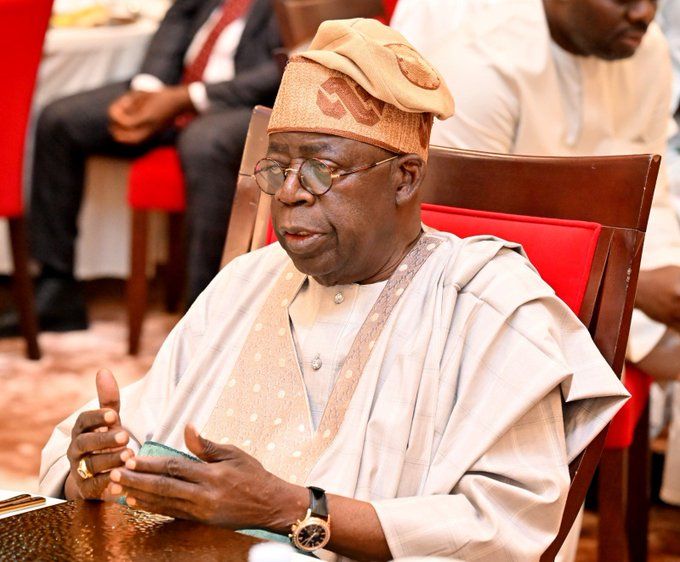
President Bola Tinubu has mounted a robust defence of his administration’s support for the Dangote Petroleum Refinery, describing it as a deliberate strategic decision driven by the imperative of energy security and insisting that bold private-sector risk-takers deserve the full weight of government backing.
The President made the remarks amid a broader conversation about Nigeria’s dramatic transformation from one of the world’s most paradoxical nations an oil-producing country that for decades spent billions on importing refined petroleum products into a net exporter of fuel.
“A risk-taker like the Dangote Refinery must be encouraged by the government in power,” Tinubu said, laying out the thinking behind his administration’s approach to the continent’s largest single-train refinery. “What I did was support him, give him free trade for his own licence, and support him in his efforts to source the crude that is necessary.
Today, he is the exporter of both the PMS, aviation fuel.” The statement represents one of the President’s most direct and personal accounts of the relationship between the Presidency and Aliko Dangote’s refining operation since the facility came online.
Tinubu grounded his argument in the urgency of Nigeria’s energy situation, particularly against the backdrop of mounting global instability. He pointed to the ongoing conflict in the Middle East, which has constrained crude supplies and sent shockwaves through energy markets worldwide, as precisely the kind of scenario that vindicates his administration’s decision to champion domestic refining.
“Today, with the crisis around the whole world, particularly around conflict, Nigeria wouldn’t be able to survive, over 200 million people, without a refinery,” he said. His remarks carry particular weight in the current global climate, where Iran’s closure of the Strait of Hormuz following the US-Israel conflict has exposed the acute vulnerability of nations dependent on imported refined fuel, while Nigeria shielded by the Dangote facility has largely avoided the disruptions battering other developing economies.
The numbers behind the President’s confidence are substantial. The Dangote Refinery, which hit full production capacity of 650,000 barrels per day in February 2026, now produces approximately 57 million litres of petrol daily well above the country’s domestic consumption of around 46 million litres.
The surplus has enabled Nigeria to begin exporting refined petroleum products to other African nations, with over 456,000 tonnes shipped across 12 cargo consignments to countries including Togo, Niger, Angola, Cameroon, Tanzania, Ghana, and Ivory Coast by March alone. Daily petroleum imports, which stood at over 42 million litres as recently as December 2025, had fallen to just three million litres by February 2026 a seismic shift in Nigeria’s downstream energy architecture.
Among the key policy interventions Tinubu’s administration made to enable this turnaround was the July 2024 approval of the naira-for-crude initiative, which allowed the NNPC to supply crude to the Dangote Refinery in local currency, removing the hard currency burden from domestic refining and stabilising the supply chain. The policy, which took effect on October 1, 2024, is widely credited with accelerating the refinery’s ramp-up to full capacity. Aliko Dangote himself has acknowledged the Tinubu administration’s economic reforms as pivotal in restoring investor confidence and creating the conditions that allowed the refinery to scale.
The President’s remarks nonetheless arrive at a moment of lingering friction in the sector. The Dangote Group has previously threatened to redirect all its output to export markets if the government continued to issue import licences for petroleum products a tension that underscores the unresolved competition between domestic refining interests and the import networks that flourished during decades of refinery inactivity. The Nigerian Midstream and Downstream Petroleum Regulatory Authority has repeatedly denied issuing fresh petrol import licences, but the accusations have persisted, reflecting deeper structural battles within the downstream industry. For now, however, the President appears determined to position the Dangote Refinery’s success as a signature achievement of his administration and a model for how government should treat bold private investment in strategic national infrastructure.