

Atiku Vows to Review NELFUND, Forgive Student Debts if Elected in 2027
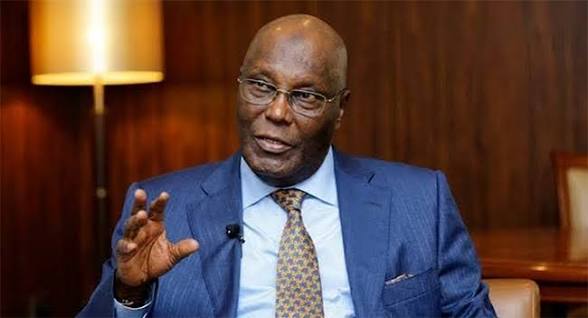
Presidential standard bearer of Africa Democratic Congress, Alhaji Atiku Abubakar has said he will review NELFUND and forgive qualifying student debts if elected president in 2027, dismissing President Bola Tinubu’s framing of the loan scheme as proof that education has become affordable.
The pledge, issued through Atiku’s Senior Special Assistant on Public Communication, Phrank Shaibu, directly answers Tinubu’s overnight post on X, where the president invoked NELFUND while attacking Atiku’s economic proposals on energy costs without naming him.
Shaibu called the president’s argument “dishonest” and said the government had driven up tuition before presenting loans as a rescue package.
“Celebrating NELFUND as proof that education has become affordable under your government is like setting school fees on fire and then boasting that you lent students a bucket of water,” Shaibu said. “What exactly is the wisdom in presiding over dramatic increases in school fees in some institutions, only to turn around and celebrate loans as the solution?”
He went further, labelling the arrangement “witchcraft economics” and questioning the logic of a government creating a financial burden with one hand while offering debt relief with the other.
“You make education more expensive, lend students money to survive the increase, and then demand applause for the rescue. That is not affordability. It is witchcraft economics: create the burden with one hand, offer debt with the other, and demand applause for the intervention,” Shaibu stated.
At the core of Atiku’s position is a distinction Shaibu pressed repeatedly: a loan is not a scholarship.
According to him, the proper measure of any education policy is whether ordinary families can keep their children in school without borrowing, not how many students have signed up for debt.
“His approach will reduce the underlying cost of education and, after review, provide forgiveness for qualifying student debts so that young Nigerians can graduate with hope rather than repayment burdens,” Shaibu said. “Education should open doors, not mortgage the future”.
NELFUND’s own figures, released a day after Atiku’s statement, show the scale of the programme his campaign wants to reshape. The fund has disbursed N355.87 billion since its portal launched on 24 May 2024, processing 1,659,853 applications as of 3 September 2026. Of that total, N192.89 billion went to 319 institutions as fees, while N162.98 billion reached students directly as upkeep allowances.
Those numbers are not in dispute. The disagreement is over what they mean.
Comrade Umar Farouk Lawal, the NELFUND board member representing students, fired back on Wednesday, challenging Atiku to produce evidence that Tinubu ordered any tuition hike.
“As the Board Member representing Students on the Board of the Nigerian Education Loan Fund (NELFUND), I wish to state categorically that at no time has Mr. President ordered the increment of tuition fees in any federal or state-owned tertiary institution in Nigeria,” Lawal said.
Lawal also pressed Atiku to specify what exactly he intends to review. Nigerians, he said, deserve to know which aspects of the existing framework the ADC candidate considers inadequate and how his alternative would improve on what students currently receive.
He further questioned how debt forgiveness would be funded without undermining the scheme’s sustainability for future beneficiaries — a question that cuts to the heart of the policy divide between the two camps.
Atiku’s team, meanwhile, rejected claims that his proposed energy intervention would threaten NELFUND funding, workers’ salaries, or the minimum wage. Shaibu accused the presidency of using students and workers as shields against a cost-of-living proposal that would lower fuel and transport costs.
“Reduce the cost of energy so that salaries buy more. Reduce transport costs so that less of a worker’s wage disappears merely getting to work,” he said. “You cannot make life painfully expensive, push students towards debt to survive the consequences, and then frighten those same students that cheaper fuel will take their loans away”.
Lawal did not address the energy subsidy dispute directly. His statement focused instead on the tuition allegation and the future of the loan programme, closing with a call for evidence-based debate.
“It will be wrong to discredit an initiative that has provided assistance to millions of Nigerian students without credible evidence to support such allegations,” he said.