
I’m a Beneficiary of Awolowo, Tinubu and Oyedepo’s Proven Graces
There is joy I cannot adequately fathom whenever I remember that I am a beneficiary of the proven graces of Chief Obafemi Awolowo, Asiwaju Bola Ahmed Tinubu and Bishop David Oyedepo, even without direct interpersonal contact.
Whenever I see an idea I have imagined, taught or shared with people eventually come to reality in policies, teachings or programmes, I pause to ponder: How do I explain this to the intellectual who believes that what cannot be explained within his framework is not reality?
Perhaps, before answering that question, we should answer a few scriptural questions.
How do we explain to the intellectual that Elisha received a double portion of Elijah’s spirit after witnessing his departure?
How do we explain the multiplication of five loaves and two fish to feed thousands?
How do we explain the account of a dead man coming back to life after his body came in contact with Elisha’s bones?
How do we explain Moses’ rod turning to snake swallowing the rods of the Egyptian magicians?
How do we explain the transfer of Moses’ leadership and spiritual authority to Joshua through the laying of hands?
How do we explain to a medical doctor that Holy Communion flushed out stage four cancer?
These are not invitations to abandon knowledge or intellectual inquisition. Rather, they remind us that human knowledge is not the boundary of all that exists.
In an age where people acquire information from AI, X, Instagram, Snapchat, TikTok and every other platform, there is sometimes a dangerous confidence that exposure to information is the same as possessing all knowledge.
It is not.
Only fools doubt proofs.
How, then, do I explain my own experience?
I can explain it through the encounters and the results that followed.
My encounter with Bishop Oyedepo happened at Shiloh 2010. It was there that I believe I received an impartation of the grace I had observed in him. I did not merely admire what I saw. I desired to partake of it.
My encounter with Asiwaju Tinubu happened in a vision in 2010. I saw him seated at a very high seat of the nation, while I was seated close to him. In the vision, he said, “had it been you go to school now, we should have looked for juicy appointment for you.” that was why i went back to the university because then i was doing well with my family building materials business. That encounter remains significant to me because it represents the point at which I believe a transfer of grace and an impartation of certain qualities associated with him took place.
My encounter with the sage, Chief Obafemi Awolowo, was different. It happened in 1987, on the night he died. An Igbo neighbour, upon hearing of his death, said, “Awolowo has returned.” Those words stayed with me. I have come to understand that encounter as part of the unusual story surrounding my connection with the sage and the qualities I believe I have inherited from his legacy.
These encounters happened before many of the things I now see as evidence of alignment.
For instance, there were things I had imagined, taught or shared with people that I later saw reflected in teachings, programmes or policies around me.
At one point, I observed that something important was missing from the church and desired that it should be introduced. Years later, I saw it incorporated into church services.
When we began speaking about Asiwaju Tinubu as an institution rather than merely an individual occupying a political position, I later encountered a teaching in which Bishop Oyedepo described how certain leaders transcend the status of great leaders and become institutions whose visions and values are carried by others.
That was not merely interesting to me. It was confirmation of a pattern I had already been observing.
Then came Shiloh 2025.
On that occasion, I was speaking about the need to raise financial giants, men with courage, men who can dare the impossible and men with the heart of lions, like David’s mighty men. Within minutes, Bishop Oyedepo was expressing essentially the same burden.
One may call it coincidence.
I call it alignment.
And alignment, when it repeatedly appears in vision, thought, teaching and action, deserves attention.
Even yesterday, after a fellowship programme, I told people at home that we must move from complaint to contribution. My point was simple: instead of constantly complaining about what is wrong, we should identify where we can contribute to the solution.
Then, within 24 hours, during today’s service, Bishop Oyedepo taught that wisdom is built on the Word of God and that those who build their wisdom upon it can become living wonders to themselves and their world.
He went further to recount the wisdom of Kenneth Hagin: that while some may build around gifts and followers, the enduring work is built on the Word.
Again, I saw the alignment.
This is why I do not merely admire Bishop Oyedepo. I study what he represents, and I watch to see whether the principles are being replicated in my own life.
The grace must produce something
There is another reason I believe proven grace is not merely a phrase.
When a man carries something, the evidence should eventually appear in what he produces.
I remember seeing accounts of how one of Bishop Oyedepo’s mentors demonstrated spiritual authority boldly. In my own little way, I have also found myself stepping forward with that same boldness, desiring to see people helped, healed and liberated.
The point is not to compare myself with such men.
Far from it.
The point is that what is genuinely received should eventually become visible in its fruit.
That brings me to Awolowo.
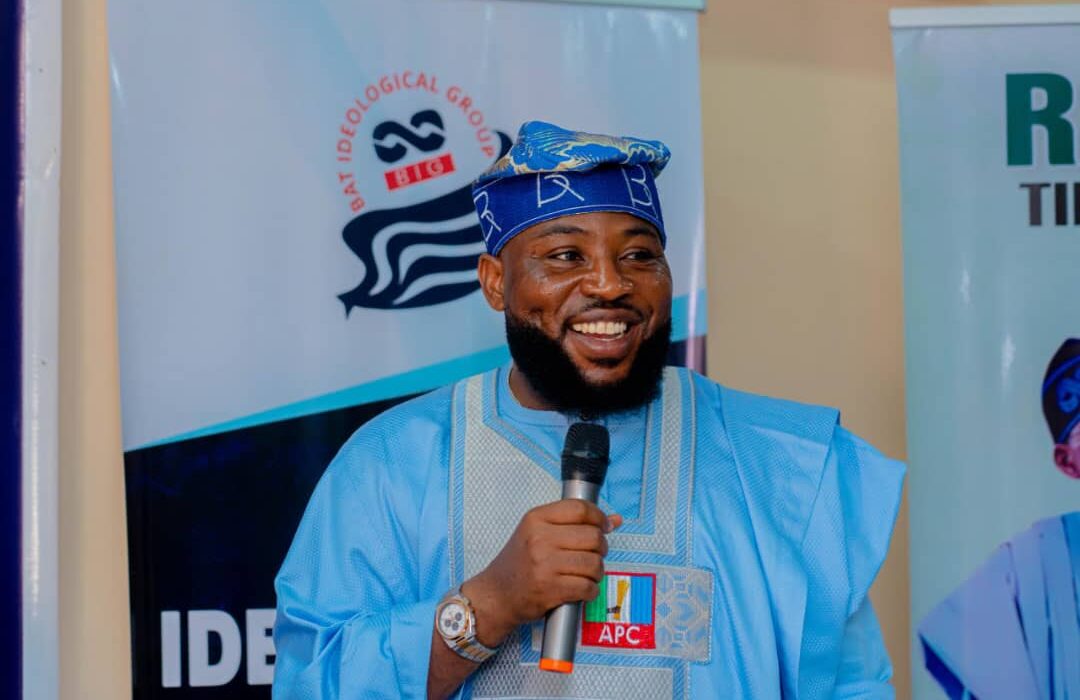
I did not initially study Chief Obafemi Awolowo deeply. My deeper encounter with his ideas came as I became more involved in the work of the BAT Ideological Group and began deliberately studying the lives and ideas of great Nigerian leaders.
Two things particularly struck me.
First, Awolowo was constantly thinking about solutions to Nigeria’s economic, political and social problems. His emphasis on education remains especially instructive.
His warning that neglecting education and empowerment of the children of the poor could eventually create serious consequences for society speaks powerfully to the challenges Nigeria faces today.
When young people are denied meaningful opportunities and education, society should not be surprised when frustration, crime, insecurity and instability emerge.
Awolowo was looking at the problem before it became the crisis we recognise today.
Second was his understanding of sustainability.
When the Action Group faced financial difficulties and accumulated debts, the response was not simply to sit around waiting for someone to rescue them. They explored productive ventures and ways of generating resources to sustain their political work.
That principle has influenced how we think at the BAT Ideological Group.
When people ask us how we sustain some of our activities, our answer is simple: create value, provide solutions and earn from the value created.
If you create a job, develop a solution or facilitate useful work, there is a legitimate basis for funding.
We do not want to build an organisation around begging for cheap money. We want to distinguish ourselves by identifying problems, developing solutions and creating sustainable value.
Tinubu: from support to problem-solving
Our engagement with Asiwaju Tinubu has followed a similar philosophy.
We asked ourselves: How do we distinguish ourselves from the countless support groups around?
The answer was to move beyond praise and mobilisation into policy monitoring, identifying developmental gaps and facilitating solutions.
For example, in 2024, we developed the idea of educating young Nigerians about the opportunities within Nigeria’s mining sector and encouraging them to see mining not merely as something controlled by government or foreign investors, but as an industry in which young Nigerians can participate as professionals, entrepreneurs and investors.
Years later, we heard the President speak about the importance of teaching young people about investment and the capital market.
Again, I saw alignment.
We also asked how grassroots political structures could become more useful to government.
Rather than merely gathering people to praise the President, we proposed that structures from the local government level down to wards and polling units should identify the specific projects their communities need and communicate those needs to the appropriate authorities.
The broader idea was simple: political structures should become channels through which citizens communicate real developmental needs.
When the Federal Government subsequently introduced initiatives around priority projects at the grassroots, I saw another point of alignment.
The same happened with our advocacy around the welfare of frontline officers and their families. We had already been pushing the idea that those who serve Nigeria on the frontline deserve better welfare and that their families should not be forgotten.
When government subsequently moved towards stronger welfare interventions, again, I saw a meeting of thought.
I do not claim that our ideas caused government decisions.
That would be intellectually dishonest.
But I cannot ignore repeated instances where our thinking, policy concerns, proposed solutions and the direction of public policy appear to converge.
And that is precisely why I call it proven grace.
The real test is what happens to others
Ultimately, this is not about claiming superiority.
It is about stewardship.
Awolowo is dead, but his ideas are still alive.
Tinubu is alive, and his political and developmental vision continues to evolve.
Oyedepo is alive, and his teachings continue to impact millions.
Whether a person is physically present or has gone ahead of us, his ideas, principles, values and spiritual investments can continue to influence generations.
That is the beauty of grace.
Grace is not given merely to make one feel special. It is given to make one useful.
The reason I am passionate about sharing these things is because I do not want to die with whatever God has deposited in me.
There is enough work to do.
The grace is abundant, and the work is enormous.
No single person can be everywhere, solve every problem or reach everyone.
Therefore, if something has been deposited in us, we must avail same to others.
Teach it.
Demonstrate it.
Transfer it.
Build people with it.
That is how a personal encounter becomes a generational legacy.
So, how do I explain to the intellectuals that I am a beneficiary of Awolowo, Tinubu and Oyedepo’s proven graces?
I may not be able to convince everyone.
And I do not need to.
The facts will speak for themselves.
If Awolowo’s commitment to education produces in me a passion for developing others, if Tinubu’s strategic approach produces in me the courage to identify problems and proffer solutions, and if Oyedepo’s faith and teaching produce in me the boldness, discipline and conviction to act, then perhaps the best evidence is not what I say about the grace.
It is what the grace produces through me.
That is my joy whenever I remember that I am a beneficiary.