

Ogun Police Warn Against Social Media Verdicts on Rape Allegations

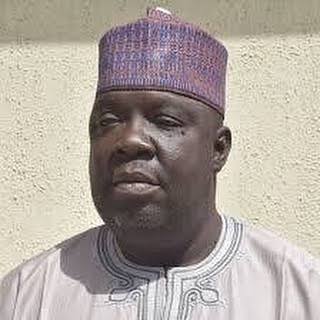
The Ogun State Police Public Relations Officer, Oluseyi Babaseyi, has cautioned the public against declaring suspects guilty of rape based on social media allegations before police investigations and court proceedings are concluded.
Babaseyi gave the warning in a statement issued on Tuesday while addressing the growing influence of social media on criminal cases and the treatment of male victims of sexual violence.
He said social media had increasingly become a platform where allegations were judged before investigators established the facts or the courts determined the cases.
According to him, rape is a serious allegation that requires careful handling, sensitivity and thorough investigation, stressing that an allegation should not be treated as an established conviction.
“The courtroom now has a competitor. It is called the internet. And sometimes, it is faster than justice. But speed is not the same as truth,” he said.
Babaseyi acknowledged that social media could help expose abuse, encourage victims to speak out, increase public awareness and compel institutions to respond to genuine complaints.
He, however, warned that social media posts, videos and screenshots should not automatically be regarded as evidence of guilt.
He said a viral post could remain unverified, while videos and screenshots might provide incomplete information or lack the context necessary to establish what actually occurred.
The police spokesman said investigators were responsible for establishing facts rather than determining guilt or innocence based on public opinion.
He listed key aspects of a proper investigation to include receiving complaints, protecting complainants, identifying and interviewing relevant individuals, preserving evidence, examining digital communications, reviewing available medical or forensic evidence, locating witnesses and assessing conflicting accounts.
He stressed that investigators must be prepared to follow evidence regardless of where it leads, saying the credibility of policing depends on pursuing the truth rather than satisfying public pressure.
Babaseyi also condemned the ridicule of men who report sexual violence, insisting that a victim’s gender should not determine whether their claims are taken seriously.
“A male victim is still a victim. His gender should not make his experience less believable,” he said.
The PPRO noted that sexual offences in Nigeria are governed by different legal frameworks, including the Criminal Code, Penal Code and the Violence Against Persons (Prohibition) Act, 2015, alongside relevant state laws.
He explained that while the Criminal Code and Penal Code traditionally contain provisions that frame rape around male perpetrators and female victims, the VAPP Act adopts broader language.
According to him, the Act’s references to “another person” and “the other person does not consent” provide for male victims under its broader framework, although the applicable law depends on the jurisdiction and legislation in force.
Babaseyi stressed that rape cases should be determined according to the relevant law and evidence rather than hashtags, celebrity influence or public sentiment.
He also clarified that consent should not be presumed simply because people know each other, are in a relationship or have previously engaged in consensual sexual activity.
“Knowing someone does not automatically mean consenting to sex,” he said.
“Being in a relationship does not automatically mean consenting to every sexual act. A previous consensual encounter does not create permanent consent.”
He urged Nigerians to take allegations seriously while allowing due process to determine whether an accused person is guilty.
“We can take an allegation seriously without declaring the accused guilty. That is not contradiction, that is justice,” Babaseyi said.
He called on the public to prioritise truth over personal loyalties and avoid taking sides based solely on their preferred narrative.
Babaseyi said justice required both compassion for victims and fairness to accused persons, urging the creation of an environment where victims could report sexual violence without being silenced or mocked, while accused persons could defend themselves without being convicted by the public.
He added that the police should be allowed to conduct investigations impartially rather than being pressured to choose between compassion and fairness.
“Justice is served when we create enough room for the truth to survive the noise,” he said.