


US Airstrikes Target IRGC Command Sites Prompting Iranian Responses
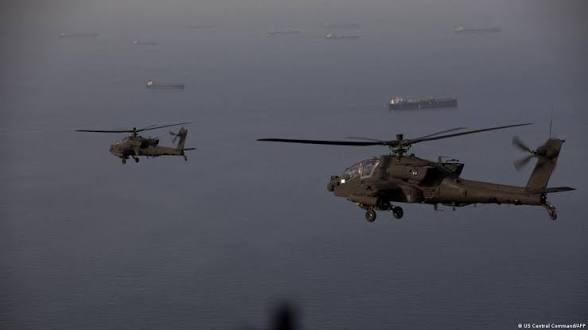
In a major escalation, United States military forces have launched a second consecutive night of heavy precision airstrikes inside Iran, decimating critical Islamic Revolutionary Guard Corps (IRGC) command and control centers, radar networks, and air defense systems.
The high-stakes operation, described by the Pentagon as a self-defense measure, has pushed the region to the brink of full-scale war and left a fragile, two-month-old ceasefire in absolute tatters.
The strikes, executed by a formidable combination of U.S. Air Force, Navy, and Marine Corps assets, utilized precision-guided munitions and at least 49 Tomahawk cruise missiles launched from naval ships and submarines.
High-value targets were obliterated across southern Iran, including primary IRGC command nodes and surveillance installations in Bandar Abbas, Sirik, Minab, and Qeshm Island. Explorations also rattled the capital city of Tehran as local air defenses tried and failed to intercept the incoming American barrage.
According to U.S. officials, the severe military response was ordered directly by President Donald Trump following a string of escalatory actions by Tehran, most notably the downing of a U.S. Army AH-64 Apache helicopter by an Iranian drone over the Gulf of Oman. Speaking from U.S. Central Command (CENTCOM) headquarters in Florida, Secretary of Defense Pete Hegseth took a hard line on the operations, framing the massive structural destruction as a blunt diplomatic lever. “If we need to negotiate with bombs, we’ll negotiate with bombs,” Hegseth told reporters, signaling that Washington intends to completely undermine Iran’s capability to threaten regional stability.
Tehran responded to the destruction of its command infrastructure almost immediately, launching a coordinated, multi-front wave of solid-fuel ballistic missiles and attack drones targeting American and allied bases across the Middle East. The IRGC claimed it successfully targeted 18 to 21 “important assets,” explicitly stating it fired a volley of 12 ballistic missiles at the Al-Azraq Air Base in Jordan, aiming to destroy a U.S. command facility and F-35 fighter hangars. While the Jordanian military confirmed intercepting multiple missiles, debris fell without causing casualties. Simmering parallel attacks also targeted the U.S. Fifth Fleet headquarters in Bahrain and the Ali Al-Salem Air Base in Kuwait, forcing multiple nations to temporarily freeze their airspaces.
Adding to the chaos, the maritime arena has descended into severe volatility. Following the strikes, Iran’s military announced the total closure of the strategic Strait of Hormuz to all commercial shipping and international oil tankers, threatening to destroy any vessel attempting transit. While CENTCOM quickly denied that the vital shipping lane was blocked, asserting that commercial vessels continue to pass under heavy guard, global energy markets reacted instantly.
International benchmark crude oil surged past $93 a barrel, marking a sharp 25% spike since the wider hostilities broke out.
With both nations trading direct kinetic blows and regional air defenses on maximum alert, the likelihood of a diplomatic resolution appears increasingly slim. Analysts warn that the decimation of the IRGC’s command structure has stripped away any remaining operational buffers, leaving the Middle East in its most perilous security crisis in decades.