



BAT-IG Began Mobilising Support for Tinubu in 2023, Says Atoyebi
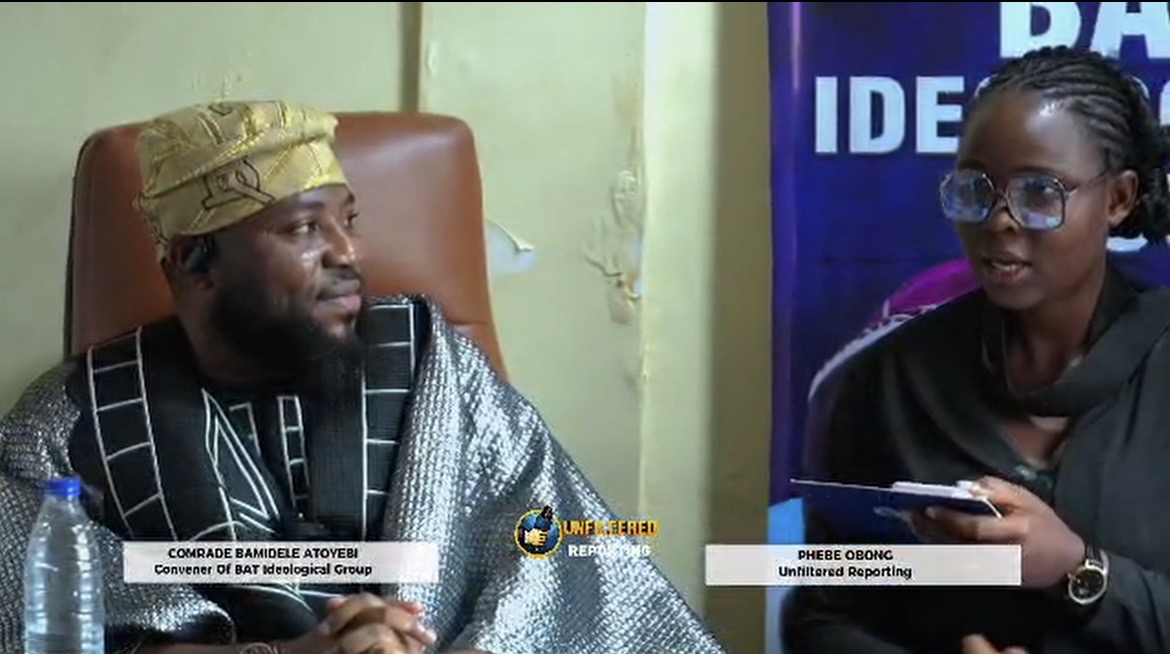
The Convenor of the Bola Ahmed Tinubu Ideological Group (BAT-IG), Comrade Bamidele Atoyebi, says the group began mobilising support for President Bola Tinubu in 2023, years before the current build-up to the 2027 general elections.
Atoyebi said the group had produced more than 2,000 articles and advertisements, alongside hundreds of jingles across major states, to communicate government policies and promote the President’s administration.
He disclosed this during an interview with Unfiltered Reporting journalist, Phebe Obong, where he outlined the group’s political strategy, policy advocacy initiatives and plans to convert its grassroots engagements into electoral support for Tinubu.
According to him, BAT-IG’s approach goes beyond conventional political mobilisation, as the group seeks to build support through policy advocacy, community interventions and public engagement.
“Our task now is to translate the impact of our grassroots interventions and advocacy into votes,” he said.
Atoyebi explained that the organisation’s activities included writing policy proposals to government agencies, following up on implementation and engaging communities where it had advocated for infrastructure and other public interventions.
He cited Rigasa in Kaduna State, where he said the group facilitated an electricity intervention after residents had endured 15 years without power. He also listed locations in Ogun, Edo and Kano states, as well as Lekki Phase One, Somolu, Ikeja, Ilupeju and Nnewi, among areas where the organisation had undertaken advocacy or project assessments.
The BAT-IG convenor said the group intended to intensify its engagement with beneficiaries of government programmes and residents of communities where it had intervened ahead of the 2027 elections.
He disclosed that the organisation’s Policy Enthusiasts initiative engages beneficiaries of the Nigerian Education Loan Fund (NELFUND) and Technical and Vocational Education and Training (TVET) programmes, asking them to produce short videos explaining how the initiatives have affected their lives.
According to him, participating beneficiaries receive a monthly stipend of ₦20,000.
Atoyebi also claimed that the group had engaged about 100,000 NELFUND beneficiaries in Yobe State, adding that they had pledged their support for Tinubu. The figure and the reported pledge could not be independently verified from the interview.
He said the organisation planned further engagements in Kwara and Kaduna states, including a visit to Rigasa, where it intended to remind residents of its electricity advocacy efforts and seek their support for the President.
Explaining the philosophy behind the group’s activities, Atoyebi said BAT-IG was founded on the principles of good governance, democracy, fiscal federalism, democratic socialism, creativity and social welfare.
He argued that political organisations should not limit their activities to election periods but should contribute ideas and pursue interventions that address the needs of citizens.
“We believe that creating value, creative ideas and impact are what we are coming with,” he said.
On accountability, Atoyebi, who also convenes Accountability and Policy Monitoring PR, said the group submits proposals to relevant government agencies when it identifies policy gaps and follows up to encourage implementation.
He stressed the importance of monitoring projects beyond the announcement stage, saying advocacy groups should ensure that government commitments translate into tangible benefits for communities.
“The Economic and Financial Crimes Commission often says, ‘Follow the money.’ My own emphasis is this: follow the project until it is completed,” he said.
Reflecting on his involvement in advocacy, Atoyebi traced his interest in public affairs to his secondary school days, when he led classmates to the Federal Government Secretariat to protest their exclusion from school over unpaid fees, which he attributed to salary arrears owed to their parents.
He said the experience shaped his belief that advocacy should extend beyond protests to developing policy solutions that prevent problems from arising.
Atoyebi also defended Tinubu’s re-election bid, citing what he described as improvements in workers’ welfare, support for students, interventions in the education sector and measures aimed at improving the welfare of military personnel.
He maintained that the administration’s policies and interventions provided a strong basis for the group’s mobilisation efforts, expressing confidence that its sustained grassroots engagement would strengthen support for the President ahead of the 2027 elections.