
Osun Poll Signals APC Vulnerability but Wabara Warns Against Complacency Ahead of 2027
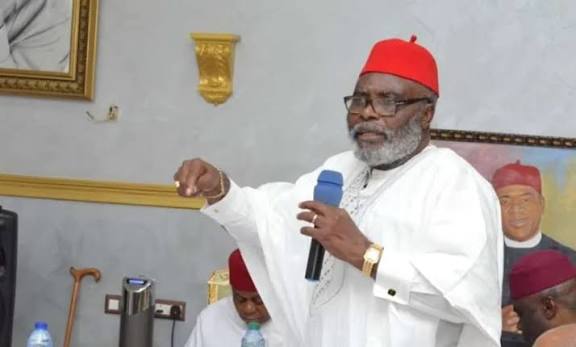
Former Senate President and Chairman of the Peoples Democratic Party Board of Trustees, Senator Adolphus Wabara, has congratulated Osun State Governor Ademola Adeleke on his re-election victory, describing the outcome as proof that federal might and political intimidation cannot permanently override the will of the people.
Wabara said the result showed that the ruling All Progressives Congress could indeed be defeated, but he cautioned Nigerians not to read too much into the win as a guarantee of opposition success at the national level in 2027.
Speaking from Umuahia, Wabara said the Osun outcome demonstrated that political mobilisation and the weight of federal power could not permanently suppress a determined electorate.
He noted that although the result was encouraging for those hoping to see the APC unseated, it should not lull Nigerians into believing the ruling party had already been defeated ahead of the next general election. According to him, the APC remains a formidable political force that should not be underestimated, and Nigerians must stay alert, monitor every political development closely and avoid being psychologically disarmed by a single state outcome.
Wabara suggested that the Osun result could be interpreted in two ways. It might genuinely reflect a weakening grip by the APC on the electorate, or it could be part of a calculated political strategy designed to shape perceptions ahead of 2027.
Either way, he insisted that the opposition cannot afford to take chances and must prepare with the seriousness of a party facing its toughest contest yet.
His comments come as Adeleke’s victory continues to generate debate across Nigeria’s political class about what it means for the 2027 presidential race. The Allied Peoples Movement has gone further, describing the outcome as a sign that President Bola Tinubu could lose his re-election bid, pointing to what it called growing public dissatisfaction with the APC even in the president’s home state.
Analysts, however, have urged caution against treating a single governorship election as a national referendum, noting that local issues such as infrastructure, jobs and the performance of the state government often weigh more heavily on voters than calculations being made in Abuja.
Osun’s election has been widely described as the last major off-cycle governorship contest before the 2027 general election, making its outcome a closely watched indicator of political mood rather than a definitive verdict on the presidential race.