


Meta Commits C$13 Billion to Expand AI Infrastructure in Canada
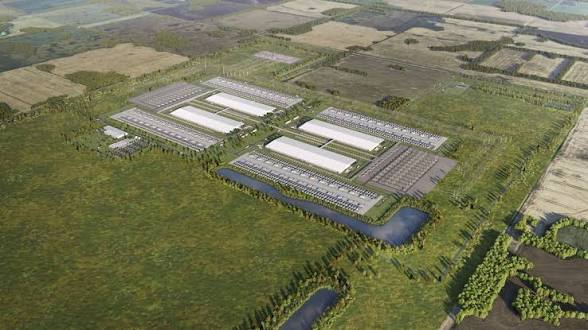
Meta has announced plans to establish its first data centre in Canada, unveiling a C$13 billion (about $9.17 billion) investment in a large-scale artificial intelligence facility in Alberta as part of its expanding global AI infrastructure.
The company disclosed on Wednesday that the one-gigawatt facility, which can be expanded to 1.8 gigawatts, will be constructed in Sturgeon County, Alberta.
The project will become Meta’s 33rd data centre globally and its first in Canada.
The announcement was made in Calgary by Meta executives alongside Alberta Premier Danielle Smith and senior provincial officials, who have been working to attract major technology investments to diversify the province’s economy beyond the energy sector.
Meta has intensified spending on AI infrastructure in recent months, committing substantial investments to increase computing capacity needed to support its growing artificial intelligence operations.
Alberta’s Minister of Technology and Innovation, Nate Glubish, described the development as a milestone for the province, expressing confidence that it would attract more large-scale data centre investments in the future.
Provincial officials said Alberta’s abundant natural gas resources, relatively low electricity costs and cooler climate make it an attractive destination for energy-intensive computing facilities. They added that several other large data centre proposals are already under consideration.
According to Meta, the facility is expected to consume an amount of electricity comparable to that used by about 800,000 homes. The company said it will finance the additional electricity generation and grid infrastructure required to support the project.
Meta’s Vice President for Data Centre Development, Gary Demasi, said the company plans to offset its power consumption through investments in clean and renewable energy initiatives. He added that the facility will operate with a closed-loop liquid cooling system designed to reduce water use, noting that its overall water consumption will be lower than that of a typical golf course.
To meet the facility’s long-term energy needs, Meta has signed a tolling agreement with Alberta-based Pembina Pipeline, which recently approved the Greenlight Electricity Centre, a natural gas-fired power plant expected to begin operations in Sturgeon County in late 2030.
Pending completion of that plant, Capital Power will provide an initial 250 megawatts of electricity from its existing fleet of natural gas-fired generating stations.
Pembina estimates the project will require roughly 150 million cubic feet of natural gas each day, creating additional demand for natural gas producers in Western Canada.
The investment comes shortly after the Canadian government introduced a national artificial intelligence strategy aimed at encouraging the expansion of data centre infrastructure by leveraging the country’s extensive clean electricity network.
However, environmental groups have raised concerns about the project, noting that Alberta generates about 60 per cent of its electricity from natural gas, making its power grid more carbon-intensive than many other parts of Canada.
Greenpeace Canada criticised the development, urging governments to strengthen environmental and human rights safeguards before approving additional large-scale AI infrastructure projects.