
Lagos TUC Rejects Rival Claims Over Leadership, Affirms Emmanuel’s Mandate
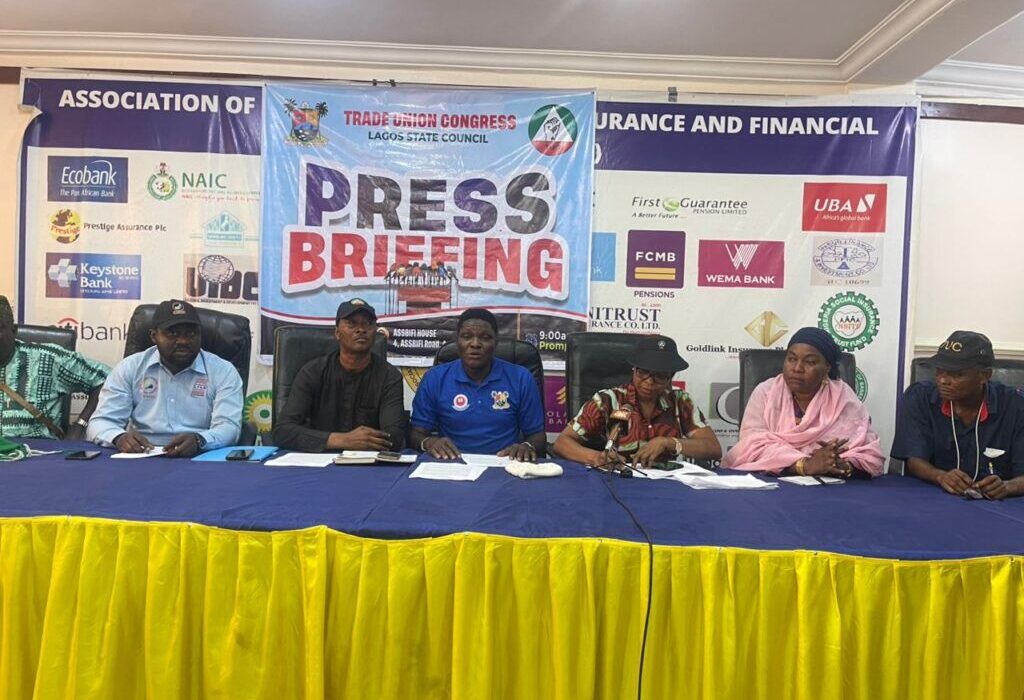
The Lagos State Council of the Trade Union Congress of Nigeria (TUC) has formally dismissed claims of a rival leadership, declaring that its recently elected executive remains the sole legitimate authority representing workers in the state.
At a press conference held in Lagos on Friday, April 24, 2026, the council addressed the brewing leadership crisis that followed a disputed state delegates’ conference.
The council reaffirmed the election of Comrade Aladetan Emmanuel (also known as Abiodun Aladetan) as Chairman, maintaining that the process was conducted in strict adherence to the union’s constitution and democratic guidelines.
The Council’s Public Relations Officer, Kabiawu Gbolahan, explained that the crisis stemmed from disagreements during the election process, specifically regarding the “alteration of approved delegate lists” on the day of the exercise.
Gbolahan stated that while the process was initially disrupted, the authentic delegates’ conference held at Yaba was the only exercise that followed proper accreditation, voting, and result declaration in the presence of security agencies and government observers.
“The introduction or alteration of delegate lists on the day of an election is inconsistent with any democratic principle we recognize,” Gbolahan stated. He further noted that the council views such actions as a breach of established electoral guidelines, which led some factions to conduct parallel, unauthorized exercises in different locations.
In a communiqué issued after a State Executive Council meeting, the TUC urged the Lagos State Government, private employers, and civil society organizations to disregard any other group claiming leadership. The council emphasized that the Emmanuel-led executive holds the “authentic and lawful” mandate of the affiliate unions.
The leadership reaffirmed its commitment to industrial harmony and the protection of workers’ rights, calling on all members to remain united and focused on the union’s core objectives despite the internal friction.
This development comes as the union continues to engage with stakeholders on critical issues, including pension compliance and industrial relations within the state.