


Tinubu Committed to Resolving Generational Grievances, Says Jimoh Ibrahim at UN
Nigeria’s Permanent Representative to the United Nations, Jimoh Ibrahim, has said President Bola Ahmed Tinubu is determined to address long-standing grievances believed to be driving insecurity in Nigeria and across the West African region.
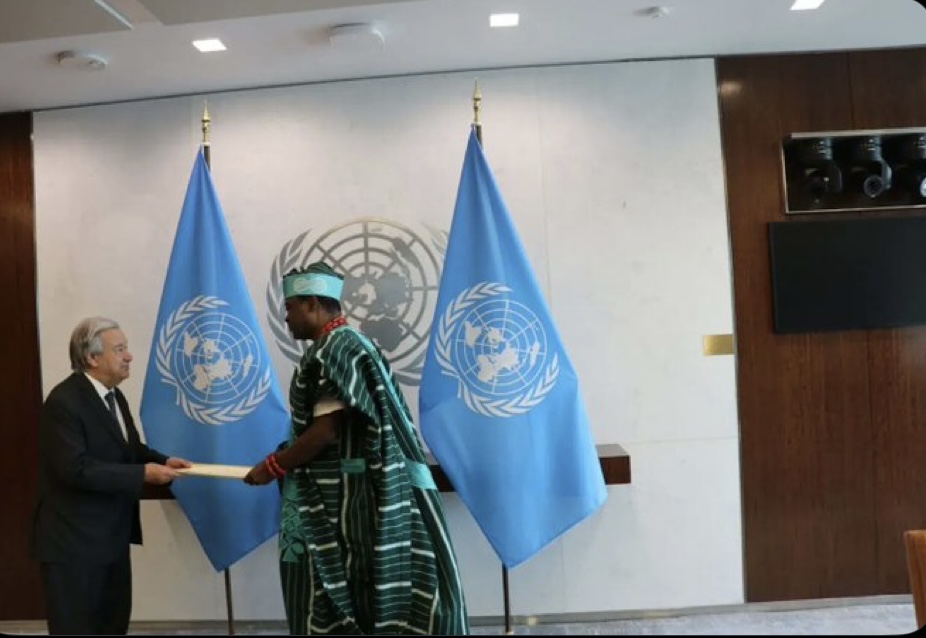
Ibrahim made this known shortly after presenting his letter of credence to the Secretary-General of the United Nations, António Guterres, at the UN headquarters in New York.
According to the envoy, many of Nigeria’s persistent security challenges—including insurgency, banditry, and communal conflicts—are rooted in unresolved historical and socio-economic tensions that have accumulated over generations.
He noted that the Tinubu administration is focused on addressing these underlying issues as part of a broader strategy to ensure lasting peace and national stability.
Mr. President is committed to resolving generational grievances that have fueled insecurity, not only in Nigeria but also in the wider region,” Ibrahim said, adding that sustainable peace can only be achieved through deliberate efforts to correct long-standing injustices and inequalities.
The ambassador further highlighted Nigeria’s intention to strengthen its diplomatic engagement on the global stage, using its position at the United Nations to foster international cooperation in tackling cross-border security threats, particularly within the Sahel region.
Ibrahim also described his appointment as a signal of Nigeria’s renewed commitment to active participation in global diplomacy, noting that the country is ready to collaborate with international partners to address pressing challenges, including terrorism, climate change, and economic instability.
He reiterated Nigeria’s support for reforms within the United Nations system, especially calls for increased African representation on the UN Security Council to reflect current global realities.
Observers say the emphasis on “generational grievances” reflects a shift toward a more holistic approach to security—one that goes beyond military responses to include political, economic, and social solutions aimed at addressing the root causes of conflict.