



UK Immigration Crackdown Drives Undocumented Migrants into Hiding, Raising Humanitarian Concerns
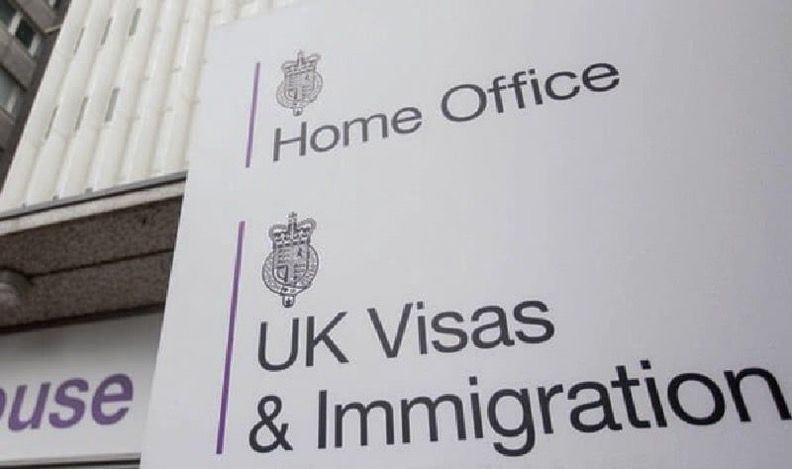
A tightening of immigration enforcement in the United Kingdom has created growing anxiety among undocumented migrants, with some resorting to desperate measures to avoid arrest and deportation.
In 2025, the British government introduced a sweeping immigration strategy known as the “Plan for Change.” The policy, aimed at reducing net migration and strengthening border controls, led to a series of deportations that unsettled migrant communities across the country.
As part of the enforcement drive, the Home Office confirmed that dozens of individuals without legal status were returned to their home countries. In one operation, 43 people were deported on a charter flight to Nigeria and Ghana.
“Those removed had no right to be in the UK, including 15 failed asylum seekers and 11 foreign national offenders who had served their sentences,” the Home Office said.
Officials have indicated that further restrictions will follow, emphasizing that immigration rules will be reshaped to prioritize skills-based entry and lawful residence.
The heightened climate of fear has had visible social consequences. A video recently circulated online showed an African migrant sleeping inside a waste bin on a snow-covered street in the UK. In the footage, a passerby encouraged him to seek refuge in a government-provided shelter.
The incident sparked widespread reactions among Nigerians living in Britain. Several told Diaspora Tales that many undocumented migrants now avoid formal accommodation out of fear that contact with authorities could lead to detention.
Fear, Homelessness, and Survival
Speaking from Dunstable County, community member Mrs. Gisela Esapa explained that homelessness among migrants is often linked to unemployment, lack of legal documents, and, in some cases, criminal activity.
She stressed that the problem is not limited to Africans alone.
“When I was living in Luton, I saw many people, including Nigerians and Brits, who slept on the streets because they lacked documents such as a Biometric Residence Permit,” Esapa said.
“Many migrants lived in Luton, and I saw how they behaved. Some people were afraid to even go to facilities provided by the UK government, thinking they might be arrested, detained, and deported.”
Another Nigerian resident in London, who requested anonymity, confirmed that many undocumented individuals now spend nights in train stations and other public spaces.
The source added that illegal migrants would do anything including sleeping on the streets to avoid deportation.
Homelessness Not a Racial Issue
However, other members of the Nigerian diaspora caution against portraying homelessness as a problem tied to nationality or skin colour.
Maxwell Adeyemi, a Nigerian based in Bradford, said economic hardship and immigration status are the primary drivers of the crisis.
“I am not aware if Nigerians are going through homelessness at the moment, but most homeless people are not even black but Asians and whites from Eastern Europe,” Adeyemi clarified.
He noted that unemployment, lack of proper documentation, and involvement in crime are common factors that push people of all backgrounds onto the streets.
Official Response from Nigeria
The Nigerians in Diaspora Commission (NIDCOM) has also addressed the situation, maintaining that many affected migrants are dealing with the consequences of violating immigration laws.
According to the commission, overstaying visas remains one of the main reasons Nigerians fall into difficulty abroad.
“They are only facing the consequences of their crimes which is usually overstaying of their visas,” said Abdur-Rahman Balogun, Director of Media, Public Relations and Protocol at NIDCOM.
He added that the agency had not received verified reports of Nigerians sleeping rough in the UK in recent times.
“We only receive deportees when the governments hosting Nigerians involve us in the deportation of the illegal migrants,” he added.
Support Available for Legal Residents
While undocumented migrants face the risk of removal, lawful residents who experience homelessness are still eligible for assistance in the UK.
Diaspora Tales reports that the UK government is only removing migrants without legal status, which guarantees that even lawful homeless people can receive help.
Local councils provide temporary accommodation such as hostels and shelters, ensuring that vulnerable individuals are not left without options.
“There are facilities for people who are homeless to sleep and while some provide food. But the most important thing is that those who are lawful residents in the UK always get help,” Esapa added.
As Britain continues to enforce stricter immigration measures, advocates warn that the human impact on migrant communities will remain a pressing social challenge requiring balanced and compassionate solutions.