
Sophisticated Cardoso
By Bamidele Atoyebi
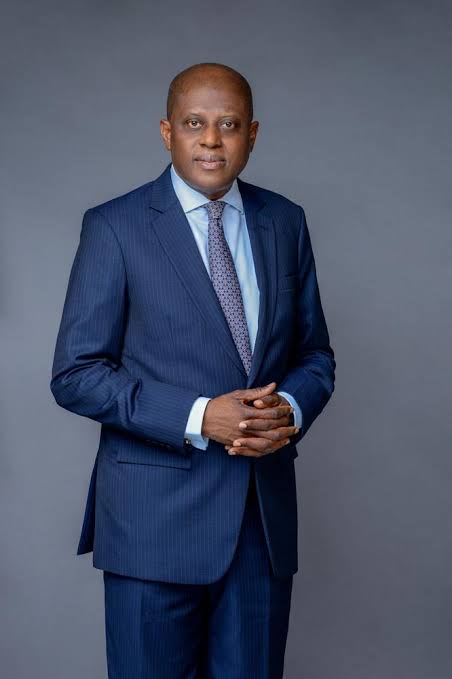
In the sweeping landscape of Nigerian history, few moments have demanded as much courage and technical precision as the current era of economic reconstruction. At the center of this transformation is a powerful synergy between President Bola Ahmed Tinubu’s bold political will and the disciplined monetary guardianship of Central Bank Governor, Olayemi Cardoso. Together, they are rewriting the nation’s financial story, moving away from years of uncertainty toward a future anchored on transparency and institutional integrity.
When President Tinubu assumed office, he inherited a prostrate economy burdened by structural distortions and a multi-layered exchange rate system that stifled growth. His response was immediate and unapologetic: a series of “bold and irreversible” reforms designed to fix the foundation of the house rather than merely painting the walls. This vision required a partner at the Central Bank who understood that the path to prosperity begins with returning to the fundamentals of central banking.
Governor Olayemi Cardoso stepped into the apex bank with a “back-to-basics” philosophy that has since become the hallmark of his tenure. By refocusing the CBN on its core mandate of price stability and monetary control, he effectively ended the era of quasi-fiscal interventions that had previously blurred the lines between banking and politics. This shift has restored the independence of the institution, ensuring that every policy decision is driven by data rather than sentiment.
One of the most visible triumphs of this partnership is the massive recapitalization of the banking sector, the most ambitious in nearly two decades. As at early 2026, the banking industry has successfully raised over N4.05 trillion in new capital, a feat that seemed impossible just a year ago. This influx of liquidity is not just about numbers; it is about creating “mega-banks” capable of financing the President’s dream of a $1 trillion economy.
The results of these reforms are now reflecting in the nation’s external buffers, which have reached an eight-year high. Nigeria’s external reserves climbed past the $34.80 billion mark in the first quarter of 2026, with financial experts projecting a rise to $51 billion by the end of the year. This growing war chest provides the necessary shield against global shocks and sends a clear signal to international investors that Nigeria is open for business.
Stability in the foreign exchange market has been another critical milestone, achieved through a combination of market-driven policies and enhanced transparency. By eliminating the “opaque” layers of the past, the CBN has allowed the Naira to find its true value, reducing the volatility that once haunted manufacturers and small business owners. This newfound stability is the oxygen that the Nigerian private sector needs to breathe and expand once again.
Beyond the high-level finance, the administration is ensuring that these macro gains translate into grassroots prosperity. A source from within reveal that governors don’t take loan from commercial banks to finance project anymore and run away when banks try to persuade them to take it. Through the Renewed Hope Ward Development Plan, the government is targeting 10 million Nigerians for direct economic inclusion. This initiative ensures that the wealth generated at the top permeates through the veins of the nation, reaching the artisans, farmers, and entrepreneurs who form the backbone of the Nigerian spirit.
The digital revolution has also played a pivotal role in this feature of national growth, with the CBN championing a “digital-first” approach to accountability. By leveraging technology to track revenue remittances and monitor banking transactions, the administration has significantly plugged leakages. This commitment to a “paperless and transparent” system is fostering a culture of trust between the government and the governed.
President Tinubu’s support for CBN autonomy has been a masterclass in modern governance, allowing Governor Cardoso to make the “hard calls” necessary for long-term health. Whether it is adjusting interest rates to combat inflation or enforcing strict compliance among financial institutions, the President has stood firm behind the bank. This unity of purpose between the fiscal and monetary authorities is a rarity that is paying massive dividends.
As 2026 unfolds, the narrative of Nigeria is shifting from one of “potential” to one of “performance.” With inflation on a steady downward trend and GDP growth projected to exceed 4%, the skepticism of the past is being replaced by a cautious but growing optimism. The “decisive and clear thinking” praised by international observers is becoming evident in the improved credit ratings and the return of foreign direct investment.
In the final analysis, the story of the Tinubu-Cardoso era is one of resilience and the triumph of institutional strength over individual interest. They have proven that with the right leadership, a nation can navigate the storm and emerge with its head held high. Nigeria is no longer just a participant in the global economy; it is emerging as a leader, a creditor nation in the making, and a beacon of economic hope for the entire African continent.
Bamidele Atoyebi is the Convener of BAT Ideological Group, National Coordinator of Accountability and Policy Monitoring and a publisher at Unfiltered and Mining Reporting