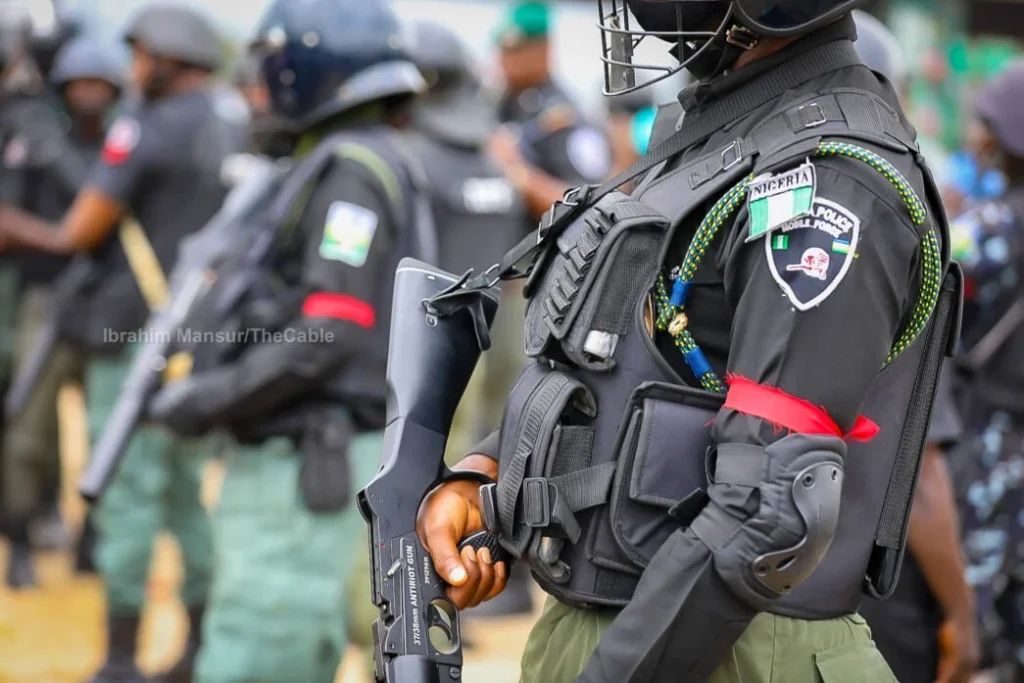
Who Gave Guns to Miyetti Allah from NSA Ribadu’s Office?
Who Gave Guns to Miyetti Allah from NSA Ribadu’s Office?
Nigeria did not arrive at this current controversy by accident; it was triggered by events widely reported across the media. Armed men were intercepted in Kwara State and subsequently identified by government sources as members of Miyetti Allah.
These individuals were reportedly operating within a security arrangement involving federal coordination from the Office of the National Security Adviser (ONSA). From that moment, public suspicion became inevitable. In a country currently bleeding from banditry and communal violence, Nigerians do not need to use their imaginations to fear the consequences of such revelations.
Miyetti Allah is a Fulani socio-cultural group, much like Afenifere in the South-West or Ohanaeze Ndigbo in the South-East.
However, a stark contrast exists: never in the history of Nigeria has Afenifere or Ohanaeze been armed or involved in an arms race to demand resource control or true federalism.
These reports were not fringe gossip; mainstream media outlets quoted state officials confirming the identity of the armed men, even as federal authorities hurried to deny that the ONSA supplied weapons to any socio-cultural group. While those denials exist, the facts presented remain: Miyetti Allah members were armed, and their presence was linked directly or indirectly to a security framework connected to the NSA’s office.
The core problem is not merely whether NSA Nuhu Ribadu personally authorized the distribution of firearms. The deeper issue is that the Nigerian state once again appears unable or unwilling to draw a hard line between formal security forces and politically sensitive ethnic associations. When a group as controversial as Miyetti Allah is found carrying weapons under any form of official cover, Nigerians are entitled to ask uncomfortable questions. These concerns do not simply disappear because of a press statement.
For years, Miyetti Allah has featured prominently in national debates regarding herder-farmer clashes and ethnic tensions. It is, therefore, reckless for its members to surface in armed operations without immediate, clear, and convincing explanations.
The optics are disastrous; to communities ravaged by violence, this looks less like security coordination and more like **selective empowerment**. Media reports indicate a state of confusion among authorities, with state officials confirming identities while federal officials deny authorization. There remains no detailed public account of who recruited these men, who armed them, or under what law they were deployed.
In the absence of clarity, the public fills the gaps with suspicion—and history gives them ample reason to do so. Ribadu’s defenders insist there is no proof he armed the group, which may be true. However, the situation has been handled with a level of opacity that fuels public distrust. National security cannot be managed like political damage control. When lives are at stake, a simple “we did not do it” is insufficient; Nigerians deserve to know what was done, by whom, and why.
This controversy is dangerous because of what it suggests: a state that blurs the line between official force and identity-based groups invites chaos.
Nigeria has seen how informal security arrangements can mutate into monsters that the state can no longer control. Pretending this fear is irrational is both dishonest and insulting. Between the reports of armed members and the NSA’s denials lies a **credibility gap** that only transparency can fill. Until then, the story will persist because, in Nigeria, silence and half-answers are often interpreted as confessions.
This is not a witch-hunt against Ribadu. It is about confronting a pattern in which the Nigerian state underestimates the power of perception, ignores historical wounds, and acts surprised when public trust collapses.
National security demands more than denials; it demands openness, restraint, and the wisdom to know that in a fragile nation, some lines should never even appear to be crossed.