



Solar Power Attains 20% of Nigeria’s Power Mix, Inches Towards 50% Share as Local Manufacturing Peaks
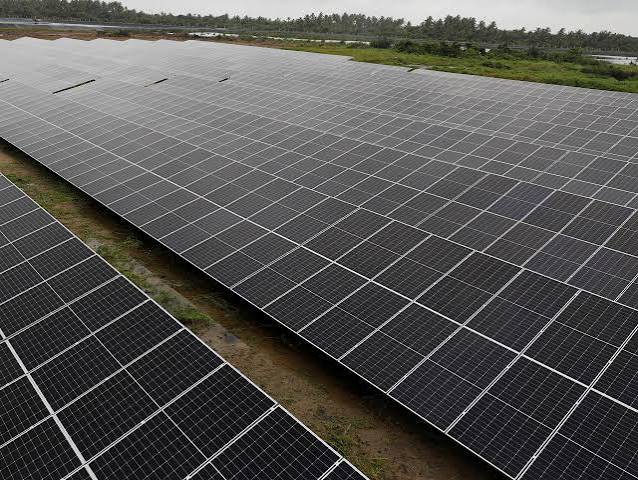
Solar power generation has scaled up significantly, now accounting for 20% of Nigeria’s total electricity supply, and is on track to hit 50% by 2029 if current deployment rates and private-sector partnerships sustain momentum.
The Managing Director of the Rural Electrification Agency (REA), Abba Abubakar Aliyu, disclosed this during a panel session titled “Re-Engineering Africa’s Power Market – Driving Reliable Energy Systems” at the 25th Nigerian Oil and Gas (NOG) Energy Week in Abuja. Aliyu emphasized that the rapid rise in clean energy is shifting Nigeria from a mere consumer of renewable equipment to a regional supplier, with a massive pipeline of 3.7 gigawatts of photovoltaic (PV) manufacturing capacity currently under development. Notably, factories along the Lagos–Sagamu industrial corridor are already exporting locally manufactured solar panels to neighboring West African countries.
However, industry experts at the panel underscored that conventional gas-fired thermal plants remain vital to managing the intermittency of solar energy and maintaining grid stability. Vincent Ozoude, Managing Director and CEO of Transafam Power Limited, warned that without a baseline supported by gas-fired capacity, renewable gains could easily be compromised.
To ensure a resilient energy future, the panel advocated for a dual-track strategy: aggressively expanding solar capacity and local manufacturing while simultaneously upgrading gas infrastructure, expanding high-voltage transmission lines, and integrating digitalized smart-grid systems for real-time power dispatch.