Today in History: Two Bomb Explosions That Shook Lagos and Changed Nigeria Forever on Sunday, July 2, 1967
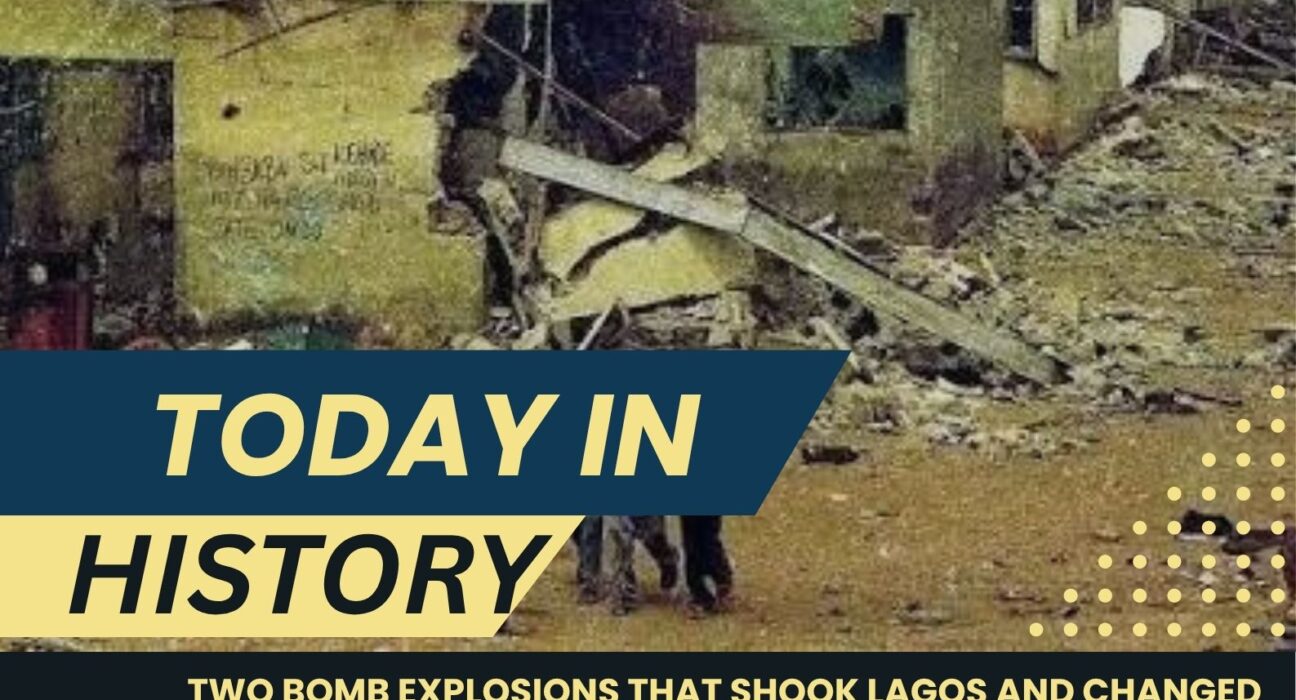
A fragile peace shattered on July 2, 1967 as two coordinated bomb explosions ripped through the federal capital of Lagos, leaving four people dead, 14 others injured, and an entire nation teetering on the edge of an all-out civil conflict.
The attacks occurred on Sunday, July 2, amid escalating tensions between the Federal Military Government, led by Lieutenant Colonel Yakubu Gowon, and the breakaway Eastern Region, which declared itself the independent Republic of Biafra just two months prior in May.
The first and most devastating explosion occurred in Obalende, directly opposite the Nigeria Police Force Headquarters. According to eye-witness accounts and police reports, an unidentified driver operating an explosives-packed vehicle attempted to gain access to the secure police facility.
When sentries turned the driver away for failing to produce proper identification, the operative reversed the vehicle directly into a neighboring petrol filling station across the road and fled the scene.
Minutes later, a catastrophic explosion tore through the station. The blast wave shattered windows across the five-story police headquarters and completely leveled an adjacent residential building. Four occupants of the destroyed house, including two young children, were killed instantly. Emergency responders rushed 11 critically injured survivors to local hospitals as rescue teams dug through the smoking rubble.
As the capital reeled from the tragedy in Obalende, panic spread further north just two hours later. A second, smaller explosion ripped through a commercial garage in the mainland suburb of Yaba.
While no fatalities were reported in the second blast, it injured three bystanders and amplified fears that a coordinated, urban sabotage campaign was actively underway in the capital.
While the Federal Commissioner for Information, Chief Anthony Enahoro, issued statements attempting to defuse public anxiety, the political fallout from the attacks has been immediate and volatile.
Military Governor of Lagos State, Lieutenant Colonel Mobolaji Johnson, quickly appealed for calm, urging citizens not to retaliate against local Easterners or the Igbo community living in Lagos. Security officials have warned that these attacks risk igniting retaliatory violence in a city already highly charged by ethnic polarization.
With military mobilization intensifying along the northern borders, these Sunday explosions have brought the terrifying reality of conflict straight to the doorsteps of everyday Lagosians, signaling that the cold war of words between Lagos and Enugu is rapidly turning hot.