


Protect Integrity in Justice Delivery, Ogun Chief Judge Urges Lawyers, Judges
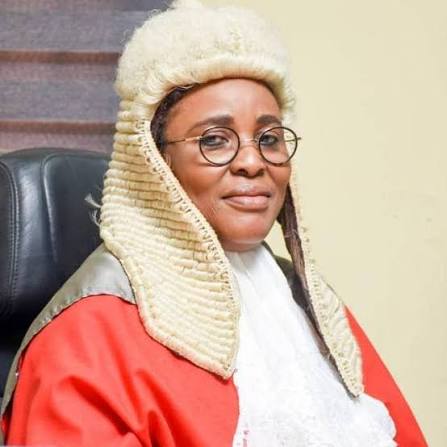
The Chief Judge of Ogun State, Justice Mosunmola Dipeolu, has called on legal practitioners and judicial officers to uphold ethical values and integrity in the administration of justice.
She warned that public trust in the legal profession and the judiciary would continue to weaken if those entrusted with dispensing justice compromised professional standards.
Justice Dipeolu made the call on Thursday at the Annual Bar Lecture organised by the Sagamu Branch of the Nigerian Bar Association at the Banquet Hall of NANDAS Hotel in Sagamu, Ogun State.
The programme was attended by the Akarigbo and Paramount Ruler of Remoland, Oba Babatunde Ajayi; Justice Catherine Ogunsanya of the Ogun State High Court; Mr Olatunde Adejuyigbe, SAN; judges, lawyers and other judicial officers.
Represented by Justice A.O. Jibodu, the Chief Judge delivered a lecture titled, “Justice with Integrity: Upholding Ethical Standards in the Practice of Law.”
She said the country was not short of laws, but many citizens were concerned about whether institutions responsible for enforcing those laws still operated according to the principles that make the law credible.
According to her, “Justice without integrity becomes power. Law without integrity becomes manipulation. Procedure without integrity becomes oppression.”
Dipeolu described integrity as the most important asset in the justice system, stressing that once it is lost, legislation alone cannot restore public confidence in the profession.
She said legal practitioners occupy a sensitive place in society because people depend on the courts and legal system to resolve disputes fairly and peacefully.
The Chief Judge warned that a breakdown of public trust in the justice system could push citizens towards other, potentially dangerous, means of seeking justice.
She noted that intelligence, eloquence and knowledge of legal authorities were not enough for a lawyer without character.
“A lawyer may be brilliant. A lawyer may be eloquent. A lawyer may know every reported authority from 1960 till date. Yet, without integrity, such brilliance becomes dangerous,” she said.
Justice Dipeolu identified financial hardship, competition for clients, the growing influence of social media and the weakening of traditional mentorship as major ethical pressures facing lawyers.
She advised younger lawyers not to define achievement by wealth, public visibility or popularity online.
According to her, a lawyer’s most valuable possession is not a luxurious office, expensive vehicles or professional brilliance, but a good name built over time.
“A lawyer’s greatest asset is reputation. And reputation is built slowly but can be destroyed suddenly,” she stated.
She referred to the late Chief Gani Fawehinmi, SAN; Chief F.R.A. Williams, SAN; and retired Supreme Court Justice Chukwudifu Oputa as examples of legal professionals whose legacies were founded on character and integrity.
Speaking on the responsibility of judges, Dipeolu said the judiciary carried an even greater burden because justice depended largely on the conduct of those who interpret and apply the law.
She said impressive court buildings, well-written constitutions and detailed procedural rules would mean little if judicial officers lacked integrity.
“Courthouses may be magnificent. Constitutions may be beautifully written. Statutes may be carefully drafted. Procedural rules may be meticulously designed. Yet, if those responsible for administering the law lack integrity, justice itself becomes endangered,” she said.
The Chief Judge added that judicial integrity was broader than avoiding bribery or corruption. She said it also required diligence, punctuality, courtesy, impartiality, preparedness and the courage to resist outside influence.
She maintained that although members of the public may not understand complex legal principles, they can recognise honesty, fairness and integrity.
Dipeolu also urged senior lawyers to deliberately guide younger practitioners in ethical conduct, saying professional values must be taught, demonstrated and reinforced rather than assumed to pass naturally from one generation to another.
Addressing young lawyers, she encouraged them to prioritise long-term professional development over immediate financial rewards.
“The legal profession is a marathon, not a sprint,” she said, adding that many of the country’s most respected lawyers earned their reputations over decades.
She commended the NBA Sagamu Branch for sustaining the annual lecture and said the event would further strengthen cooperation between the Bench and the Bar while promoting professional ethics.
She also praised the branch chairman, Mr G.M. Sofola, and members of his executive for encouraging intellectual engagement among lawyers.
In her keynote address, Justice Catherine Ogunsanya described integrity as the foundation of an effective justice system and a fair society.
She urged lawyers and judicial officers to maintain high ethical standards in order to leave behind a legacy of responsible leadership, integrity and sound professional conduct.
Speaking on the topic, “Integrity in Advocacy: Ethical Lawyering in the Age of Technology and Social Change,” Adejuyigbe cautioned lawyers against using artificial intelligence-generated materials without properly verifying them.
He said AI could be useful but had limitations, particularly when lawyers relied on it for legal authorities and statutes.
“One common error of generative AI is hallucination,” Adejuyigbe said, explaining that the technology could produce fabricated but convincing cases and laws.
He added that lawyers in several jurisdictions had faced sanctions after presenting non-existent authorities generated by AI, urging legal practitioners to be careful and thorough when using the technology.
Sofola said the annual Bar Lecture was created to examine current issues, expand lawyers’ knowledge and improve their ability to contribute meaningfully to legal practice and the administration of justice in Nigeria.