Rubio Tours Gulf States With Security Pledge as US-Iran Deal Rattles Regional Allies
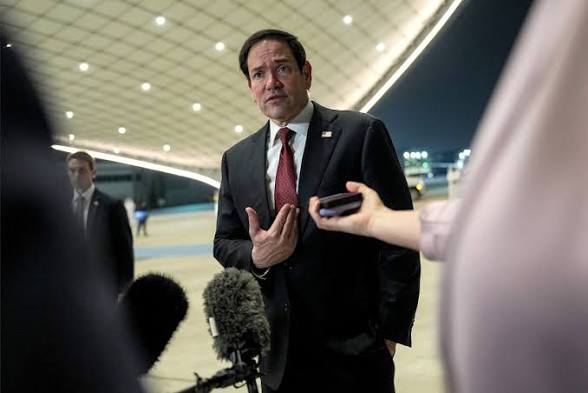
United States Secretary of State, Marco Rubio has pledged that Washington will not take any action that undermines the security of its Gulf allies, delivering the assurance during a high-stakes diplomatic tour of three Gulf states amid deepening anxieties over a recently concluded memorandum of understanding between the United States and Iran.
Speaking to reporters in Kuwait City on Wednesday before departing for Bahrain, Rubio said the US was completely aligned with its Gulf partners and that the purpose of his visits was precisely to reinforce that commitment. He described his conversations with regional leaders as frank, honest and important, adding that the US was in Kuwait, the United Arab Emirates and Bahrain not merely to talk but to listen and ensure that the views of Gulf allies were reflected in every decision taken as part of the US-Iran negotiation process.
The tour follows the signing of the memorandum of understanding between Washington and Tehran last week, the first such accord between an American and an Iranian president since Iran’s 1979 Islamic Revolution. The deal, which includes a proposed $300 billion fund and the waiver of some sanctions, has drawn concern from Gulf states that suffered Iranian missile and drone attacks during the recent regional conflict. Several of the countries Rubio is visiting were directly targeted by Iranian strikes, and their governments had hoped any agreement would contain stronger provisions addressing Iran’s ballistic missile programme and its network of regional proxy forces.
Rubio also stressed that the Strait of Hormuz, through which a significant share of global oil and gas exports pass daily, must remain open and free for navigation. His remarks came against the backdrop of suggestions by Iran and Oman that they were considering imposing navigation-related costs on vessels transiting the strategic waterway. Rubio rejected any such possibility, describing the Strait as an international waterway and noting that no country is permitted under international law to charge tolls or fees on such a route.
On the broader question of Iran’s compliance, Rubio made clear that Tehran must honour all commitments under the memorandum of understanding, including ending support for proxy groups and ensuring maritime transit through the Strait remains unobstructed. He added that technical negotiators from both sides were expected to resume talks by the end of the month in Switzerland, and that should Iran fail to meet its obligations, President Donald Trump retained all available options. The US Embassy in Kuwait also resumed operations on Wednesday, following a closure that had been triggered by Iranian drone strikes on the facility.