

Tinubu’s Reforms Light Years Ahead of Obi’s Record, Opinions, Says Atoyebi

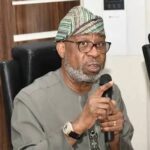
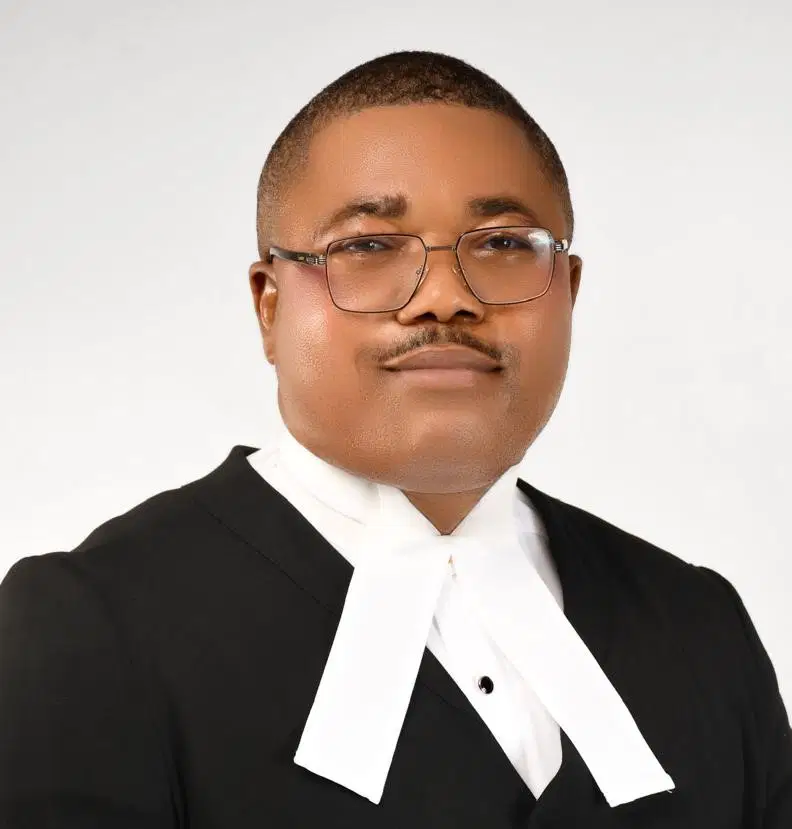
The Convener of the Bola Ahmed Tinubu Ideological Group, Bamidele Atoyebi, has dismissed calls for President Bola Tinubu’s resignation, arguing that the President’s reforms in local government administration, electricity, education, security, health and the economy have placed Nigeria on a path of long-term recovery.
Atoyebi, who is also the National Coordinator of Accountability and Policy Monitoring, said Tinubu’s record in public office showed a stronger grasp of governance than that of the Labour Party’s 2023 presidential candidate, Peter Obi.
In a statement made available to journalists, Atoyebi said Nigeria must avoid what he described as the temptation of choosing “the loudest voice over the steadiest hand,” insisting that the country’s economic and institutional challenges required reforms that may be difficult in the short run but beneficial in the long run.
He said Tinubu’s political and administrative record in Lagos State, particularly the creation of 57 Local Council Development Areas from the original 20 local governments, demonstrated the President’s commitment to bringing governance closer to the people.
According to him, Tinubu resisted attempts by the administration of former President Olusegun Obasanjo to halt the creation of the LCDAs and eventually secured a legal victory at the Supreme Court.
Atoyebi said the expansion of the local government structure in Lagos helped to improve access to basic infrastructure such as roads, primary healthcare services and potable water.
He contrasted this with Obi’s tenure as governor of Anambra State, pointing out that local government elections were not conducted for several years under the former governor.
He said the absence of elected local government officials limited grassroots participation and weakened the ability of communities to channel their needs to government.
Atoyebi also credited Tinubu with advancing local government financial autonomy through the Federal Government’s legal action at the Supreme Court.
The Supreme Court, on July 11, 2024, ruled that allocations meant for Nigeria’s 774 local government councils should be paid directly into their accounts and held that only democratically elected local government administrations should manage such funds.
According to Atoyebi, the ruling could strengthen infrastructure development and reduce state-level interference in local government finances.
On regional development, the BAT Ideological Group convener said Tinubu’s administration had taken steps towards addressing infrastructure deficits in the South-East through the establishment of the South East Development Commission.
He said the commission was designed to support the reconstruction and rehabilitation of infrastructure affected by the Nigerian Civil War.
Atoyebi also cited the administration’s approval of funding for the Eastern Rail Line and upgrades of eastern ports, saying the projects could improve trade, mobility and industrial growth in the region.
He further praised the amendment of the Electricity Act, which moved electricity generation, transmission and distribution from the Exclusive Legislative List to the Concurrent List.
The reform allows states to develop electricity markets and generate power within their jurisdictions.
Atoyebi said several states, including Lagos, Ogun, Oyo, Ekiti, Enugu, Anambra, Abia, Imo and Edo, had begun taking steps towards developing their own electricity markets.
He said the policy was similar to opening more doors in a building previously controlled by one gatekeeper, allowing states to pursue solutions based on their individual energy needs.
The group convener, however, criticised Obi’s campaign promise to raise Nigeria’s electricity generation and distribution to 10,000 megawatts within four years, arguing that Nigeria already had an installed capacity estimated at between 13,000MW and 14,000MW.
He said the major challenge in the sector was not merely installed capacity but gas supply constraints, transmission limitations and legacy debts in the power value chain.
Atoyebi said the Tinubu administration had taken steps to address debts owed to gas suppliers and power generation companies, which he said could improve electricity supply when fully resolved.
On security, he said Tinubu’s support for state policing was linked to increased allocations to state governments and the push for local government autonomy.
According to him, state police forces would be better positioned to understand local languages, culture, terrain and community dynamics.
He cited the operations of the South-West Security Network, popularly known as Amotekun, as an example of how community-based security structures could support conventional policing.
Atoyebi said a properly structured state police system would require adequate funding, training, equipment and safeguards against political interference.
He also commended the Tinubu administration for improving the welfare of military personnel through salary reviews, funding for accommodation and equipment, as well as efforts to clear outstanding pensions.
On education, Atoyebi said Tinubu’s administration had significantly increased budgetary allocations to the sector, citing allocations of ₦2.18tn in 2024 and ₦3.52tn in the 2025 budget.
He also highlighted the Nigerian Education Loan Fund, which provides tuition support and monthly upkeep loans for eligible students in tertiary institutions.
He said the Federal Government’s Technical and Vocational Education and Training reforms, including monthly stipends for trainees and payments to approved training centres, were designed to encourage skills acquisition and reduce youth unemployment.
Atoyebi added that the Tertiary Institutions Staff Support Fund would provide interest-free loans to eligible academic and non-academic staff in public tertiary institutions.
He also referenced the improved global rankings of the University of Ibadan and the University of Lagos, which were placed in the 801–1000 band of the Times Higher Education World University Rankings.
On the economy, Atoyebi said Tinubu’s record as Lagos State governor showed how internally generated revenue could be enhanced through reforms in tax administration and public finance.
He said Lagos State’s monthly internally generated revenue grew from about ₦600m when Tinubu assumed office in 1999 to more than ₦83bn by the end of his tenure.
He added that the state’s revenue had continued to grow after Tinubu’s tenure, describing it as evidence of a governance structure that outlived the individual who initiated it.
Atoyebi also praised the Federal Government’s decision to increase the national minimum wage to ₦70,000 and cited Nigeria’s removal from the Financial Action Task Force grey list in October 2025 as a sign of progress in financial regulation and anti-money laundering reforms.
He, however, accused Obi of leaving Anambra State with outstanding debt obligations despite claims that he handed over a debt-free state in 2014.
Atoyebi also criticised Obi’s record in education, health and local government administration, alleging that the former governor did not build new schools or hospitals during his tenure.
He said the Tinubu administration had pursued healthcare reforms through the revitalisation of primary healthcare centres, the deployment of emergency medical transport systems and expanded support for maternal healthcare.
The reforms, he said, include subsidised Caesarean sections for vulnerable women, dialysis support, investments in cancer treatment centres and improved funding for disease surveillance and emergency response.
Atoyebi said Tinubu’s leadership style had also produced a generation of political leaders, including Lagos State Governor Babajide Sanwo-Olu, former Lagos State governors Babatunde Fashola and Akinwunmi Ambode, former Vice-President Yemi Osinbajo, Minister of Finance Wale Edun, Central Bank Governor Yemi Cardoso, former Osun State Governor Gboyega Oyetola and Kaduna State Governor Uba Sani.
He urged Nigerians to assess political leaders based on policies, institutions and measurable outcomes rather than campaign rhetoric.
“Facts are stubborn,” Atoyebi said. “Nigerians must remain vigilant and choose leaders who can build systems that will outlive their tenure.”