


UBEC Partners Traditional, Religious Leaders to Tackle Out-of-School Children Crisis
The Universal Basic Education Commission (UBEC) has entered into a partnership with traditional rulers and religious leaders to identify out-of-school children and facilitate their enrolment in basic education institutions across Nigeria.
The initiative is also expected to strengthen community-based monitoring of pupils’ attendance, retention and completion rates to prevent children from dropping out after enrolment.
The development was announced in a statement issued by the Office of UBEC’s Executive Secretary on Thursday, following the signing of a Memorandum of Understanding between the commission and the Sultan Foundation for Peace and Development.
The agreement provides for the establishment of national, state and local coordinating committees to drive grassroots mobilisation and advocacy for basic education. It also assigns traditional and religious leaders the responsibility of encouraging parents and guardians to make their children’s education a priority.
As part of the arrangement, the partners will produce and distribute educational advocacy materials in Hausa, Fulfulde and Yoruba. The initiative will also involve identifying children who are not attending school through household visits and facilitating their admission into nearby schools.
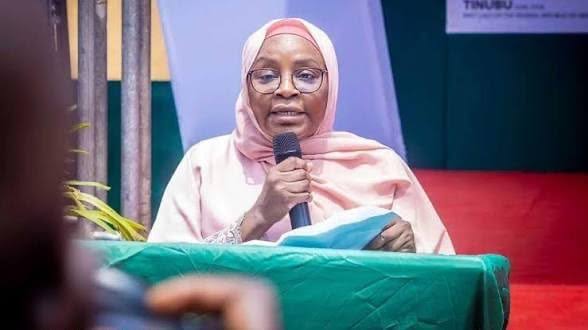
Speaking on the partnership, UBEC Executive Secretary, Aisha Garba, said addressing Nigeria’s out-of-school children challenge required collective responsibility beyond government spending on educational infrastructure and other interventions.
She emphasised the strategic importance of traditional and religious institutions, given their influence over community values, family decisions and grassroots mobilisation.
Garba also identified girls as a priority group under the initiative, noting that social and cultural practices in some communities continued to restrict their access to education.
She added that the partnership would introduce accountability measures to acknowledge communities, schools and traditional leaders that record significant improvements in school enrolment and attendance.
According to her, the effectiveness of the programme would be assessed through increased enrolment, improved attendance and retention, better learning outcomes and a sustained decline in the number of children excluded from basic education.
The initiative comes amid persistent concerns over Nigeria’s out-of-school children population. UNICEF’s 2025 Nigeria Annual Report put the figure at 10.2 million, with the North-West accounting for 45 per cent and the North-East representing 28 per cent.
The report highlights the disproportionate impact of the crisis in regions grappling with insecurity, poverty, displacement and inadequate access to functional schools.
In May 2026, the Minister of Education, Dr Maruf Alausa, disclosed that the Federal Government had successfully returned more than one million children to classrooms within 30 months through various interventions.
He also announced a nationwide mapping exercise aimed at obtaining more reliable data on out-of-school children, including identifying their locations through geotagging.
The Federal Ministry of Education has also highlighted its Back2School Drive and interactive out-of-school children dashboard as part of efforts to improve identification, enrolment and the delivery of targeted educational interventions.
Despite these measures, UNICEF reported that only 70 per cent of Nigerian children and young people aged three to 24 attended school in 2025. Attendance was considerably lower in rural communities, at 51 per cent, compared with 75 per cent in urban areas.
Providing an update on UBEC’s interventions, Garba said the commission, in collaboration with the Federal Ministry of Education and State Universal Basic Education Boards, had facilitated the construction of more than 4,900 classrooms and the renovation of existing school facilities nationwide.
She disclosed that the commission had equally supported the provision of water, sanitation and hygiene facilities, with its infrastructure projects benefiting over 2.3 million learners by the end of 2025.
Other interventions, according to her, include community-led school improvement programmes and professional development initiatives for teachers to strengthen school administration and improve teaching and learning standards.
Garba acknowledged the contributions of the Minister of Education, Dr Maruf Alausa, and the Minister of State for Education, Prof. Suwaiba Ahmad, to ongoing efforts to expand access to inclusive and quality education.
She, however, maintained that sustained progress would depend on stronger community involvement and effective collaboration among stakeholders.
Also speaking at the event, the Deputy Governor of Kebbi State, Senator Umar Tafida, who represented Governor Nasir Idris, praised the Sultan Foundation for Peace and Development for its contributions to healthcare and social development, particularly projects supported by international development partners, including the Bill and Melinda Gates Foundation.
Tafida said the Kebbi State Government recognised the foundation’s efforts to improve the welfare and educational prospects of vulnerable children.
He described its commitment to supporting disadvantaged children as consistent with the principles of Islam and humanity and conveyed the governor’s goodwill to UBEC, the Sultan Foundation and the Nasara Foundation.
Garba reaffirmed the commission’s commitment to working with state governments, traditional institutions and development partners to widen access to quality basic education and advance ongoing reforms in the sector.