
Obasanjo’s 2008 Response to Allegations Over $16 Billion Power Sector Spending
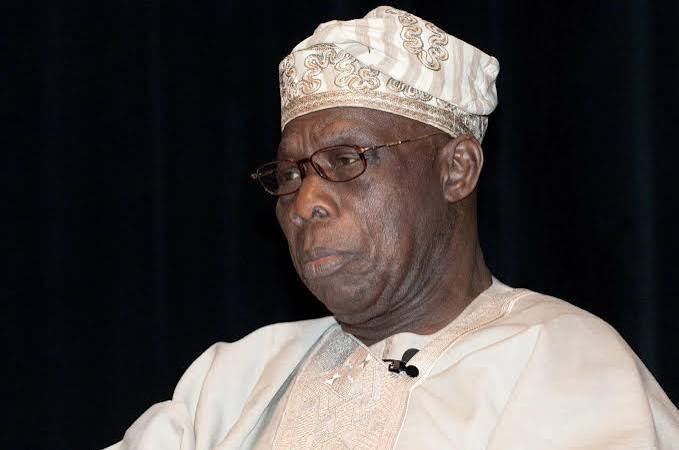
Former President Olusegun Obasanjo, in May 2008, defended his administration’s expenditure on Nigeria’s power sector between 1999 and 2007 after the House of Representatives commenced an investigation into the funds reportedly spent during his time in office.
The probe followed allegations by his successor, the late President Umaru Musa Yar’Adua, that about $11bn had been spent on the power sector without corresponding improvements. The figure later rose to $16bn.
Obasanjo was invited by the House Committee on Power and Steel to respond to the allegations. In a letter dated May 12, 2008, he explained his administration’s role in the development of the sector and questioned the manner in which the lawmakers had invited him.
He said the committee’s invitation, which he received on May 9 for an appearance scheduled for May 12, did not provide specific details of the allegations or counter-allegations he was expected to address.
The former president argued that fairness required the committee to provide the relevant information and allow him sufficient time to prepare, particularly because he had left office in 2007 and no longer had access to government records.
Nevertheless, he said he chose to cooperate with the investigation voluntarily because he believed in strengthening democratic institutions, accountability and transparency.
Obasanjo said his administration inherited a power sector in poor condition when it assumed office in May 1999.
According to him, Nigeria had experienced nearly 18 years of inadequate investment in electricity generation and transmission, apart from the completion of projects initiated by earlier military administrations.
He stated that although the country was said to have an installed generation capacity of about 6,000 megawatts at the time, actual electricity generation stood at approximately 1,500MW.
He also listed problems affecting the existing facilities, including obsolete equipment, poor maintenance, inadequate water supply to hydroelectric stations, gas pipeline vandalism and widespread corruption within the then National Electric Power Authority.
The former president recalled that his first Minister of Power, the late Chief Bola Ige, had initially expressed confidence that the electricity crisis could be resolved within six months. However, he said the complexity of NEPA’s problems made the task more difficult than anticipated.
After Ige was moved to the Ministry of Justice, Dr Segun Agagu took over the power portfolio, and Obasanjo said he became more directly involved in addressing the challenges.
He explained that the government subsequently changed NEPA’s leadership, bringing in engineer Joe Makoju from the private sector to reposition the organisation and improve its operations.
Obasanjo said his government embarked on the rehabilitation and replacement of electricity infrastructure, beginning with the installation of a new 276MW thermal unit at Afam.
He also disclosed that the administration approached oil companies to invest in electricity generation, but only Agip demonstrated sufficient commitment to construct a 480MW thermal power plant at Okpai in Delta State.
The former president said the government also began developing thermal power plants at Papalanto, Omotosho, Alaoji and Geregu, with the intention of expanding each facility to generate close to 1,000MW.
He explained that the administration obtained concessionary loans from China to support some of the projects because oil prices were relatively low during its first term, affecting government revenue.
According to him, Papalanto, Omotosho and Geregu had reached commissioning stage before he left office in May 2007, although further work was required to expand their capacity and address gas supply and transmission challenges.
He added that the administration examined several sources of electricity, including solar, wind, tidal, biomass, gas, coal, nuclear and hydroelectric power.
However, he said the government considered gas, coal and hydroelectric generation more suitable for large-scale electricity production at the time, while alternative energy sources were encouraged for smaller domestic applications.
Obasanjo also traced the development of the National Integrated Power Project to efforts by his administration to identify locations close to available gas sources, including Sapele, Ehobor, Egbema, Gbaram, Calabar and Omoku.
He explained that successful electricity generation required the completion and coordination of several components, including turbines, gas supply, civil engineering works, electrical installations and transmission infrastructure.
According to him, a power project could remain unusable if even one of these essential components was incomplete.
Addressing the amount allegedly spent on electricity between 1999 and 2007, Obasanjo said different figures ranging from $4bn to $16bn had been circulated.
He argued that the figures depended on what categories of expenditure were included in the calculation.
He explained that including workers’ salaries, pensions, gratuities, transportation, maintenance and rural electrification would produce a different total from one limited to operational and capital expenditure on generation, transmission and distribution.
He further said that including power-related spending by other ministries and government agencies would generate another figure.
Obasanjo stated that he had been informed that expenditure specifically relating to the sector between 1999 and 2007 was approximately $6.5bn, including outstanding letters of credit.
He rejected the suggestion that the spending produced little or no results, arguing that several power stations had been constructed, rehabilitated or expanded during his administration.
He listed six new generating facilities that had been added by 2007: Okpai, Afam II, Omotosho, Papalanto, Geregu and Ikot Abasi. He also mentioned Alaoji, which was nearing completion at the time.
The former president said these projects, alongside rehabilitation work on existing facilities, had increased the country’s electricity generation infrastructure.
He also maintained that transmission infrastructure had been expanded, including the extension of transmission facilities to Bayelsa State and improvements to the Shiroro-Abuja line.
Obasanjo maintained that the failure to translate the investments into consistent electricity supply was partly due to the lack of adequate follow-up funding and the failure to complete certain projects.
He argued that substantial investments could remain unproductive if relatively minor but essential components were not installed.
He also warned that delays in executing power projects would increase their costs and undermine economic and industrial development.
The former president urged the lawmakers to investigate any proven cases of corruption by identifying the amounts involved, the individuals responsible and the financial institutions connected to the transactions.
He called for anyone found culpable to be handed over to the appropriate anti-corruption agencies for prosecution.
Obasanjo insisted that no policy or project under his administration was approved for personal enrichment, adding that public officials who committed genuine misconduct should be sanctioned.
He concluded by expressing confidence in the achievements of his administration and maintained that the country needed sustained commitment to power sector development rather than political arguments over the past expenditure.