SDP’s Adebayo Proposes N200 Petrol, Nationwide Public Transport Ahead of 2027
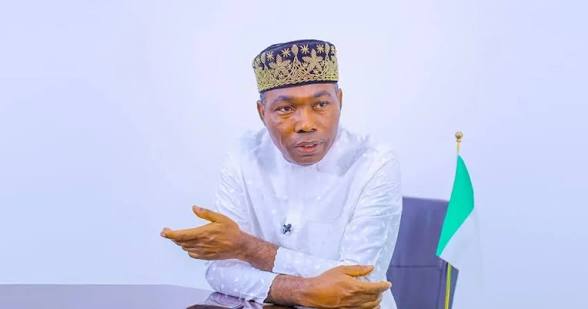
The Social Democratic Party (SDP) presidential candidate, Prince Adewole Adebayo, has proposed supplying locally produced crude oil to domestic refineries at no upfront cost as part of a plan to reduce petrol prices to about N200 per litre and establish a nationwide public transportation system.
Adebayo said the proposal would separate crude meant for domestic refining from oil sold on the international market, arguing that Nigerians earning local wages should not be required to pay international prices for petroleum products refined from the country’s own crude.
He unveiled the proposal at a dinner organised by the SDP leadership on Sunday night, where he also called for cooperation among opposition parties ahead of the 2027 general elections and urged the media to give voters wider access to competing political platforms.
According to him, crude allocated for domestic refining could be provided to local refineries under a government-backed arrangement, while the refineries would generate revenue from the range of petroleum products produced during the refining process.
“The crude oil that we refine at home is not the same as the one we are selling internationally. The one we sell internationally, that’s okay. We sell it, and we share the money at the Federal Account Allocation Committee,” he said.
“However, domestically, we take these 445,000 barrels and give it to the four refineries to refine for us. The refinery doesn’t pay for the crude. We also don’t pay them for refining.”
Adebayo argued that the economics of refining should allow operators to remain profitable through the sale of products such as aviation fuel, kerosene, naphtha, fuel oil and asphalt, rather than depending solely on petrol revenue.
He said a refinery capable of turning $1 million worth of crude into products valued at $1.2 million to $1.3 million could remain commercially viable while government pursued lower petrol prices.
The SDP candidate criticised the use of international pricing benchmarks for domestically produced crude, saying the policy ignored the disparity between Nigerian incomes and international wages.
He argued that while there might be international prices for goods and services around the world, workers in Nigeria were generally paid according to local wage levels.
“If you go to the University of Canberra in Australia or the University of Sydney, there is an international price for a professor. There is an international price for doctors, nurses and drivers,” he said.
“Do you pay the international price for labour in Nigeria? So why would you ask somebody who is paid a local price for his labour to pay international prices for what he consumes?”
Adebayo also criticised the removal of petrol subsidy by the administration of President Bola Tinubu, saying the policy had increased the financial pressure on households and businesses.
He questioned the effectiveness of asking citizens to reduce their movements and transportation costs while government officials continued to have access to official vehicles, convoys and aircraft.
“The president who was staggering at Eagle Square on that windy day, May 29, 2023, and said subsidy is gone, he himself does not buy fuel,” he said.
“A person who doesn’t participate in your market cannot fix the price of the product in that market.”
Adebayo said revenue generated from his proposed petrol arrangement would be channelled into a dedicated public transportation fund rather than absorbed into government’s general revenue.
He proposed using the fund to deploy buses powered by compressed natural gas, electricity and solar energy across the country, with the aim of ensuring that every local government area had access to mass transit.
Under the plan, he said, the government would work with manufacturers and franchise operators from countries including India, China, Brazil and Turkey, as well as Nigerian manufacturers such as Innoson, to produce and supply buses.
He proposed an initial allocation of 100 new buses to each local government annually, with the number eventually adjusted according to population and transportation requirements.
“We will use that money to do an emergency public transportation system,” he said.
“That money, N200 per litre, which is the profit, goes into that account, so that we can give every year 100 brand-new buses to every local government.”
He further proposed free public transportation for students, including members of the National Youth Service Corps, while workers would access the system through a salary-based contribution.
Under the proposed arrangement, registered workers would contribute five per cent of their salaries through their employers in exchange for access to public transportation services nationwide.
“If you are a student up to NYSC, you take the buses for free,” he said.
“If you are a civil servant, if you work in any company, they register you, and you will be taking transport anywhere you want to go.”
Adebayo also called for stronger action against crude oil theft, claiming that the volume of crude stolen in Nigeria could exceed the amount required to meet domestic refining needs. He did not provide supporting data for the claim during the address.
Beyond petroleum policy, the SDP candidate identified poverty and insecurity as major challenges confronting the country and urged the media to treat both issues as matters of national importance.
He argued that journalists should remain independent and impartial in their reporting but should not be neutral about issues such as poverty, insecurity, corruption and threats to democratic institutions.
“There is no way you can be a good journalist without writing about poverty in Nigeria. There is no way you can be a journalist worthy of your pen without critically analysing insecurity in the country,” he said.
Adebayo also warned against limiting electoral coverage to the leading political contenders, saying Nigerians should be exposed to the policies and manifestoes of all qualified presidential candidates.
He argued that voters should be able to compare competing programmes before making their choices in the 2027 presidential election.
“The media should not create the impression through its programmes and studio discussions that only two candidates are contesting the presidential election when other candidates and parties also have ideas to present,” he said.
“The best approach is to allow all legitimate opinions to be heard. Nigerians are capable of evaluating the alternatives and making informed decisions.”
He also urged opposition parties to establish a common framework for protecting the integrity of the 2027 elections, stressing that such cooperation should not necessarily amount to an agreement to field a single presidential candidate.
According to him, opposition parties could cooperate on issues such as preventing vote-buying, electoral violence, manipulation of results and other practices capable of undermining the credibility of the polls.
“Our immediate objective is to establish a common understanding on the fundamental principles of democracy,” he said.
“What we are trying to achieve in Nigeria is a minimum level of agreement among political parties on the rules that should govern elections.”
Adebayo said opposition parties should ensure that their polling agents protect the integrity of the electoral process as a whole, rather than focusing solely on securing votes for their individual candidates.
He also criticised what he described as the commercialisation of electoral coverage, warning that financial considerations should not prevent media organisations from adequately covering less prominent candidates and political parties.
“INEC can damage democracy on election day, but the media can starve democracy to death long before INEC has the opportunity to act,” he said.
The SDP candidate said his party’s approach was rooted in the constitutional responsibility of government to protect the security and welfare of Nigerians.
He said the SDP had made its manifesto available in English, Hausa, Igbo and Yoruba, adding that the party was prepared to subject its policies to public scrutiny ahead of the 2027 elections.
Adebayo also spoke on public health concerns raised during the event, urging Nigerians to maintain proper hygiene, report suspected symptoms to health facilities and avoid self-treatment when dealing with potentially infectious illnesses.
He further referenced the SDP’s historical association with Nigeria’s democratic struggle and said the party remained committed to electoral competition and citizens’ right to choose their leaders.
He urged Nigerians to scrutinise the manifestoes of political parties and hold elected officials accountable for their promises, saying public policy should ultimately be measured by its impact on the security and welfare of citizens.