

Peter Obi Faces Tough Path to 2027 Presidency, Says APGA Chairman Backs Tinubu
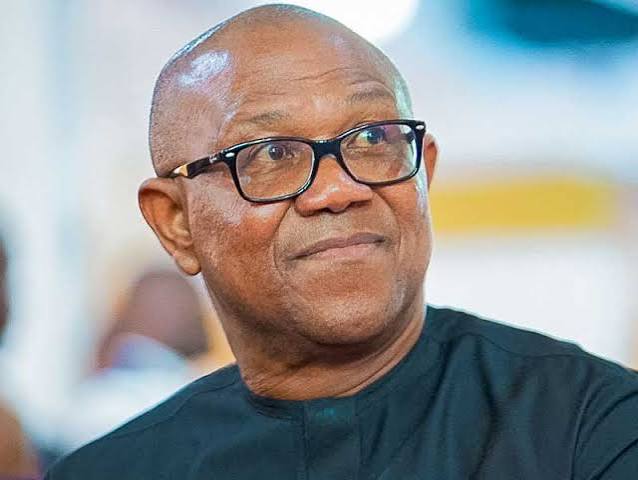
The National Chairman of the All Progressives Grand Alliance (APGA), Sly Ezeonkenwa, has argued that Peter Obi faces a difficult path to winning the 2027 presidential election, insisting that political alliances with other regions would better serve the long-term interests of the South-East.
Ezeonkenwa made the remarks during an interview on Wednesday, October 14, 2026, while explaining APGA’s decision to support President Bola Tinubu’s re-election bid.
He said the party believed that aligning with the political centre would give the South-East a stronger opportunity to participate in national leadership, rather than remaining isolated from broader political coalitions.
According to him, the decision to support Tinubu was based on what the party considered the region’s strategic interests and the need to build alliances beyond its traditional political base.
Ezeonkenwa maintained that Nigeria’s multi-party system made coalition-building essential for presidential candidates seeking to meet the constitutional requirements for election.
He explained that a candidate must secure the highest number of votes and obtain at least 25 per cent of votes cast in no fewer than two-thirds of Nigeria’s states, making nationwide support crucial to victory.
The APGA chairman said the electoral requirements underscored the need for political parties to cooperate and support candidates capable of attracting voters across different regions.
He also defended Anambra State Governor Chukwuma Soludo’s support for Tinubu, saying the governor’s position went beyond personal relationships and reflected a broader political strategy.
Ezeonkenwa said APGA had maintained a policy of building cordial relationships with the ruling party as part of its political alliances and long-term survival strategy.
He traced the approach to 2011, when the party supported the presidential candidacy of former President Goodluck Jonathan.
He further argued that political parties with similar ideological positions could legitimately unite behind a common presidential candidate instead of dividing their support among competing contenders.
The APGA chairman cited appointments of party members into Tinubu’s administration, including Ambassador Bianca Ojukwu, as examples of the relationship between the party and the Federal Government.
Ezeonkenwa said the South-East could not secure the presidency through its votes alone, arguing that the region needed stronger partnerships with other parts of the country to improve its chances of producing a future president.
He referred to voter registration figures released by the Independent National Electoral Commission, claiming that the South-East accounts for approximately 11 per cent of registered voters nationwide.
According to him, the region’s share of registered voters makes cross-regional cooperation necessary for any presidential candidate seeking to build a winning coalition.
He also argued that the South-East had been politically marginalised since 2015, saying the region’s limited participation in national political arrangements had weakened its influence.
Ezeonkenwa maintained that supporting Tinubu in 2027 was, in APGA’s view, a strategic decision intended to strengthen the region’s position in national politics.
He also linked the party’s position to the principle of power rotation between the North and South, arguing that the South should complete its turn under the current arrangement before the presidency returns to the North.
Ezeonkenwa also criticised Obi’s decision to leave APGA after serving as governor of Anambra State on the party’s platform.
He claimed that APGA had provided Obi with significant political support during his time in the party and accused him of subsequently working against its interests.
The chairman alleged that the party had faced repeated political challenges involving Obi but had managed to survive them.
He added that Soludo had invited Obi to return to APGA in 2022, arguing that the party believed cooperation with the former governor could help strengthen the South-East’s chances of producing a presidential candidate in the future.
Ezeonkenwa also rejected suggestions that APGA had failed to acknowledge Obi’s role in the party’s electoral success in Anambra State.
He said the party had supported Obi’s political mandate through the courts after his election as governor in 2003.
Despite the disagreement, Ezeonkenwa said APGA would continue to engage voters across the South-East to explain why it believes supporting Tinubu would serve the region’s interests.
He reaffirmed that the party’s leadership had decided to back Tinubu’s re-election campaign and would work to persuade its supporters to adopt the same position.
Obi, a former governor of Anambra State and the Labour Party’s presidential candidate in the 2023 election, is seeking the presidency again in 2027 under a different political platform. The contest is expected to involve competing political alliances as parties and political leaders position themselves ahead of the general election.