


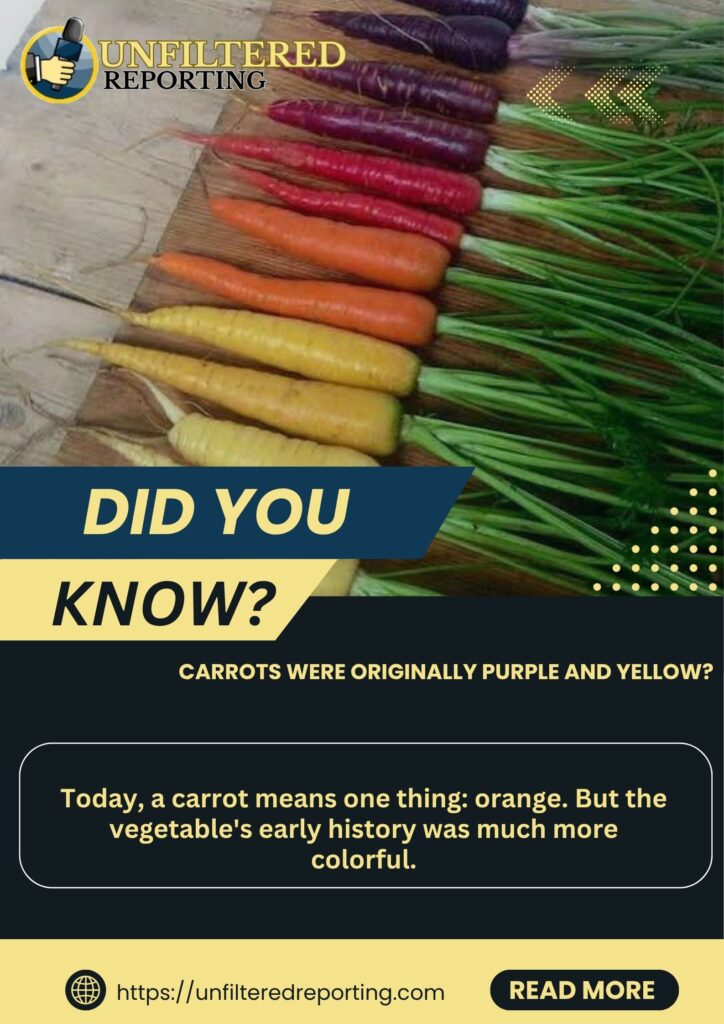
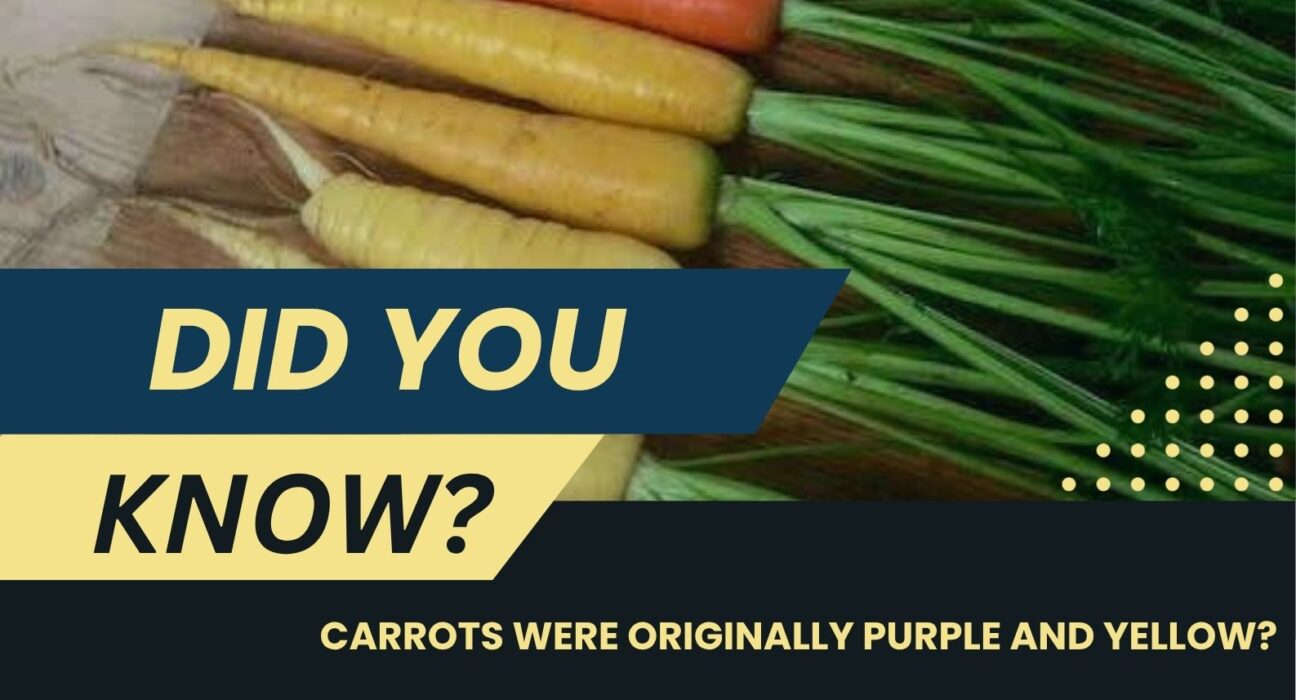
Did you know: Carrots were Originally Purple and Yellow?
Today, a carrot means one thing: orange. But the vegetable’s early history was much more colorful.
Carrots trace back to the region of modern-day Iran and Afghanistan, where they were first cultivated roughly a thousand years ago. Their wild ancestor looked nothing like the sweet, crunchy root in your kitchen. Wild carrots had thin, pale, bitter roots, closer to the plant we now call Queen Anne’s lace.
Farmers gradually selected the best-tasting and thickest roots, and the carrots they produced came mostly in purple and yellow. White and red types also appeared along the way.
Orange carrots show up in European records and paintings from around the 1500s and 1600s, and the Netherlands played a major role in developing and spreading them. A popular story says Dutch growers bred orange carrots to honor the House of Orange, the royal family. It makes a great tale, but historians consider it a legend rather than proven fact. Orange varieties may have existed before then, and they likely won out because they were sweeter, milder and more consistent than their purple cousins.
The color itself comes from beta-carotene, a pigment your body converts into vitamin A. Centuries of selective breeding have made modern carrots richer in it, which is why today’s orange carrot is more of a human-made creation than a natural original.
Purple carrots are still grown today and are enjoying a comeback in markets and restaurants. Their color comes from anthocyanins, the same pigments that give blueberries and red cabbage their deep hues. Some purple varieties even have an orange core, a hint of the old and new colors meeting in one root.
The orange carrot is not the original, just the winner. The next time you see a purple or yellow carrot, you’re looking at something much closer to what people ate a thousand years ago.