

Today in History: The Siemens Global Corruption Scandal: How a Munich Court Exposed a Multi-Million-Dollar Bribery Web in Nigeria
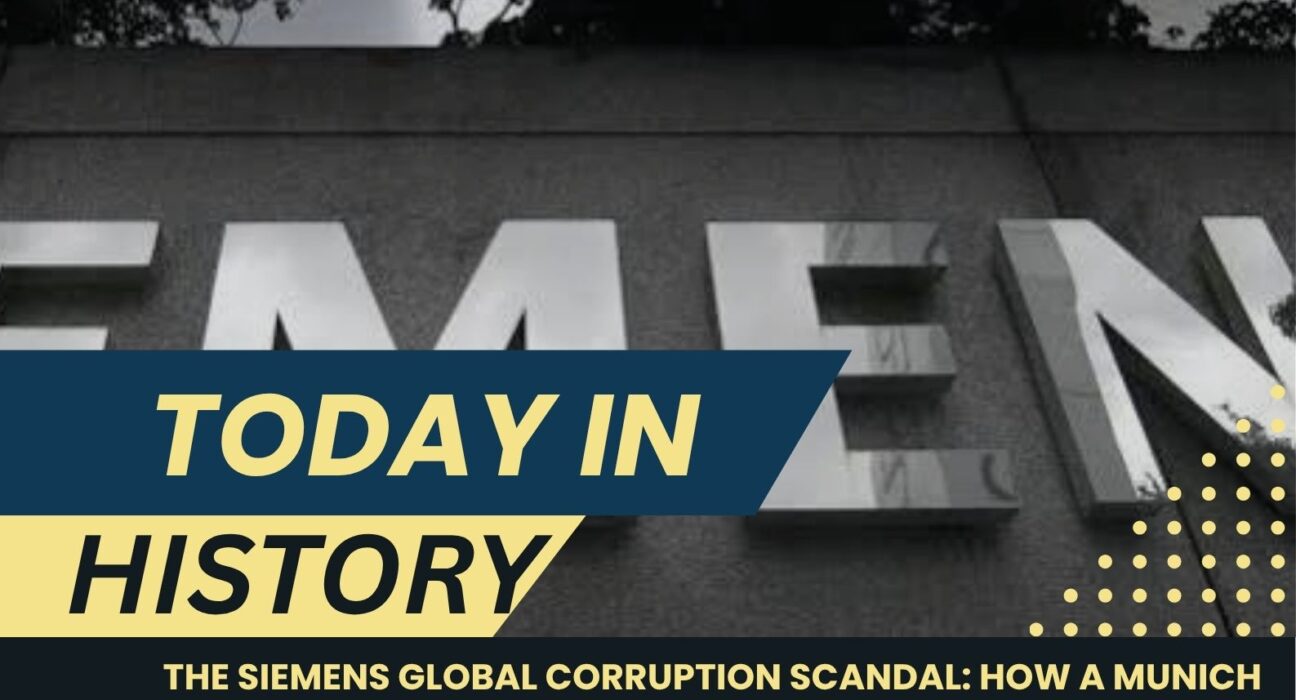
On October 14, 2007, a Munich state court in Germany blew the lid off one of the most expansive corporate corruption scandals in modern history. Court documents revealed that the German engineering conglomerate, Siemens AG had systematically funneled millions of dollars in bribes across multiple continents to secure lucrative government contracts. Among the most explosive disclosures was a web of illicit payments tied directly to Nigeria’s telecommunications sector, pulling in four former telecommunications ministers, a serving senator, and several key civil servants.
According to the Munich State Court’s findings, Siemens’ telecommunications division utilized a sophisticated shadow financial infrastructure including offshore accounts, dummy consultancies, and secret slush funds to distribute approximately $12.7 million (€10 million) in bribes to high-ranking Nigerian public officials between 2001 and 2004. The goal was to secure preferential treatment and multi-million-dollar infrastructure contracts for the state-owned telecommunications company, Nigerian Telecommunications Limited (NITEL), and other national projects.
The court papers explicitly named several prominent political and bureaucratic figures, including former telecommunications ministers Major General Tajudeen Olanrewaju, Dr. Bello Haliru Mohamed, Chief Cornelius Adebayo, and Alhaji Haruna Elewi, alongside Senator Jibril Aminu and various ministry managing directors, legal advisors, and tender board secretaries who acted as decision-makers in pushing contracts through the approval pipeline.
While the Nigerian disclosures sent shockwaves through West Africa, they were only a fraction of a much larger global operation. Investigations by German and U.S. authorities revealed that Siemens had maintained a global bribery budget, executing over 4,283 illicit payments totaling roughly $1.4 billion worldwide to win public contracts.
The fallout was monumental. In December 2008, Siemens agreed to pay a staggering $1.6 billion in combined fines to U.S. and German authorities, setting the largest anti-bribery settlement in corporate history at the time. Locally, Nigerian anti-graft agencies launched independent probes in November 2007, which ultimately led to local investigations, asset recoveries, and a November 2010 settlement agreement requiring Siemens to pay millions in damages to the Nigerian government. Furthermore, the scandal forced a complete leadership reset at Siemens, prompting the company to dismantle its slush funds and spend over a billion dollars rebuilding its compliance architecture from the ground up to restore investor trust.
The Munich court’s exposure of the Siemens-Nigeria connection remains a landmark case study in cross-border anti-corruption enforcement, highlighting how foreign judicial probes can pierce the veil of international corporate malfeasance.