Today in History: October 7, 1960, Nigeria Joins the United Nations
Just six days after raising its own flag, Africa’s most populous nation took its seat among the world’s nations.
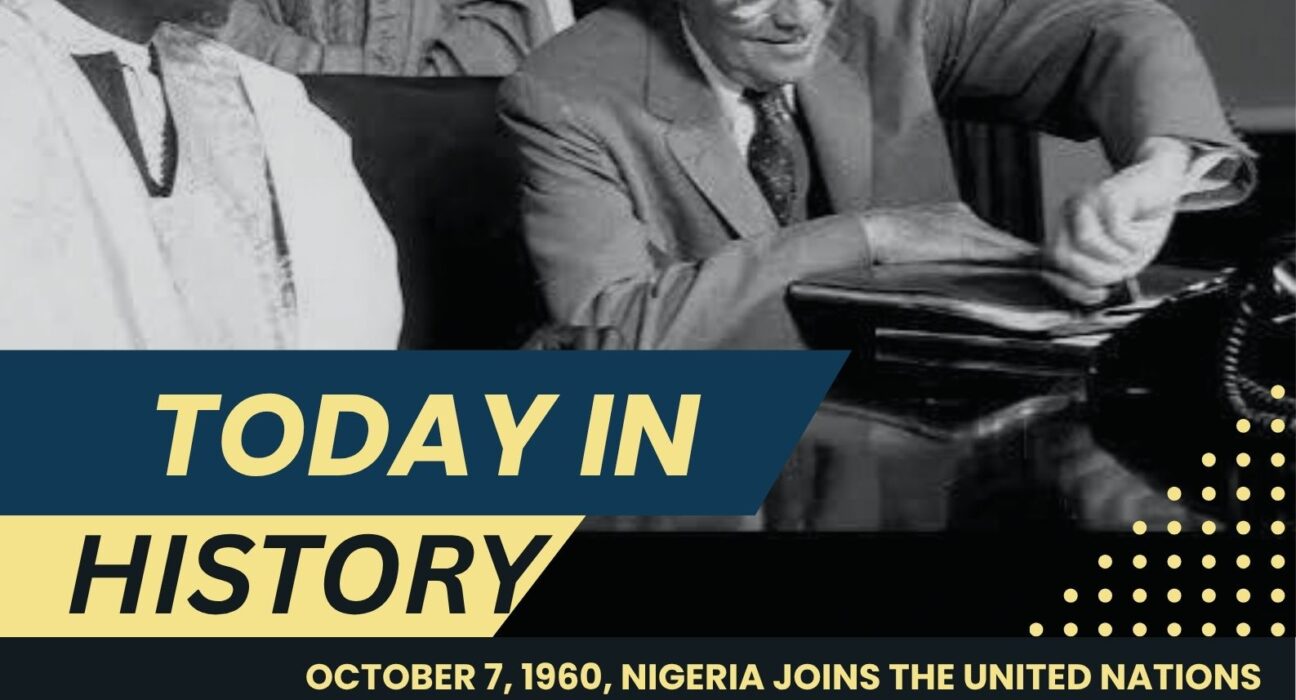
On October 7, 1960, the Federal Republic of Nigeria was admitted as a member of the United Nations. The country had gained independence from British colonial rule only a week earlier, on October 1, 1960. Today marks the anniversary of that milestone, which announced Nigeria’s arrival on the international stage almost as soon as its sovereignty began.
Nigeria’s independence on October 1, 1960, ended decades of British rule. The territory had been formally unified as a single colony and protectorate in 1914, and the road to self-government was shaped by constitutional conferences, regional politics, and a growing nationalist movement led by figures such as Nnamdi Azikiwe, Obafemi Awolowo, and Sir Abubakar Tafawa Balewa. Balewa became the country’s first Prime Minister, and Azikiwe would soon become its Governor-General and later its first President.
With independence secured, the new government moved quickly to establish its place in the world. Admission to the United Nations was a key step. Membership gave Nigeria international recognition as a sovereign state, a voice in global affairs, and access to the diplomatic networks that would help it pursue development and security.
Nigeria’s admission came during a remarkable period for the UN and for Africa. 1960 is often called the “Year of Africa,” as seventeen African territories achieved independence in those twelve months. Many of them, including Nigeria, joined the United Nations the same year. The influx of new members changed the character of the General Assembly, shifting the balance of voices and putting decolonization, development, and self-determination more firmly on the global agenda.
For Nigeria, the timing mattered. The Cold War was in full swing, and newly independent states were courted by both blocs. Nigeria’s early foreign policy leaned toward non-alignment, emphasizing independence in decision-making and a strong commitment to African causes.
From its first days at the UN, Nigeria positioned itself as an advocate for African interests. Over the decades that followed, it became one of the organization’s most active contributors, particularly in peacekeeping. Nigerian troops and police have served in missions across Africa and beyond, and the country has been among the larger contributors to UN peace operations.
Nigeria has also been a consistent voice against colonialism and apartheid. It played a prominent role in the international campaign against South Africa’s apartheid system, and Nigerian diplomats have held leadership roles in UN bodies over the years. The country has served multiple terms as a non-permanent member of the Security Council and has long campaigned for greater African representation in the council’s structure.
October 7, 1960, is a reminder that independence is not only about raising a national flag but about taking up a place in the community of nations. Within a week, Nigeria had moved from colony to sovereign member of the world body, carrying the hopes of a young nation with hundreds of ethnic groups and a vast population.
Today, Nigeria remains a major force in Africa and in multilateral diplomacy. Its story at the United Nations, beginning on this day in 1960, reflects the ambitions of a generation that sought not just freedom but a meaningful role in shaping the world.
On this day, October 7, 1960: Nigeria becomes a member of the United Nations, six days after independence.