

Obi Debunks $123.7 Million Debt Claim, Says He Left Anambra With Funds to Cover It
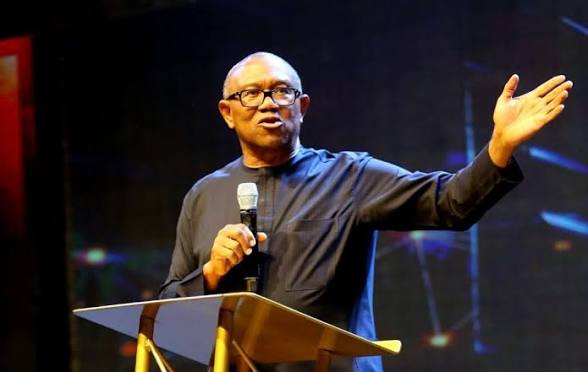
Former Anambra State Governor and Nigeria Democratic Congress presidential candidate Peter Obi has rejected claims that he left the state with $123.77 million in outstanding debt, saying he neither borrowed money nor issued bonds on behalf of the state during his tenure.
Obi made the clarification on Thursday during an interview on Arise TV, in response to allegations by the Anambra State Government that his administration left outstanding external loans for subsequent governments to repay.
The state government, through its Commissioner for Information and Value Reorientation, Law Mefor, had said eight external borrowing facilities contracted during Obi’s tenure had an outstanding balance of about $92.35 million, equivalent to N127.4 billion, as of June 30, 2026. It said the facilities were tied to projects covering malaria control, education, healthcare, erosion management, community development and agricultural value chains.
Obi, however, disputed the characterisation of the facilities as loans personally obtained by his administration, arguing that some of the funding came through concessionary multilateral support facilitated by the Federal Government and the World Bank.
“I, Mr Peter Obi, did not approach any financial institution to borrow money or issue bonds on behalf of Anambra State in the eight years I was in government,” he said.
He explained that Anambra, Ekiti and Bauchi were selected to receive concessionary support because of their performance in education, adding that the funding was intended to support further development in the states.
According to Obi, the State Education Programme Investment Project, one of the facilities cited by the state government, had its drawdown after he had left office.
He also argued that an approved credit facility should not automatically be treated as debt if the entire amount was not drawn.
Obi illustrated his position with a hypothetical N10 billion loan facility, saying that if only N500 million was actually drawn, it would be inaccurate to claim that the government owed the full N10 billion.
He further maintained that he left more than $150 million in state funds invested in bonds when he left office in 2014, which he said generated about $10 million in annual income for the state.
“Let me assume the worst-case scenario, which is false, that there was $123.7 million owed as of the time I left. I left over $150 million that was earning about $10 million,” Obi said.
He argued that even if the debt figure cited by the state government were accepted, the funds he said he left behind would have been sufficient to settle the obligation while preserving the principal investment.
Obi also said his administration left office without unpaid salaries, pensions, gratuities or verified obligations to contractors and suppliers whose work had been completed.
The dispute followed the release of records by the Anambra State Government detailing eight external borrowing facilities it attributed to Obi’s administration. The state said the facilities were still being serviced by subsequent administrations.
Obi maintained that the distinction between borrowing, receiving concessionary development support and actually drawing down funds was central to the disagreement over the debt figures.
He also cited former Director-General of the Debt Management Office, Abraham Nwankwo, whom he said had publicly stated that Obi was the only governor who did not visit his office to seek approval to borrow money.
The former governor said that even under the scenario presented by the Anambra government, the funds he claimed to have left behind would have provided sufficient resources to settle the liabilities.