


Aisha Buhari Visits Atiku as He Raises Concern Over Child Malnutrition
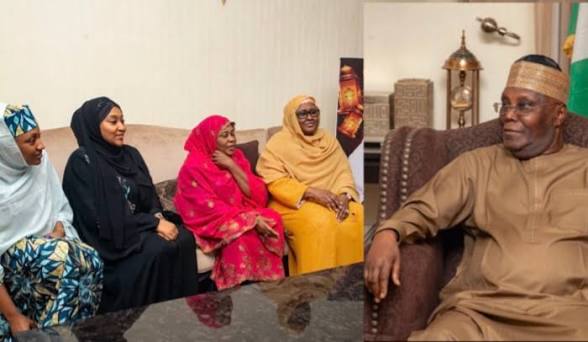
Former First Lady, Aisha Buhari has visited former Vice-President and African Democratic Congress (ADC) presidential candidate, Atiku Abubakar, in Abuja amid increased political activity ahead of the 2027 general elections.
Atiku disclosed the visit in a post on his social media platforms on Wednesday, describing the meeting as “warm and deeply appreciated.”
The purpose of the visit and details of their discussion were not disclosed by either Aisha or Atiku. Aisha was accompanied by one of her daughters and some associates.
Following the meeting, Atiku drew attention to the rising cost of food, transportation, education, healthcare and other basic needs, linking the economic pressure on households to worsening child malnutrition.
He cited figures presented by nutrition experts indicating that 41.1 per cent of Nigerian children under five are stunted, while 19.2 per cent are severely stunted. He also said stunting prevalence in the North-West stood at 58.2 per cent and that nearly two million children were suffering from severe acute malnutrition, with only about two in 10 receiving treatment.
Atiku said the figures showed the impact of economic hardship on Nigerian families, particularly as the cost of food, transportation and energy continues to affect household budgets.
The former vice-president said Nigerians needed an economy that rewards hard work, creates opportunities and enables families to meet their basic needs.
He also proposed a production subsidy for petroleum refined domestically, rather than a return to subsidising imported petrol. According to him, the proposed intervention would be targeted, capped, transparently budgeted and independently audited.
Atiku said reducing energy and transportation costs would have wider effects on agriculture, manufacturing, logistics, businesses and household spending.
He also called for increased treatment of severely malnourished children, stronger maternal and child nutrition programmes and improved delivery of nutrition funds to communities.
The National Bureau of Statistics currently puts Nigeria’s food inflation rate at 19.57 per cent.
Atiku said his broader economic programme was aimed at reducing energy, transportation and production costs, strengthening domestic production and improving household purchasing power.