



Currency Outside Nigerian Banks Falls to N4.8tn, Lowest Since November 2025
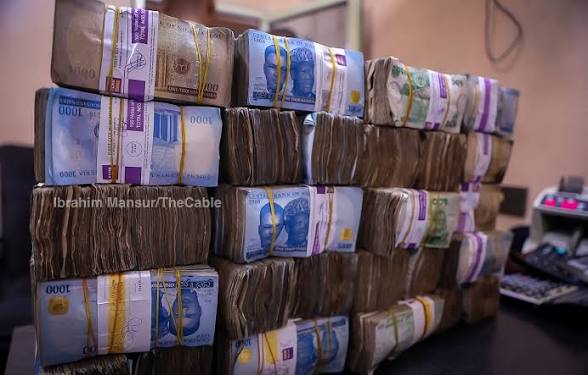
The amount of currency held outside Nigerian banks fell to N4.8 trillion in July 2026, its lowest level since November 2025, according to the latest data from the Central Bank of Nigeria (CBN).
The figure declined by N118.7 billion, representing 2.4 per cent, from N4.92 trillion recorded in June. It also extended the downward trend from N5.19 trillion in May.
Data tracked by Nairametrics showed that currency outside banks stood at N5.25 trillion in January before falling to N5.19 trillion in February, N5.08 trillion in April and N5.19 trillion in May. It subsequently dropped to N4.92 trillion in June and N4.8 trillion in July.
On a year-to-date basis, the amount has declined by N450.2 billion, or 8.6 per cent, from N5.25 trillion in January.
The July decline occurred alongside a reduction in total currency in circulation, which fell from N5.52 trillion in June to N5.38 trillion, representing a monthly decrease of N140.6 billion, or 2.5 per cent.
Despite the decline, cash outside banks continued to account for the larger share of total currency in circulation.
Meanwhile, bank reserves increased significantly during the period, rising from N34 trillion in June to N36.73 trillion in July. This represents an increase of about N2.73 trillion, or eight per cent.
Special intervention reserves remained unchanged at N329.4 billion.
The contrasting movements suggest a shift in the composition of monetary liquidity, with a greater proportion of funds being retained within the banking system rather than held as physical cash outside banks.
The development also reverses part of the increase recorded toward the end of 2025, when currency outside banks rose from N4.91 trillion in November to N5.41 trillion in December.
However, the July figure remains above most levels recorded in 2025, including N4.45 trillion in August, N4.47 trillion in September and N4.65 trillion in October.
The decline in cash holdings outside banks may be linked to increased adoption of electronic payment channels, greater movement of funds through bank accounts and changing demand for physical cash across the economy.
Speaking at the launch of the Nigeria Payment System Vision 2028 in Abuja, CBN Governor Olayemi Cardoso said the initiative would build on the country’s progress in digital payments and support a more inclusive, technology-driven financial system.
The apex bank has set a target of reducing cash outside the banking system to below 40 per cent of total currency in circulation, while also aiming to raise financial inclusion to 95 per cent of the adult population by 2028.
Nigeria has experienced rapid growth in digital payments over the past decade, supported by fintech, mobile money, instant payment systems and digital banking.
In May 2025, the CBN, in partnership with the Nigeria Inter-Bank Settlement System (NIBSS), launched the Non-Resident Bank Verification Number platform to enable Nigerians living abroad to obtain their BVN remotely without travelling to Nigeria for physical verification.