


Ben Murray-Bruce Calls for Decentralised Electricity System, Says Privatisation Has Failed
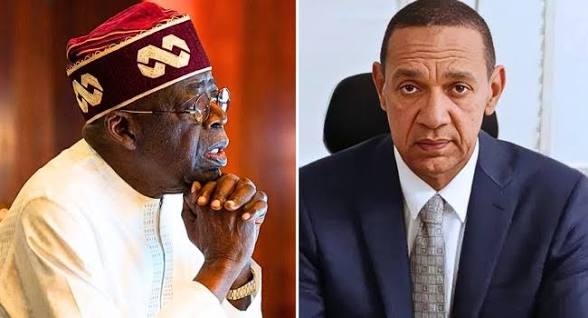
Former Senator and Silverbird Group founder, Ben Murray-Bruce, has called on President Bola Ahmed Tinubu to overhaul Nigeria’s electricity system by decentralising power generation and distribution across states, communities and estates.
Murray-Bruce, in an open letter to the President, argued that the 2013 electricity privatisation had failed to deliver reliable power, describing the process as a “transfer of custody” rather than a genuine reform.
He urged the Federal Government to empower communities and states to develop independent electricity systems, particularly through solar-powered mini-grids and other decentralised solutions.
Citing figures from the Nigerian Electricity Regulatory Commission, NERC, he said only 4,286 megawatts of the country’s 13,625MW installed generation capacity was available for dispatch in April, representing about 31 per cent.
He also cited the collapse of the national grid on August 22, when available generation reportedly dropped from above 4,000MW in the afternoon to 1,132MW at about 8:30 p.m.
Murray-Bruce said the situation demonstrated the vulnerability of relying on a centralised national grid to supply a population of more than 200 million people.
He further criticised the metering gap in the distribution sector, noting that about 5.1 million of Nigeria’s 12.31 million active electricity customers remained unmetered as of February.
According to him, the continued reliance on estimated billing was unacceptable, particularly as the distribution companies reportedly collected ₦801.16 billion between January and April.
“A meter is a machine that tells the truth. An estimated bill is a machine that does not,” he said, accusing the sector of generating revenue despite inadequate electricity supply.
Murray-Bruce also acknowledged the debts owed to generating companies but argued that the sector required stronger private capitalisation rather than continued dependence on government intervention and bailouts.
He proposed a community-based model under which estates, communities and other local entities could obtain guaranteed loans to establish and operate their own metered solar power systems, with residents paying regulated tariffs.
He said the approach could simultaneously expand electricity access and create new investment opportunities for Nigerians.
The former senator also proposed that state governments take responsibility for powering facilities under their jurisdiction, including streetlights, primary healthcare centres, schools and police stations, while the Federal Government focuses on federal institutions and infrastructure.
He noted that the Electricity Act 2023, signed by President Tinubu, had removed electricity from the Exclusive Legislative List and enabled states to regulate their electricity markets.
Murray-Bruce argued that the legal framework for decentralising the sector was therefore already in place, stressing that what was required was decisive implementation.
He cited Geometric Power’s electricity system in Aba, Abia State, as an example of how localised power generation and distribution could provide an alternative to dependence on the national grid.
He urged Nigerians to hold state and local governments accountable for electricity responsibilities devolved to them under the new legal framework.
Murray-Bruce concluded by challenging the Federal Government to reset the electricity sector around decentralised generation, saying such reforms could enable a significant expansion of reliable electricity supply within four years.