


Governor Sule Finalizes New $2 Million Lithium Agreement with Chinese Enterprise
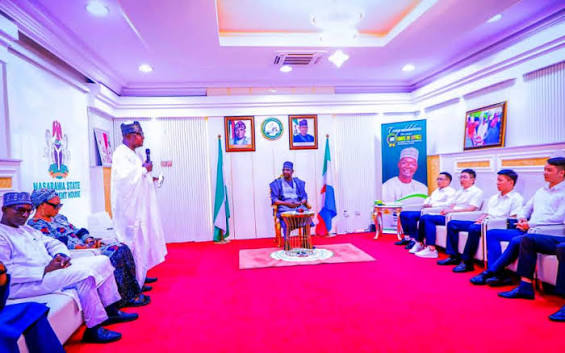
Governor Abdullahi Sule of Nasarawa State has overseen the signing of a $2 million supplementary lithium agreement between the state government and Diamond New Energy, coming on the heels of his recent official trip to China.
The formal execution ceremony took place on Friday at the Nasarawa State Governor’s Lodge in Abuja.
Delivering remarks during the event, Governor Sule expressed gratitude to the investors for demonstrating faith in both Nasarawa State and Nigeria, framing the deal as one that safeguards the mutual interests of the government and the corporate entity.
“By keeping your factory operational, we ensure that you continue to get raw material. That is the essence of this agreement, and that is the essence of us quickly obtaining that license before somebody else will get it. Now we have achieved both aims,” the governor stated.
He added, “We are going to keep your factory functional, and we also have an interest as license owners in whatever you are doing in your company. More importantly, the people you have employed will remain employed.”
The signing ceremony was attended by representatives from the Ministry of Justice, the Ministry of Environment and Natural Resources, the Nasarawa State Investment Development Agency (NASIDA), alongside executive teams from Diamond New Energy and Ganfeng Lithium Industry Limited.
Furthermore, the governor urged the company to maintain peaceful co-existence with its host communities and invest in their local growth, describing such communal harmony as the most reliable path to safeguarding foreign investments.
He clarified that all financial disbursements payable to Nasarawa State under the terms of the accord would be remitted directly in foreign currency to the Nasarawa Mining Company Limited, accompanied by a clause allowing for routine reviews of the operational terms.
In his address, Ibrahim Abdullahi, the Managing Director and Chief Executive Officer of NASIDA, highlighted that the state government had previously entered into an exclusive mining collaboration agreement with the firm in 2024, which facilitated the establishment of West Africa’s largest lithium processing refinery.
He noted that this supplementary pact reinforces that groundwork and further enhances investor trust within the state’s economic ecosystem.
“This supplementary agreement gives credence to these issues. It further gives confidence to the investor to do even more within Nasarawa State. A key component is that we are giving permission for the continued supply of lithium materials from the state government’s block to serve as feedstock for the refinery, so that more youths and women of Nasarawa State can be employed,” Abdullahi stated.
He highlighted that the deal yields immediate financial yields for the state, specifying that Nasarawa State will collect two million dollars upon execution, with additional revenues accruing sequentially as detailed in the contract.
Speaking on behalf of Diamond New Energy, Mr. David Siong reaffirmed the organization’s dedication to expanding its operations within Nasarawa State, placing special emphasis on local mineral processing and employment generation for surrounding communities.
“Diamond New Energy always insists on and firmly believes in the further development of resources in Nasarawa, the deep processing of resources, creating employment for the local community, and boosting local economic development. We look forward to the support of the state government to put this cooperation into practice,” Siong declared.
The Attorney-General and Commissioner for Justice, Isaac Danladi, subsequently presented copies of the deed of assignment entered into between the Nasarawa Mining Company Limited and Ganfeng Lithium Industry Limited.
Danladi explained that the legal document conveys the mining rights and equity of the Nasarawa Mining Company across 3.5 mining cadastral units located at Endo in Nasarawa Local Government Area to Ganfeng Lithium Industry Limited, following comprehensive legal scrutiny by all stakeholders.