


Today in History: When Organized Labour Stood Up for Democracy on August 3, 1994
On August 3, 1994, Nigeria’s socio-political landscape witnessed one of the most defining confrontations between organized civil society and military authoritarianism. On this day, the Nigerian Labour Congress (NLC) acting as the umbrella organization for 40 industrial unions representing millions of Nigerian workers officially declared an indefinite nationwide general strike.
The primary demand was non-negotiable: the immediate, unconditional release of Chief M.K.O. Abiola, the presumed winner of the June 12, 1993, presidential election, alongside the restoration of democratic governance.
To fully appreciate the gravity of August 3, 1994, one must look back to June 12, 1993. That presidential election widely regarded by local and international observers as the freest, fairest, and most peaceful election in Nigeria’s post-independence history saw Chief Moshood Kashimawo Olawale (M.K.O.) Abiola secure a decisive national mandate.
However, the military regime led by General Ibrahim Babangida abruptly annulled the election, plunging the country into institutional chaos. Following Babangida’s exit and the brief, fragile tenure of Ernest Shonekan’s Interim National Government, General Sani Abacha seized power in November 1993, further tightening the military’s grip on the state.
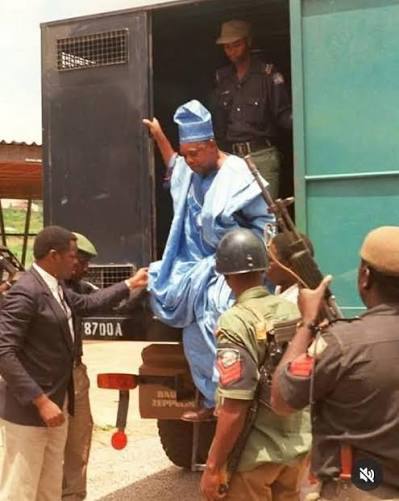
Undeterred by the oppressive political climate, Abiola formally declared himself President of the Federal Republic of Nigeria at Epetedo, Lagos, in June 1994. The Abacha regime reacted swiftly, arresting Abiola on charges of treason.
Prior to the NLC’s action on August 3, key petroleum sector unions most notably the National Union of Petroleum and Natural Gas Workers (NUPENG), led by Frank Kokori, and the Natural Gas Senior Staff Association of Nigeria (PENGASSAN) had already initiated strikes in July that severely disrupted fuel distribution across the country.
The entry of the parent body, the Nigerian Labour Congress, on August 3 elevated localized industrial actions into a coordinated national resistance. The timeline of tension had built steadily from the annulment in June 1993, to Abiola’s Epetedo declaration in June 1994, followed by the oil sector stoppages in July, and ultimately culminating in the NLC’s full-scale call to action on August 3.
By directing all 40 affiliated unions to down tools, the NLC effectively halted commerce, public transport, state administration, and industrial output in major urban centers such as Lagos, Ibadan, Enugu, and Kaduna.
The message from the workforce was clear: economic normalcy could not coexist with political tyranny.
The Abacha dictatorship viewed the August 3 declaration as a direct challenge to its authority. Rather than engaging in constructive political dialogue, the regime responded with heavy-handed repression across multiple fronts.
By mid-August, the federal military government issued decrees dissolving the national executive boards of the NLC, NUPENG, and PENGASSAN, replacing elected labour leaders with government-appointed sole administrators.
Prominent union leaders and pro-democracy advocates were detained under harsh conditions without trial, while media houses covering the industrial actions were systematically raided or shut down.
Despite the violent crackdown and eventual suppression of the strikes, the resolute stance taken by organized labour severely eroded the legitimacy of the military junta, cementing the union movement’s role as a cornerstone of Nigeria’s pro-democracy struggle.
The events of August 3, 1994, remain a watershed moment in Nigerian history. It demonstrated the power of organized labor to transcend purely economic concerns such as wages and working conditions to champion constitutional rights, civil liberties, and democratic legitimacy.
Though Chief M.K.O. Abiola remained in custody until his tragic passing in July 1998, the collective sacrifices made by Nigerian workers during the turbulent summer of 1994 kept the democratic flame alive, ultimately paving the way for the nation’s return to civilian rule in May 1999.