



Stakeholders Advocate Technology Adoption to Drive Nigeria’s Energy Sector Growth
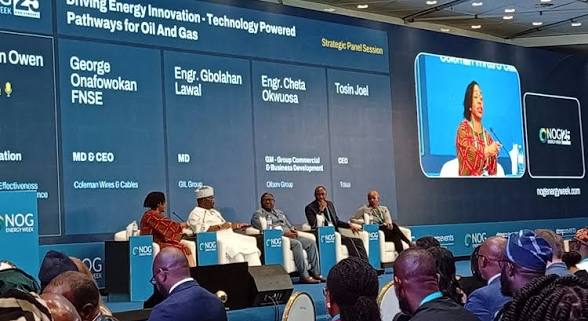
Nigeria’s oil and gas industry stakeholders have urged operators to accelerate the adoption of emerging technologies and invest more in workforce development, saying the combination is critical to improving efficiency, increasing productivity and supporting the sector’s long-term growth.
The call was made during a panel discussion on technology-driven innovation at the recently concluded Nigeria Oil and Gas Conference.
Speaking during the session, Chairman of Oilserv Group, Emeka Okwuosa, represented by the company’s Group Business Development and Commercial Manager, Cheta Okwuosa, said engineering, procurement and construction firms should prioritise technologies that improve operational speed, safety and sustainability while strengthening local technical capacity.
According to him, technology can only deliver lasting value when backed by skilled personnel, stressing the need for deliberate investment in developing indigenous professionals capable of operating advanced systems.
Okwuosa said Oilserv had steadily integrated automation into its operations, progressing from manual processes to semi-automated systems before deploying fully automated technologies on major gas infrastructure projects.
He explained that the company recorded improved operational outcomes after deploying a combination of semi-automatic and fully automatic systems on the Ajaokuta-Kaduna-Kano gas pipeline project, noting that artificial intelligence now plays a key role in optimising these technologies.
He added that as the company expands into gas commercialisation, it has introduced AI-powered leak detection, intrusion monitoring and remote surveillance systems that enable real-time oversight of critical infrastructure.
Also speaking, Managing Director of GIL Group, Gbolahan Lawal, called on industry players to embrace data-driven innovations and modern technologies to improve operational performance.
Lawal urged operators to review existing analogue processes, retain effective practices and replace outdated methods with more efficient digital solutions. He also emphasised the importance of training and capacity building to improve profitability across the industry.
Lead Strategic Consultant at Acepontis Ltd, Atiemoria Ebhodaghe, said technology adoption among marine logistics operators in the upstream oil sector remained uneven, with larger operators advancing more rapidly than smaller indigenous firms.
According to him, international oil companies and leading vessel owners are increasingly deploying technologies such as Dynamic Positioning systems, remote vessel data exchange and automated fuel optimisation to improve efficiency and reduce operational risks.
He noted, however, that many indigenous operators struggle to adopt similar technologies because of limited financial resources, creating a gap between technologically advanced fleets that secure long-term offshore contracts and older vessels that remain confined to the spot market.
Ebhodaghe also said artificial intelligence is reshaping vessel management by enabling predictive maintenance, allowing operators to detect potential equipment failures before they disrupt offshore operations.
He explained that AI-driven maintenance systems help reduce vessel downtime and improve fleet availability, supporting timely delivery of offshore drilling and production projects.