


Senate Approves Dual Policing System for Nigeria, Empowering Governors to Appoint State Police Chiefs
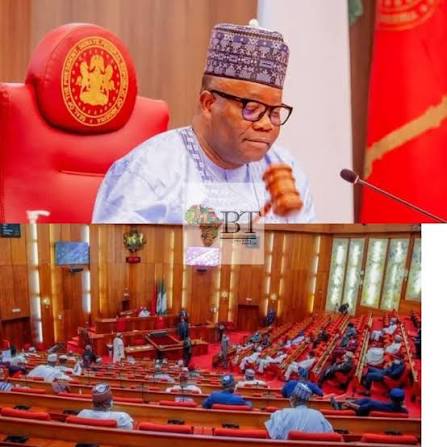
Nigeria’s Senate has passed a landmark constitutional amendment bill establishing state police services across the country, bringing to an end one of the longest-running debates in the nation’s security and governance history. The upper chamber approved the legislation on Wednesday during a plenary session presided over by Senate President Godswill Akpabio, after more than two-thirds of senators voted in its favour through a manual voting process conducted on the floor of the chamber.
The bill, titled the Constitution of the Federal Republic of Nigeria (Sixth Alteration) Bill, 2026, replaces the existing Nigeria Police Force framework with a dual structure comprising a Federal Police Service and State Police Services.
Under the new arrangement, each state police service will be headed by a Commissioner of Police appointed by the state governor and confirmed by the state legislature. Governors are also empowered to issue written policy directives to state commissioners on matters relating to public safety and public order within their respective states.
The passage followed a dramatic start to the session, as senators were forced to abandon a planned electronic voting system after technical glitches left the devices unable to function for more than 30 minutes despite repeated attempts. Senate Leader Bamidele moved a motion to switch to manual voting, arguing that every senator deserved an equal opportunity to participate in the historic exercise. Senate President Akpabio backed the motion, insisting that an open voting process would also promote transparency by putting each senator’s position on record before the Nigerian public.
Lawmakers also built safeguards into the legislation to address widespread concerns that the new policing structure could be weaponised by governors against political opponents. The bill expressly prohibits state commissioners of police from arresting, detaining, investigating or deploying force against any person, political party or group solely for criticising government. These provisions reflect the intensity of the debate that has surrounded state policing for years, with critics consistently warning that concentrating police powers at the state level without checks could deepen political repression.
President Bola Tinubu had transmitted the bill to the Senate in a letter dated June 15 and read during plenary by Akpabio on Tuesday, June 23. Tinubu described the legislation as a critical component of his administration’s strategy to reorganise Nigeria’s security architecture in the face of rising banditry, terrorism, kidnapping and communal violence. Senators were recalled from a scheduled three-week recess specifically to take up the bill, underscoring the urgency attached to the reform at the highest levels of the federal government.
The bill’s passage by the Senate does not mark the end of the legislative journey. As a constitutional amendment, it must now be transmitted to the 36 State Houses of Assembly, where it requires the ratification of at least 24 state legislatures before it can take full legal effect. The Senate and House of Representatives will also constitute a joint conference committee to harmonise any differences between their respective versions of the legislation before it proceeds further.