Misplaced Call For Resignation: Peter Obi Not Worth a Cleaner in Tinubu School of Leadership
Fiscal Federalism
When a nation takes a shortcut in selecting its leader, choosing the loudest voice over the steadiest hand, it buys temporary adrenaline-induced excitement at the cost of its steady and studied stability. A crown obtained by foul means is rarely worn with honor. Nigerians must be wary and extra vigilant when searching for quick economic transformation.
When Tinubu was the Governor of Lagos State, he broke down 20 local governments into 57 Local Council Development Areas (LCDAs). This was no easy feat. He stood against the onslaught of then-President, Olusegun Obasanjo, and successfully won the case at the Supreme Court. While other leaders involved in creating LCDAs alongside Tinubu backed down because they couldn’t stand the heat, Tinubu endured. LCDAs literally mean bringing governance closer to the people, ensuring that the government is abreast of the demands of its citizens without middlemen. The development of these LCDAs has directly bolstered the building of roads, primary healthcare facilities, and provision of potable water.
The reverse is the case for Peter Obi. While he was the Governor of Anambra State, he failed and refused to conduct local government elections for years. Elections were only held shortly after the Independent National Electoral Commission (INEC) declared his successor, Willie Obiano, as the winner. Obi claimed this 8-year delay was due to court litigation. This means that for nearly a decade, local governments in Anambra had no voice to channel their needs and demands to; the government was deliberately kept far away from the very people it was supposed to serve.
In the history of Nigeria, no president has successfully implemented true local government autonomy until Tinubu assumed office. He fought tirelessly not just for the administrative autonomy of local governments, but for their financial independence. On July 11, 2024, the Supreme Court granted financial autonomy to Nigeria’s 774 local government councils, ordering the Federal Government to pay allocations directly into their exclusive accounts. The court ruled that only democratically elected local government administrations are entitled to these funds, effectively ending the era of caretaker committees. This fiscal autonomy gives local governments the opportunity to build infrastructure and spend funds independently of state interference.
Following the Nigerian Civil War, Head of State General Yakubu Gowon promised the southeastern region (the former Biafra) a policy of “No victor, no vanquished,” initiating the 3Rs program: Reconciliation, Rehabilitation, and Reconstruction. The government pledged to reintegrate the region, rebuild destroyed infrastructure, and provide basic needs to those who suffered. No administration has come closer to fulfilling those promises than the Tinubu presidency. His administration has taken more definitive, institutional steps than many of his predecessors combined. Tinubu signed the bill establishing the South East Development Commission (SEDC), which is explicitly mandated to manage federal funds for the reconstruction and rehabilitation of civil war-damaged infrastructure in the South-East. Furthermore, his administration approved over $3 billion for the completion of the Eastern Rail Line and over $500 million to upgrade and modernize underutilized Eastern ports.
On electricity, when Tinubu assumed office, he successfully removed power generation from the Exclusive List to the Concurrent List. This landmark reform means states can now embark on their own electricity programs, generating and transmitting power without federal government interference. Already, 15 states have officially taken control of their own electricity markets including Enugu, Ekiti, Ondo, Imo, Oyo, Edo, Kogi, Lagos, Ogun, Niger, Plateau, Abia, Anambra, and Nasarawa. It is only a matter of time before constant electricity becomes the new norm across Nigeria.
Meanwhile, Peter Obi pledged to increase Nigeria’s electricity generation and distribution to at least 10,000 Megawatts (MW) within his first four years in office. It is safe to say this man does not understand Nigeria’s at all. Nigeria already has an installed capacity of approximately 13,000–14,000 MW. However, due to gas supply shortages, the country generally generates and distributes between 3,500 MW and 5,800 MW. This gas shortage was caused by inherited debts, which the Tinubu administration has almost entirely cleared. Once fully resolved, there will be a free flow of gas to power the national grid.
State Policing
All of Tinubu’s plans are strategically designed to work hand in glove. Imagine a country that passes a bill for state policing without adequate state funding or local government autonomy. What would happen? The states would fail to fund their police forces, and local governments wouldn’t be able to properly equip local security. Knowing this from the start, Tinubu unprecedentedly increased allocations to state governments. These enhanced allocations ensure that states can fund state policing, properly equip personnel, and provide superior training without relying on heavy borrowing ultimately leading to better security for the states and Nigeria at large.
State policing will fundamentally address the security challenges plaguing Nigeria by curbing the lack of passion, lack of dedication, and issues of political and financial sabotage. For instance, when a policeman from the North is transferred to the South for service, the deep cultural passion for the environment is often missing. In such cases, personnel easily fall victim to financial bribes because they have no organic connection to the land of their deployment. To put it simply, “ko le work” (it cannot work). It is highly improbable for a policeman protecting his own homeland to accept a bribe that enables the destruction of his own community.
Look at the remarkable progress Amotekun has achieved across Yoruba land despite their low income, with some operatives reportedly receiving just ₦35,000. Even while using older weapons and lacking standard training, they have excelled. When these forces are integrated into the upcoming state policing system which will definitively earn them better salaries, advanced weapons, and adequate training they will execute their duties with even greater passion.
Currently, opportunities to study at the Police Academy or the Nigerian Defense Academy (NDA) are frequently handed out as political favours (“slots”) by politicians. After these individuals graduate, they pay the price of loyalty to the politicians who gave them those slots. This leads to political sabotage, where security forces are used for personal political advantage rather than the benefit of the state. Such manipulation is impossible under a well-structured state police system.
Furthermore, many individuals join the police force today simply due to unemployment, rather than a genuine passion to protect citizens. In a country where people flaunt overnight wealth gotten from kidnapping without being questioned, state policing will structurally address and eliminate these issues.
Tinubu has consistently prioritized the welfare of security personnel. His actions during his recent birthday speak volumes: the President donated his entire salary since his inception of office to the military. No government in the history of Nigeria has ever donated its entire salary to any cause, let alone the armed forces. Tinubu has also approved an upward review of salaries and allowances for the Nigerian Armed Forces. Beyond basic pay, the government approved massive funding for decent accommodations, equipment procurement, and the clearance of outstanding pensions for retired military personnel. Our military no longer fights wars with “Sakabula” (flintlock muskets). The military now utilizes chartered and military flights to transport troops for deployment, rotations, and annual leave a massive shift from the past, where personnel had to use their personal funds to travel to their states of deployment.
In contrast, during political debates, Peter Obi’s immediate successor, Willie Obiano, publicly stated that at least 69 people were kidnapped in a single period leading up to the transition of power, leaving residents terrified to return home. I witnessed a kidnapping firsthand in Obi’s hometown of Agulu around 5:00 PM, and I promised myself never to visit the area again.
Education
Obafemi Awolowo once said, “Education is the light that drives away poverty.” Yet, throughout Obi’s 8-year administration as Governor of Anambra State, he did not build a single new school, claiming that constructing brand-new schools was never part of his administration’s manifesto.
While it is true that Anambra State achieved the number one ranking in Nigeria for both WAEC and NECO examinations during the final years of Obi’s tenure, the narrative surrounding this achievement is deeply dark. The success was heavily built on “miracle centers.” Obi left office in 2014, and his direct successor, Governor Willie Obiano, immediately faced intense regulatory threats from the West African Examinations Council (WAEC) to delist Anambra State entirely. Under severe pressure from WAEC to avoid a total state-wide ban, the incoming Obiano administration officially shut down 486 “special” or “miracle” examination centers that had operated unchecked throughout Obi’s tenure.
Conversely, Tinubu was the first governor in Nigeria to pay JAMB fees for students in public schools, and he initiated the “One-Day Governor” program to motivate students to excel. Tinubu built numerous schools. During his tenure as Governor of Lagos State (1999–2007), his administration constructed 4 brand-new model prototype secondary schools known as the “Millennium Secondary Schools,” alongside roughly 24 rural/primary schools and thousands of new classrooms.
Under Tinubu, the federal education budget has skyrocketed. For context, in 2016 under the Buhari administration, the budget for education was ₦369.6 Billion. In 2024, Tinubu’s administration budgeted ₦2.18 Trillion for education. Similarly, in 2012 under the Goodluck Jonathan administration, ₦400.15 Billion was budgeted for education, whereas Tinubu’s 2025 budget allocated a staggering ₦3.52 Trillion to the sector. This clearly demonstrates that Tinubu treats education with ultimate priority.
Technical and Vocational Education and Training (TVET) has been around for a long time, but youth engagement was low. Tinubu turned this around by introducing comprehensive reforms: every verified student enrolled in a TVET now receives a monthly stipend of ₦22,500 (split into ₦17,500 for general upkeep and ₦5,000 for transportation costs). Approved vocational hubs do not charge the students any tuition; instead, the Federal Government pays the centers ₦45,000 monthly per trainee to cover instructional materials and tools.
The Nigerian Education Loan Fund (NELFUND) is another area where Tinubu is working wonders. Under NELFUND, 100% of a student’s tuition and mandatory institutional charges are calculated and wired directly to the accounts of their university, polytechnic, or college of education. To cover feeding and general living expenses, a monthly stipend of ₦20,000 is paid directly into the student’s personal bank account. Nigerian lecturers now have access to a dedicated interest-free loan program known as the Tertiary Institutions Staff Support Fund (TISSF). Consequently, the Academic Staff Union of Universities (ASUU) is no longer embarking on strikes under Tinubu. Today, Nigeria has two institutions the University of Ibadan (UI) and the University of Lagos (UNILAG) positioned in the prestigious 801–1000 band globally, a major improvement from previous years when only a single school made the top 1,000 threshold.
Economy
Tinubu assumed office as Governor of Lagos State when the state’s Internally Generated Revenue (IGR) was a mere ₦600 Million per month. By the time he left office, it had grown to ₦83.02 Billion, and today, Lagos boasts an IGR of over ₦155 Billion per month a trajectory made possible by Tinubu’s blueprint.
Zooming into his current administration as President, Nigeria was previously trapped in borrowing unproductive loans that generated no income and were used to fund salaries, fuel subsidies, and general consumption. Most Nigerian states couldn’t even pay basic salaries before Tinubu assumed office. Under Tinubu’s administration, the national minimum wage was increased to ₦70,000, and the government is achieving this without borrowing to pay salaries.
Every major economic indicator is turning green. The United Kingdom has commended Tinubu’s economic reforms, openly referencing Nigeria as the “African Superpower.” The S&P rating also indicates that the Nigerian economy is moving in the right direction. Crucially, following rigorous structural reforms, Nigeria was officially removed from the Financial Action Task Force (FATF) gray list on October 24, 2025.
Compare this to Peter Obi, who invested state funds into a commercial bank where he had personal interests, alongside recent allegations of fraud within his political circle. Kenneth Okonkwo alleged that Peter Obi headed a “criminal gang” that defrauded party aspirants, presenting text messages from party member Obunike Ohaegbu, who claimed he was scammed out of ₦10 Million. While Peter Obi insists that he left zero debt when he handed over power in March 2014, official records from the Debt Management Office and statements from his successors prove that Anambra State was left with a debt profile ranging between ₦12.1 Billion and ₦17.6 Billion.
Health
Not a single new hospital was built during Obi’s 8 years as governor. In fact, it was during his administration that the Anambra health sector embarked on a continuous strike that lasted for 13 consecutive months.
President Bola Ahmed Tinubu’s healthcare reform strategy under the Renewed Hope Agenda centers on structural upgrades, maternal support, and expanded rural emergency mobility. The administration has systematically targeted grassroots infrastructure through the revitalization of primary health centers, alongside a planned overhaul of an additional several thousand centers nationwide to bring basic care closer to local communities. To address critical transit gaps in rural and riverine regions, the government deployed a dedicated fleet under the National Emergency Medical Service and Ambulance System, incorporating rural tricycle ambulances, boat ambulances, and compressed natural gas-powered tertiary hospital vehicles.
On specialized care and financial relief, the agenda prioritizes maternal health by establishing fully subsidized, free Caesarean sections for vulnerable pregnant women across accredited facilities via the National Health Insurance Authority (NHIA). Specialized clinical access is being enhanced through regional oncology centers of excellence designed to combat medical tourism. This infrastructure is reinforced on the ground by human resource placement across local government areas and financial interventions, including direct funding support to the Nigeria Centre for Disease Control (NCDC) to bolster public health surveillance and emergency response. His administration is also subsidizing dialysis, something that never been done before.
“What we have done for ourselves alone dies with us; what we have done for others and the world remains and is immortal.” Albert Pike, Tinubu has always been a mentor to so many be it directly or indirectly has always mentor people. He has a lot of politicians under his wings who he has mentored directly ranging from Babbajide Sanwo-Olu, Rauf Aregbesola, Yemi Osinbajo, Babatunde Raji Fashola, Adegboyega Isiaka Oyetola, Lai Mohammed, Kayode Fayemi, Akinwunmi Ambode, Wale Edun, Yemi Cardoso, Uba Sani the list goes. Who has Obi mentored?
Nigerians, shine your eyes. Facts are stubborn, and these are the unassailable facts. Choose wisely.
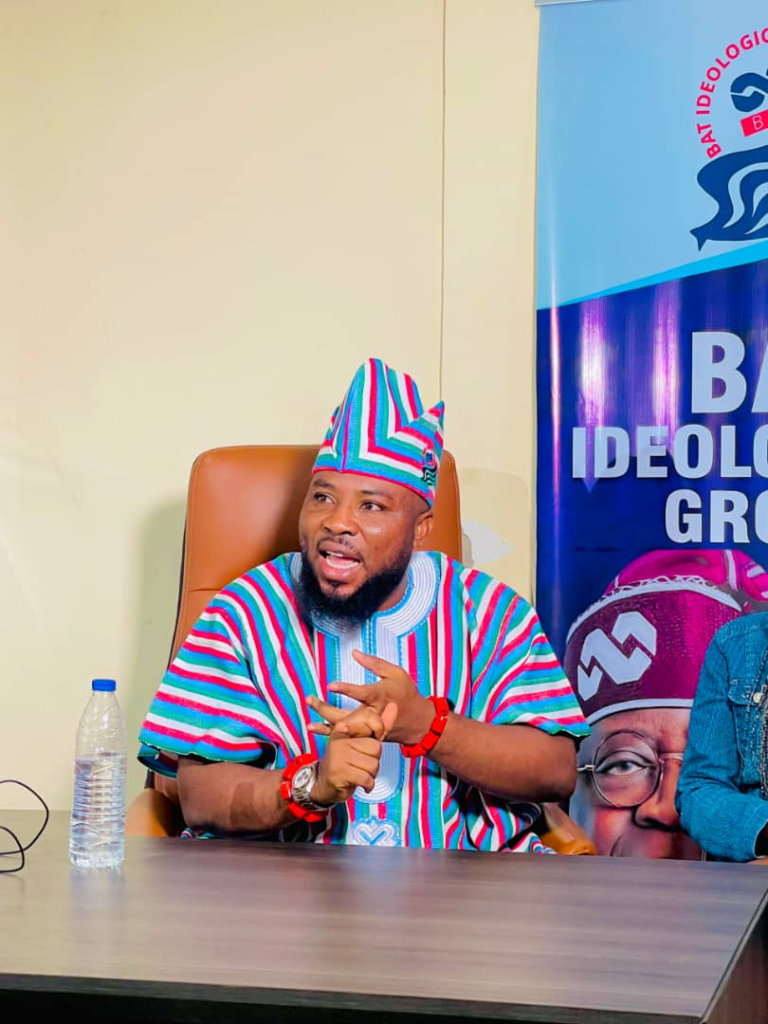
Bamidele Atoyebi is the Convener of BAT Ideological Group, National Coordinator of Accountability and Policy Monitoring and a publisher at Unfiltered and Mining Reporting and political social worker