



Ebola Cases Near 900 as Africa CDC Raises Concern Over Rapid Spread
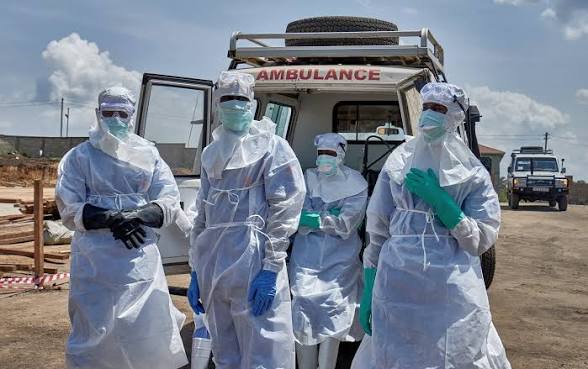
The ongoing Ebola outbreak in Uganda and the Democratic Republic of the Congo (DRC) has recorded 894 confirmed infections and 204 deaths within a month of its declaration, raising concerns among health authorities over the pace of transmission and gaps in response efforts.
The Acting Head of Emergency Preparedness and Response at the Africa Centres for Disease Control and Prevention (Africa CDC), Dr Wessam Mankoula, disclosed this on Thursday during a webinar on the outbreak.
Mankoula said 74 patients had recovered since the outbreak was officially declared on May 15, 2026, adding that the situation in Uganda remained stable with 19 confirmed cases, two fatalities and seven recoveries, all confined to a single health zone in Kampala.
According to him, the DRC remains the epicentre of the outbreak, with Ituri Province accounting for 91 confirmed cases and 78 per cent of all Ebola-related deaths recorded in the country.
He identified North Kivu as a major area of concern due to insecurity, which has hampered access for health workers and emergency responders, resulting in poor contact tracing coverage and a high fatality rate.
Mankoula noted that the outbreak has expanded significantly, affecting 32 health zones across the DRC and Uganda within four weeks. He said the number of affected zones rose from three during the first week of the outbreak to 32 by the fourth week.
He described the current outbreak as one of the largest in Ebola history, ranking behind only the 2014 West Africa epidemic and the 2018–2019 DRC outbreak in terms of confirmed cases and deaths.
The Africa CDC official revealed that infections increased by 38 per cent compared to the previous week, although transmission remains concentrated within the three provinces where the outbreak first emerged.
He expressed concern over inadequate contact tracing, explaining that while between 17,000 and 35,000 contacts should be monitored based on the number of confirmed cases, only about 6,000 individuals have been identified and listed.
Of those, he said, approximately 4,000 are being actively monitored, representing less than 15 per cent of the level required for effective outbreak control.
Mankoula stressed that the absence of approved vaccines and treatments for the Sudan strain of Ebola makes early case detection, contact tracing and daily monitoring the primary tools for containing the disease.
He also highlighted serious gaps in burial response capacity, noting that only seven of the 49 required safe burial teams have been deployed, alongside seven of the 98 vehicles and 84 of the 540 personnel needed for operations.
The Africa CDC declared the outbreak a Public Health Emergency of Continental Security on May 18, three days after confirmation of the outbreak. Since then, regional and international stakeholders have intensified coordination efforts, including ministerial meetings, field visits and cross-border engagements involving affected countries and neighbouring states.
Mankoula said Africa CDC and the World Health Organisation have launched a joint six-month response plan valued at 517 million dollars, covering affected countries, neighbouring states at risk and partner coordination activities.
He reported improvements in laboratory capacity, with testing turnaround times reduced from up to eight days to less than 24 hours. More than 21,000 diagnostic tests have already been supplied to affected countries, while an additional 27,000 are expected.
Despite these gains, treatment facilities are approaching capacity. Nine Ebola treatment centres in the DRC are currently operating at 86 per cent occupancy, while additional centres are being constructed to accommodate projected increases in cases.
The official added that infection prevention measures have been strengthened through assessments of healthcare facilities, delivery of more than 60 metric tonnes of medical supplies and deployment of technology to support surveillance and border monitoring.
He, however, warned that funding shortfalls, insecurity, the lack of licensed medical countermeasures and inadequate healthcare worker protection continue to threaten response efforts.
According to Mankoula, scaling contact tracing coverage from below 15 per cent to at least 95 per cent remains critical to bringing the outbreak under control.