

Today in History: How Valentina Tereshkova Made Space History Solo
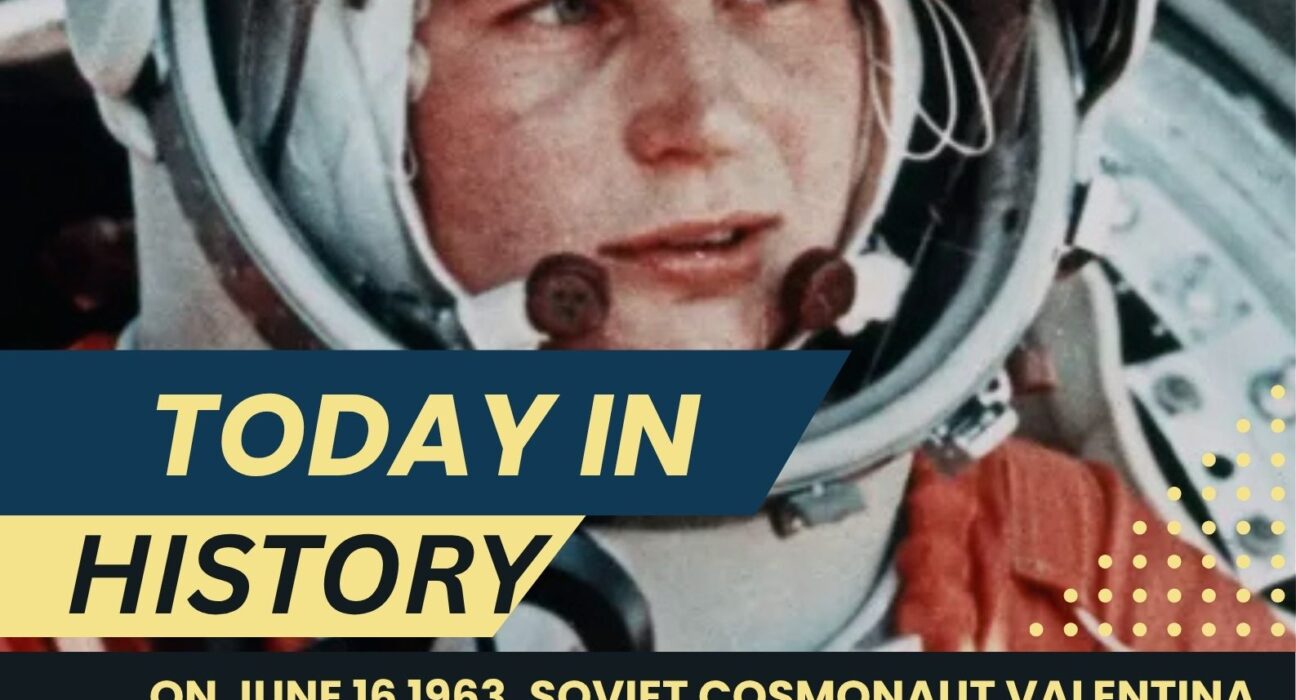
On the morning of June 16, 1963, a modified R-7 rocket roared to life at the Baikonur Cosmodrome, carrying a 26-year-old former textile worker into the upper atmosphere. Operating under the call sign Chaika (Seagull), Valentina Tereshkova was not just launching into orbit she was shattering a profound terrestrial ceiling.
By the time her Vostok 6 capsule returned to Earth three days later, Tereshkova had secured her place as the first woman in space, setting a milestone that remains completely unique to this day.
Tereshkova’s journey to the stars was atypical for an early space explorer. Unlike her male counterparts in the Soviet space program, who were exclusively military test pilots, Tereshkova lacked conventional flight experience. Instead, she had a passion that proved even more valuable to the Soviet space agency: skydiving.
An avid amateur parachutist at her local flying club in Yaroslavl, she had clocked dozens of jumps while working full-time at a textile mill. This specific expertise caught the attention of Soviet space officials. Early Vostok spacecraft lacked a soft-landing system; to survive the return to Earth, cosmonauts had to eject from their capsules at roughly 20,000 feet and parachute down safely.
Following Yuri Gagarin’s historic flight, Soviet leadership saw a powerful opportunity to demonstrate technical superiority and showcase the progress of Soviet society. Tereshkova was selected from hundreds of applicants, undergoing a rigorous training regimen of weightlessness tests, isolation studies, and intensive centrifuge training.
When Tereshkova blasted off on June 16, 1963, she wasn’t just performing a routine mission. Vostok 6 was part of a complex dual-flight operation. Just two days prior, cosmonaut Valery Bykovsky had launched aboard Vostok 5. At one point during their overlapping orbits, the two spacecraft came within three miles of each other, allowing the pilots to establish direct radio communication.
While the mission was heralded as a seamless triumph publicly, the reality inside the capsule was grueling. Tereshkova spent nearly 71 hours crammed into a space barely large enough to move, experiencing severe space sickness and physical discomfort from her spacesuit. Furthermore, a critical error in the navigation software threatened to lift the spacecraft further into space rather than de-orbiting it. Working closely with ground control, Tereshkova successfully loaded new coordinates to ensure a safe reentry.
Her historic flight lasted 2 days, 22 hours, and 50 minutes. During this time, she completed 48 full orbits around the Earth and traveled roughly 1.2 million miles. Her single mission logged more total flight hours than the combined flight time of all American Mercury astronauts up to that date.
Tereshkova landed by parachute in the Altay region of Siberia on June 19, completing a flight that permanently altered the landscape of the Space Race. It would take another 19 years before another woman, Svetlana Savitskaya, reached space, and 20 years before Sally Ride became the first American woman to do so in 1983.
Yet, as modern space agencies transition to multi-person crews and collaborative international missions, Tereshkova’s milestone stands as a permanent fixture in history. More than six decades after her capsule touched down in the Siberian fields, Valentina Tereshkova remains the first and only woman to have completed a solo space flight.
“Anyone who has spent any time in space will love it for the rest of their lives. I achieved my childhood dream of the sky.” — Valentina Tereshkova