


Super Falcons to Face Sudan or Comoros in First Step Towards LA 2028 Olympics
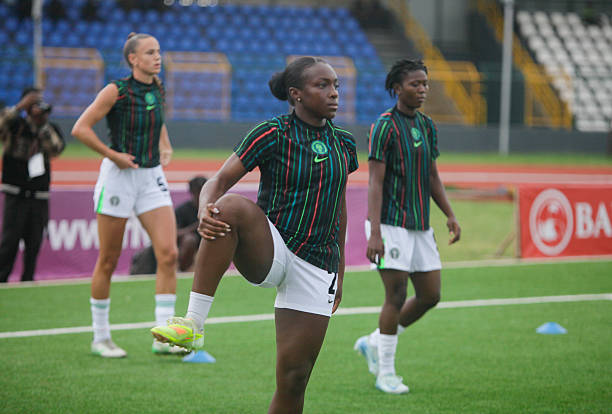
Nigeria’s Super Falcons now know their path to the 2028 Los Angeles Olympic Games after the Confederation of African Football conducted the draw for the African women’s football qualifying tournament in Cairo, Egypt on Wednesday.
The draw, held at CAF headquarters, confirmed that the ten-time African champions will enter the competition at the second round, a privilege afforded to them as the continent’s highest-ranked women’s side.
Their opponents will be the winner of the first-round clash between Sudan and Comoros, who are set to contest their home-and-away tie between June 1 and 9. The Super Falcons will then face whoever emerges from that fixture across two legs between October 5 and 13.
A total of 35 nations entered the qualification series, spanning every corner of the continent and reflecting the rapid growth of women’s football across Africa. The competition has been structured across five knockout rounds, with only two African teams ultimately earning tickets to represent the continent at the Los Angeles Games.
The women’s football tournament is scheduled to run from July 11 to 29, 2028, with the United States entering as defending champions on home soil. Fifteen nations will join the hosts through continental qualifying campaigns across six confederations, with Africa’s allocation remaining at just two spots.
The narrow qualification window makes the stakes extraordinarily high for every team involved. For the Super Falcons, the five-round knockout format offers no safety net a single poor run of results across two legs at any stage could end the campaign entirely. Nigeria qualified for Paris 2024 alongside Zambia but struggled at the tournament itself, exiting the group stage without a win.
The Los Angeles campaign presents an opportunity for redemption, and the pressure to return to the Olympics will be significant.
Africa’s most accomplished women’s footballing nation has historically set the standard on the continent, with their best Olympic showing coming at the 2004 Athens Games where they reached the quarterfinals. But the landscape has shifted. Nations like Morocco, South Africa, and Zambia are closing the gap, and the competition throughout the qualifying rounds is expected to be fierce.
For now, the Falcons’ immediate focus turns to their second-round assignment a task that, on paper, appears manageable, but one that demands full concentration. In Olympic qualification, no fixture is routine.