



Economic Spotlight: Nigeria’s Projected Growth Trails High-Flyers in Global 2025 Ranking
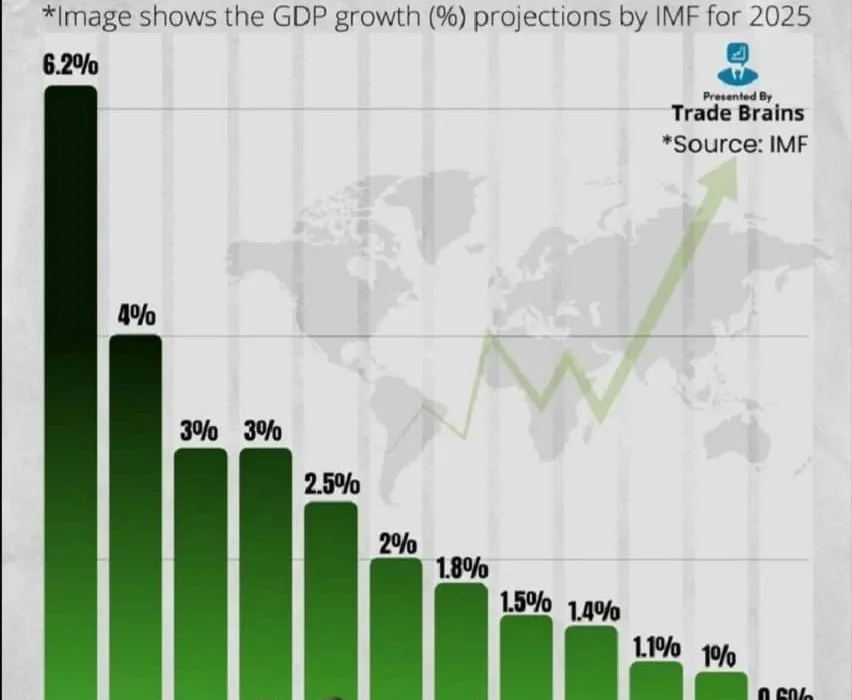
A recent analysis of future economic performance, drawing on data from the International Monetary Fund (IMF), has positioned Nigeria among the top countries for Gross Domestic Product (GDP) expansion in 2025, though its projected rate is substantially eclipsed by a host of other emerging economies.
Based on projections from the IMF’s World Economic Outlook (April 2025), Nigeria is forecast to achieve a 3.0 percent growth in its GDP for 2025. This figure places the West African nation in a tie for the third-highest growth rate globally, sharing the position with oil giant Saudi Arabia.
While a 3.0 percent expansion is a notable achievement, the overall global growth standings reveal a significant hierarchy among the world’s largest economies. India is slated to be the world’s primary economic engine, topping the list with an anticipated 6.2 percent growth rate. Following closely is China, projected to expand its economy by 4.0 percent.
The presentation of this ranking, often featuring prominent global figures, contributes to the perception of an authoritative, high-stakes international competition for economic ascendancy.
A deeper dive into the IMF’s forecast, however, highlights that several other nations are set to experience far more robust economic surges.
A number of countries, predominantly from Africa and Central Asia, are projected to record significantly higher growth rates than Nigeria and other top-ranked major economies.
These figures underscore a narrative of vigorous and dynamic, albeit sometimes volatile, growth across diverse emerging markets, setting a higher bar for Nigeria’s 3.0 percent projection, which is the exact figure stipulated by the IMF for the country’s 2025 GDP growth.
Nigeria’s projected 3.0 percent growth must be viewed within the context of its unique macroeconomic landscape. Dominated by oil revenues, the country’s economy remains susceptible to global commodity price fluctuations, which inherently caps potential highs.
Furthermore, ongoing domestic reforms—such as the removal of fuel subsidies and the restructuring of the foreign exchange market—while intended to spur sustainable, long-term growth, may create near-term volatility that limits expansion. The 3.0 percent figure, therefore, likely reflects a cautious assessment, balancing a continued rebound in the non-oil sectors (like technology and agriculture) and a stabilized, though not booming, oil sector, against the headwinds of high inflation and infrastructural deficits that continue to restrain more aggressive economic acceleration.