Currency Rebound Signals Economic Shift as Political Integrity Falters
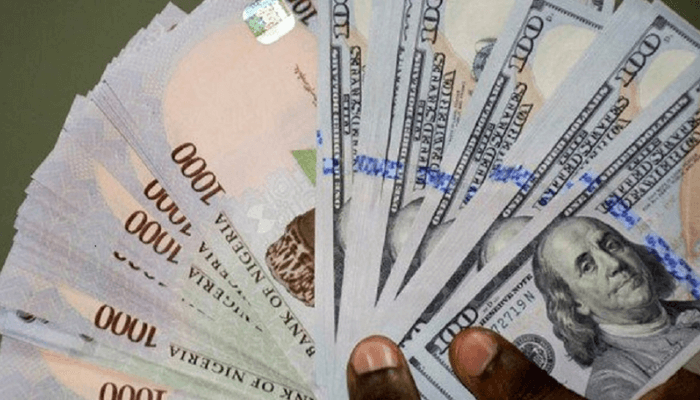
Nigeria’s currency is staging a major comeback, with the Naira-to-Dollar exchange rate plummeting to ₦1,450 per US dollar—a level not seen since mid-2024. While the public is abuzz with speculation about a “crashing dollar,” financial experts clarify that the true story is the significant appreciation of the Naira, a development many foresaw and have labeled as the start of the “year of the Naira.”
The currency’s renewed strength is viewed as a direct outcome of the tough, structural reforms implemented by President Bola Ahmed Tinubu’s administration.
Financial analysts point to the alignment of key economic fundamentals as the primary driver of this turnaround. The painful, yet essential, policies initiated in 2023—including the unification of exchange rates and the removal of the costly fuel subsidy—are finally yielding tangible results.
“The volatility that made investing in Naira instruments a futile exercise for years is receding,” noted one prominent financial commentator. “We are witnessing a shift from the ‘leaking bucket’ economy to one showing signs of stability.”
The economy is reportedly becoming more predictable. This has led to a crucial behavioral change: individuals and corporations are reducing dollar hoarding and increasingly converting foreign earnings to invest in local Naira-denominated assets. This reduced pressure on the foreign exchange market has significantly increased the dollar supply for legitimate trade, causing the gap between official and parallel market rates to narrow drastically.
A critical factor underpinning this stability is the Dangote Refinery. Its operation marks a generational milestone, drastically reducing Nigeria’s dependency on imported petroleum products. The resulting lower import bill means that valuable foreign exchange is being retained within the national economy, further easing demand for dollars.
Additionally, the nation’s trade balance has swung into surplus. President Tinubu recently announced an export surplus of approximately 4%, a substantial reversal from the debilitating trade deficits of 2022 and 2023. This positive trade balance, where exports now surpass imports, positions Nigeria to potentially reclaim its status as a continental economic powerhouse in substance, not just in rhetoric.
The local investment environment is responding robustly. Inflation is easing, leading to a deceleration in the frantic, hourly price increases that characterized 2024.
The Nigerian stock market is booming, with some equities recording appreciation exceeding 400%, and instruments like bonds and mutual funds are attracting renewed interest from both local and returning foreign investors.
Projections suggest the Naira could close the year even stronger, potentially dropping to ₦1,400 or less per dollar.
The current political landscape is marked by a concerning shift in political financing. Historically, political parties were backed by successful, established business moguls who brought private wealth into the public sphere.
Today, however, many major political financiers are individuals with no discernible business background—namely, civil servants and career politicians. “In no other place can a person retire from public service one day and finance a major political campaign the next, without rigorous public scrutiny,” observed the commentator. “This blatant display of wealth acquired through non-business means points to a deep systemic rot.”
The controversial case of former Central Bank Governor Godwin Emefiele is highlighted as a prime example of this moral decay. His alleged political aspirations while still in office, following the economic turmoil caused by a widely criticized currency redesign, represent a stark violation of public trust.
The continued legal defense of such actions, despite the evident damage to the national economy, signals a compromised system.