

US Calls Off Pakistan Trip after Iran Leaves Without Direct Talks
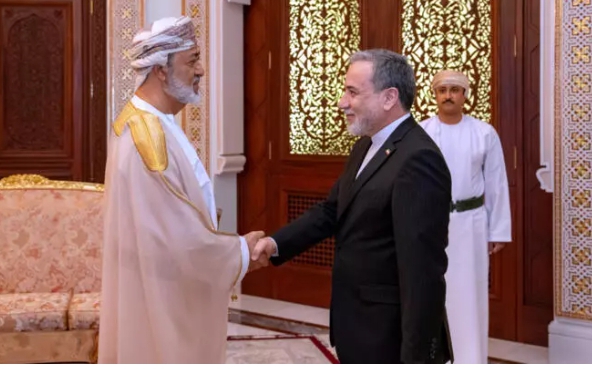
The United States had initially announced plans to send envoys Steve Witkoff and Jared Kushner to Pakistan for potential talks with Iran’s Foreign Minister Abbas Araghchi, who arrived in Islamabad on April 24, 2026.
However, those talks never took place. Araghchi left Pakistan without any direct or indirect meeting with US officials, and the White House subsequently canceled the envoys’ trip, citing “infighting” in Iran.
Earlier, White House press secretary Karoline Leavitt had said the US was hopeful parties could “move the ball forward to a deal,” but Iranian state media and officials repeatedly denied any intention to hold direct talks in Pakistan. Writing on X, Araghchi described his visit as a “timely tour of Islamabad, Muscat, and Moscow” focused on bilateral matters, with no mention of US negotiations.
President Donald Trump told Reuters he remained open to a deal, claiming Iran was “making an offer” to end its nuclear program.
Defense Secretary Pete Hegseth added that Iran had “an open window to choose wisely … at the negotiating table,” provided it “abandon a nuclear weapon in meaningful and verifiable ways.”
Two Pakistani government sources told Reuters that Iran had proposed using Pakistan as a mediator to relay its positions to Washington, but no face‑to‑face talks were ever scheduled.
Al Jazeera’s Ali Hashem reported from Tehran that a “senior official” had “made it clear” there would be no US‑Iran talks in Pakistan, noting that “regional partners all have their own ideas on how to solve this deadlock, but for the moment, Iran has said it would not meet for a new round of talks.”
Reports in Iranian state media made no mention of Parliament Speaker Mohammad Baqer Ghalibaf, who had led Iran’s delegation in an earlier round of talks this month. His office denied he had resigned as head of the negotiating team but confirmed that no new round of talks had been scheduled.
Vice President JD Vance, who participated in the first round, was not traveling to Pakistan, though the White House said he remained “deeply involved” and on standby.
Al Jazeera’s Mike Hanna noted a “graded process” was envisioned, with “an initial exploratory phase” that could lead to “higher‑level engagement if negotiations deepen.” However, a new round expected to begin on Tuesday did not materialize, with Iran saying it was not ready to commit.
Contrary to some earlier reports, there was no unilateral US extension of a “ceasefire” related to Iran. Tensions over the Strait of Hormuz continued, with Iran insisting it would not stop blocking the strait until the US lifted its port blockade. On Friday, the US froze $344 million in Iranian cryptocurrency assets as part of ongoing sanctions.