



Fani-Kayode Hails Tinubu’s Economic Reforms as New NRS Headquarters Opens in Abuja
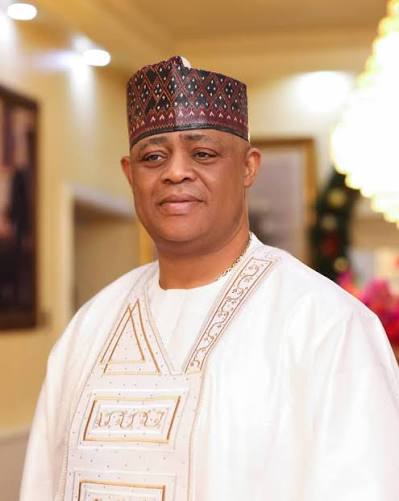
Former Minister of Aviation, Chief Femi Fani-Kayode, has issued a scathing rebuttal to critics of President Bola Ahmed Tinubu’s fiscal policies, following the official commissioning of the Nigeria Revenue Service (NRS) Corporate Headquarters in Abuja.
Taking to social media, Fani-Kayode argued that the successful restructuring of the nation’s tax architecture—personified by the leadership of NRS Chairman, Dr. Zacch Adedeji—is undeniable proof that the administration’s “Renewed Hope” agenda is yielding significant results.
The landmark event, held on April 14, 2026, saw President Tinubu unveil the state-of-the-art, 16-floor edifice, marking the formal transition from the defunct Federal Inland Revenue Service (FIRS) to the modernized NRS. In his reaction, Fani-Kayode suggested that those who remain skeptical of the government’s economic direction are ignoring tangible progress in revenue mobilization and institutional reform. He stated that anyone who listened to Adedeji’s address and still doubts the efficacy of the current fiscal policies is “either blind, deaf, dumb, or all three.”
During the ceremony, Chairman Zacch Adedeji highlighted the NRS’s evolution into a tech-enabled, centralized system designed to “tax prosperity, not poverty.” Under the new framework, the agency has already seen a massive leap in revenue, including the successful consolidation of mineral royalties and VAT collection.
Adedeji’s leadership has been central to the administration’s goal of reaching a $1 trillion economy by 2030, a vision Fani-Kayode described as being driven by one of the President’s “brightest stars.”
The commissioning was attended by top government officials, including Senate President Godswill Akpabio and FCT Minister Nyesom Wike. The new headquarters, featuring three towers and the capacity for 3,000 employees, is being positioned as a symbol of integrity and the “new era” of Nigerian public finance.
For supporters like Fani-Kayode, the building is more than just an office; it is a physical manifestation of a strategy that is finally stabilizing Nigeria’s volatile fiscal landscape.